










Why electrification, and why now
The mining and construction equipment sector does not electrify because it is fashionable. It electrifies because the economics flipped. Diesel prices at remote mine sites carry the freight cost of getting fuel to the pit, and pit ventilation fans spend a lot of energy pulling diesel exhaust out of a deep pit. A battery-electric truck has no tailpipe exhaust, so the ventilation load drops with every diesel truck replaced. It also has roughly one third of the well-to-wheel energy cost per tonne-km compared with a diesel equivalent, because an electric motor is far more efficient than a diesel engine at converting energy to motion.
We build electric versions across four product families: mining dump trucks, municipal sanitation vehicles, rotary drilling rigs and port tire cranes. The common thread is a duty cycle that repeats every shift, returns to a known point, and draws power from the grid - the conditions where electrification pays back fastest. Below is how each family fits into that logic.
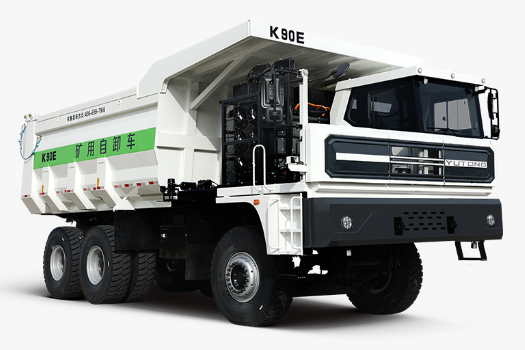
Electric mining dump trucks: the YTK range
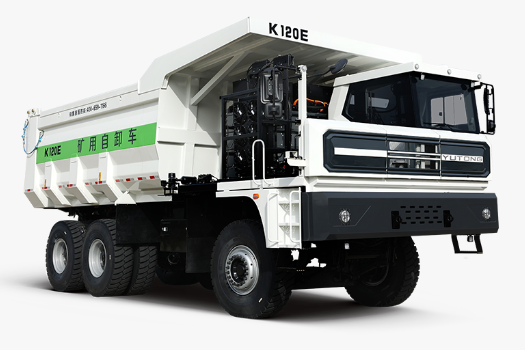
The YTK electric mining truck line runs from the YTK90E (around 60 t payload) up through the YTK105E and YTK120E to the YTK145E. Each uses a lithium iron phosphate (LFP) battery pack and twin electric wheel motors with regenerative braking on the down-haul, which recovers energy every time the truck descends a ramp. The YTK136E is built around a battery-swap station, so a 24-hour pit never waits at a charger. For pits without full charging infrastructure, the YTK136RE range-extended model runs electric around the pit and fires a diesel generator only for the rare long move off the haul road.
On a typical coal mine with a 2 km haul, an electric YTK replaces roughly 80 to 100 litres of diesel per truck per shift. Multiply that by 10 trucks running two shifts and the annual diesel displacement runs into the hundreds of thousands of litres, with the corresponding CO2 and pit-exhaust reduction. The exact figure depends on your cycle length and load factor, so we build the calculation with your route numbers rather than quote a generic average.
Battery technology that survives a pit
Mining trucks operate in dust, vibration and temperature swings that would kill a passenger-car battery in a season. The LFP chemistry we use has a wider thermal window than nickel-based cells, no cobalt content, and a slower degradation curve under deep cycling. Every pack sits on a dedicated thermal management loop that chills or warms the cells to keep them inside a 25 to 35 degree C band regardless of whether the ambient is minus 20 or plus 45. Cell modules are serviceable individually, so a failed module is swapped in the field instead of writing off the whole pack.
Regenerative braking on the descent does more than save energy: it wears the service brake far less. A diesel truck's brake discs and pads on a long ramp are a recurring maintenance line; an electric truck uses the electric motor as a retarder and keeps the friction brake in reserve. That cuts brake overhauls and the risk of a runaway truck on a 10 percent ramp.
Beyond the mine: electric sanitation, drills and port cranes
Electrification only makes sense where the duty cycle repeats and the vehicle returns to base. That logic applies outside the pit as well.
| Family | Models | Why it electrifies well |
|---|---|---|
| Mining dump trucks | YTK90E, YTK105E, YTK120E, YTK145E | Short repeat haul cycles, fixed routes, grid power at the pit. |
| Municipal sanitation | YTZ5043 sweeper, YTZ5060 sweeper, YTZ5187 sweeper, YTZ5060 washer | Fixed routes, depot charging overnight, quiet operation in city streets. |
| Rotary drill rigs | YTR166AE, YTR206AE, YTR266HE, YTR406HE | Stationary power demand during drilling, grid-tied operation cuts fuel and noise. |
| Port tire cranes | YTQL40E, YTQL70E | Yard cycles with shore power, zero emissions in populated port areas. |
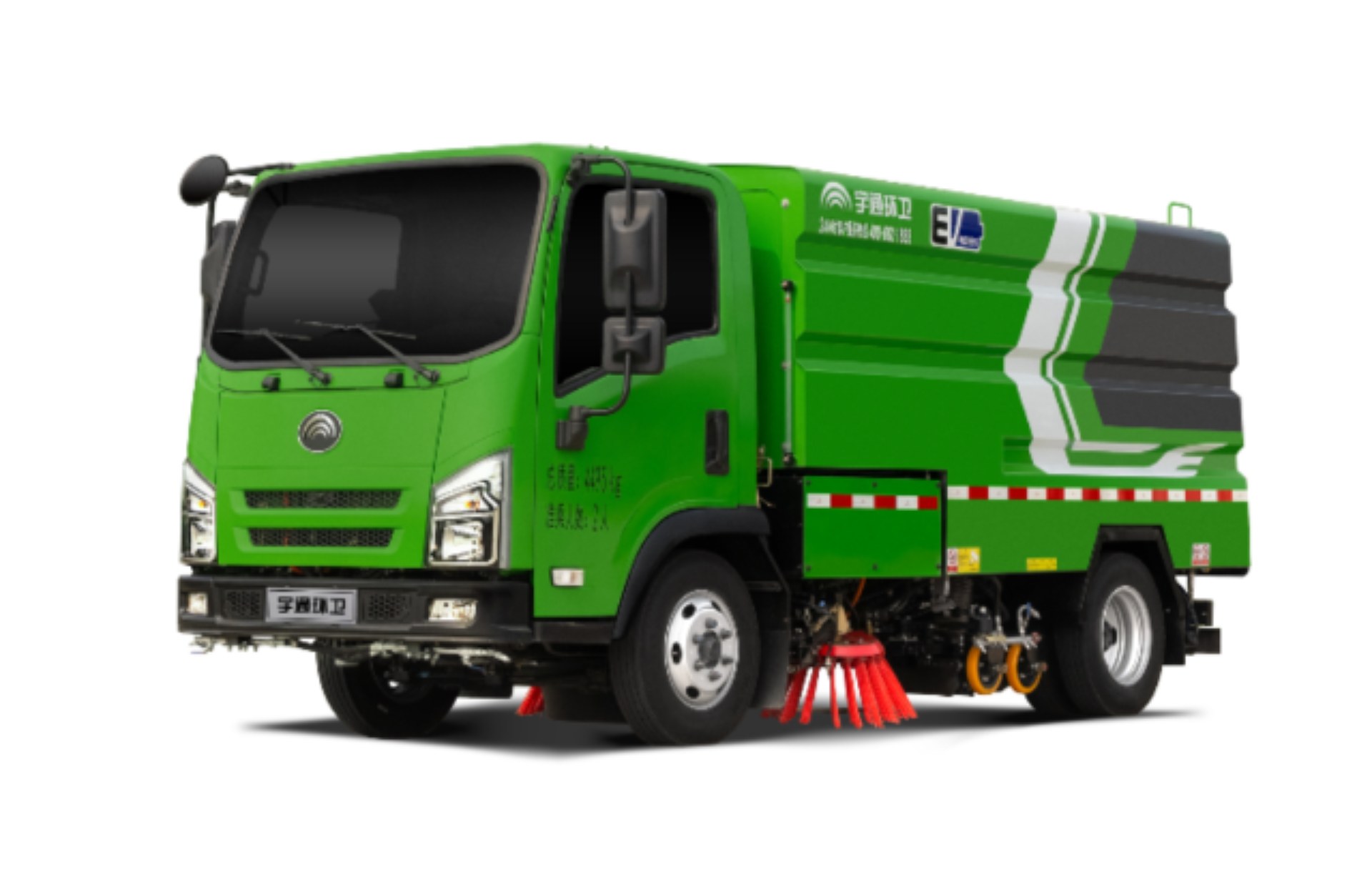
For municipalities, the YTZ BEV sanitation line covers street sweepers, road washers and vacuum trucks from 4 t to 18 t gross vehicle weight. They charge overnight at the depot and run a fixed route every shift, which is exactly the duty cycle where battery-electric beats diesel on both noise and operating cost. In a city centre, the noise reduction matters as much as the tailpipe: a BEV sweeper runs after 10 pm without waking the neighbourhood.
For drilling, the YTR AE/HE electric drill rigs plug into grid power at the site instead of running a diesel generator. Drilling is a steady, stationary power load, so the generator runs at its worst efficiency point; grid-tied electric drives remove that generator from the equation and cut both fuel cost and the noise footprint around a piling site in a city.
For ports and yards, the YTQL pure-electric tire crane range uses shore power and regen on container lifts. A reach-stacker or tire crane shuffling containers all day burns a surprising amount of diesel; the electric version recovers energy on every descent and charges during idle windows.
Green manufacturing: the factory side of the equation
An electric truck built in a coal-heavy factory does not deliver the emissions saving a customer expects. Our Zhengzhou plant at No. 88 Yugong Road runs its own roof-mounted solar array on the assembly hall, and the paint and welding lines use water-based paints and fume extraction that meets GB 21910 emission limits. Battery pack assembly is a separate climate-controlled line where cell sorting, module stacking and high-voltage testing happen under ISO 9001 process control.
Assembly itself is not the whole story. We work with tier-one suppliers on the same battery and motor platforms used across the Yutong group, so the pack in a mining truck shares cells, BMS software and service parts with the pack in a city bus. That standardisation is what keeps spare-part availability high and service intervals predictable for exported fleets.
Customer cases: where electrification is already paying back
A coal mine in northern China replaced a mixed diesel fleet with YTK electric trucks on the shovel-to-plant loop. The route is 2.1 km one way with a 6 percent ramp. After six months of two-shift operation, the mine reported per-truck diesel use near zero on that loop, brake lining life roughly doubled, and the pit ventilation fan load dropped measurably because there was no diesel exhaust to clear. The payback case was built on the local diesel price and the mine's already-paid-for grid connection.
A municipal cleaning fleet in a Middle Eastern city took delivery of YTZ BEV sweepers and road washers. The depot charges overnight on off-peak tariff, and the quiet operation let the city extend the cleaning window into early morning without resident complaints. We have shipped the same platform to municipal buyers across Southeast Asia and the Middle East, and the after-sales support path is the one described on the service page.
For a worked example of how a specific pit evaluated the switch, read the Chile copper mine case, which walks through a 50 t truck deployment with uptime and tonne-km cost numbers.
Frequently asked questions
How much CO2 does an electric mining truck actually save?
Per tonne-km, a battery-electric truck uses roughly one third of the well-to-wheel energy of a diesel truck and emits zero tailpipe CO2 at the pit. The grid-side saving depends on your local generation mix: hydro or wind power gives a far larger well-to-wheel cut than coal-fired power. We model it around your local tariff.
Battery swap or fast charge for my fleet?
Swap suits large fleets on 24-hour shifts because a swap takes minutes and the truck never waits at a charger. Fast charge is cheaper to install for a small fleet with predictable idle windows. The YTK136E uses a swap station; smaller fleets often start with fast charge.
What is the battery life on an electric mining truck?
The LFP packs are rated for roughly 4,000 to 6,000 full cycles before reaching 80 percent state-of-health, which is five to seven years of two-shift pit operation. Thermal management keeps cell temperature in a narrow band so cycle life holds up in desert heat.
Do electric sanitation trucks work in cold climates?
Yes. The YTZ BEV sweepers use LFP packs with thermal management that pre-condition cells from grid power during overnight charging. Range drops in winter but remains usable for municipal duty cycles that return to depot every shift.
Can I electrify only part of my fleet?
Yes. Most customers start with the shortest, most repeatable loop in the pit and convert that first. Diesel trucks keep the long-haul and variable routes. As chargers or a swap station come online, more loops convert. This spreads capital cost and de-risks the switch.
What infrastructure does an electric mining truck need?
Fast-charge trucks need a charger pad with enough grid supply, typically 360 kW to 1 MW per stall. Swap-station trucks need a dedicated swap bay and a bank of charged batteries. We size the electrical supply against your shift pattern and truck count.
Model the switch on your own numbers
Send us your daily tonnage, one-way haul distance, local diesel price, electricity tariff and current fleet size, and our mining engineering team will tell you where the break-even lands across the Yutong electric mining truck range. We export to over 60 countries and build to FOB / CIF terms with the full customs document set. Request brochures and spec sheets on the downloads page, or talk to an engineer directly.