










Why African mines spec equipment differently
An African mine is not a European or Australian mine transplanted south. Bench widths are often narrower, haul roads are not always hardened to first-world standard, fuel arrives by road tanker and gets marked up by the time it reaches the pit, and spare-part lead times are measured in weeks rather than days. The equipment that wins on an African site is the equipment that tolerates rough roads, runs on locally available fuel, and does not strand the production cycle waiting on a 40-day sea freight for a consumable.
We have shipped mining equipment across Zambia, the DRC, South Africa, Ghana, Mali, Burkina Faso, Guinea, Tanzania and Zimbabwe. The product mix that actually sells into these pits is the 40 to 70 t rigid truck class, blasthole drills that handle the rock hardness, and a starter spare-parts kit that arrives with the first shipment. Below is how we match the machine to the orebody. Construction buyers should also look at the Africa construction machinery page, sanitation buyers at the Africa sanitation equipment page, and South African buyers at the South Africa mining equipment page.
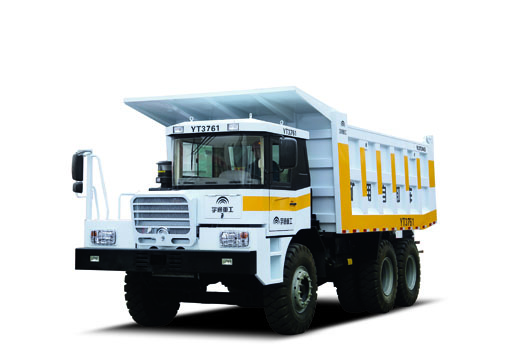
Match the truck class to the ore and the bench
Copper belt (Zambia / DRC). Copper pits are typically hard rock at 2.5 to 2.8 t/m3 with benches that widen as the pit deepens. A 40 to 50 t rigid truck such as the YT3621 or YT3761 suits the early-stage narrower benches; as the pit opens up, customers step up to the YTG50 or the 60 to 70 t electric class. For a worked example, see the Chile copper mine case, which runs the same truck class through a copper operation.
Gold and hard-rock underground-to-open-pit mines. Ghana, Mali and Burkina Faso gold pits tend to be medium-tonnage with variable bench widths. The 40 to 50 t class is agile enough on tight benches and resale-friendly as the pit cuts back.
Lithium mines. Southern African lithium projects are younger, narrower pits with lighter overburden. The same 40 to 60 t class works, and customers often pair a small electric truck on the shovel loop where grid power is available.
Iron ore. Heavier rock, wider benches, longer hauls. The 70 to 100 t class - YTG100 or the YTK120E electric - moves more tonnes per cycle on wide benches.
Drills: blasthole and DTH rigs for African rock
A truck is only as productive as the bench it loads from. The drill that puts the powder hole in the rock sets the fragmentation, which sets the truck fill factor and crusher throughput. We ship two drill families into African mines.
The rotary blasthole drilling rig line is for larger benches where you are drilling 115 to 200 mm blast holes on a production cycle. These are truck-mounted or crawler-mounted rigs built for daily blasthole drilling in hard rock. For smaller benches, quarry-style drilling and hard-rock DTH (down-the-hole) holes, the tracked DTH drilling rig line is the right tool - smaller footprint, easier to move between benches, and suited to the 90 to 127 mm hole range common in African gold and quarry operations.
| Ore / region | Truck class | Drill rig | Notes |
|---|---|---|---|
| Copper (Zambia / DRC) | 40-70 t rigid | Rotary blasthole | Hard rock, benches widen over mine life. |
| Gold (Ghana / Mali) | 40-50 t rigid | Tracked DTH | Medium tonnage, variable bench width. |
| Lithium (Southern Africa) | 40-60 t, electric option | Tracked DTH | Younger, narrower pits; lighter overburden. |
| Iron ore (West Africa / SA) | 70-100 t rigid | Rotary blasthole | Wide benches, long hauls, dense rock. |
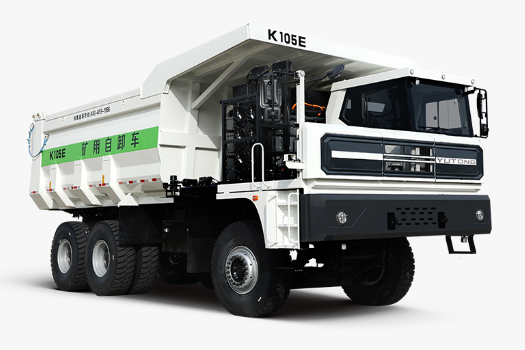
Why African mine procurement picks Yutong
Right-size, not over-size. We do not push the 100 t truck onto a 30 m bench. The 40 to 70 t class that fits most African copper and gold pits is the class we build and support.
Fuel and energy cost that matters on-site. Diesel in a remote African mine is expensive by the time the road tanker reaches the pit. An electric truck on a short shovel loop cuts that line item hard; the YTK105E and YTK90E are the models customers ask about first when grid power is available.
Export documentation done right. We prepare the commercial invoice, packing list, bill of lading, export declaration, ISO/CE certificates and certificate of origin for every shipment. The importer handles local clearance; we recommend forwarders who know Zambian, DRC and South African customs.
Spare parts that arrive before they are needed. A starter fast-moving-parts kit ships with the first order so the pit is not waiting on a 35-day sea freight for a filter or seal. More on this on the after-sales support page.
Logistics, customs and payment: the practical part
Shipping a mining truck to Africa is not the same as shipping a container of consumer goods. A rigid mining truck comes knocked-down or on its own axle line; the drill rig comes as a containerised kit; and the overland leg from the African port to a remote mine can take another week or two on bad roads. We plan around the discharge port that actually serves your mine.
| Route | Sea freight | Typical incoterms |
|---|---|---|
| Shanghai / Qingdao to Durban | ~25-35 days | CIF Durban |
| Shanghai / Qingdao to Mombasa | ~30-40 days | CIF Mombasa |
| Shanghai / Qingdao to West African ports | ~35-45 days | CIF your port |
| Zambia / DRC inland | + road from Durban / Dar es Salaam | DAP mine gate option |
Payment terms are standard T/T: 30 percent deposit with the order, 70 percent balance before shipment. For established mining customers and larger fleets we can discuss an irrevocable letter of credit at sight from an acceptable bank. We quote in US dollars on FOB, CIF or DAP terms, so you can compare landed cost against other suppliers on an equal basis. Request the actual spec sheet and price on the downloads page or through the contact form.
Frequently asked questions
Which African countries do you ship to?
We export to over 60 countries, with regular shipments to Zambia, the DRC, South Africa, Ghana, Mali, Burkina Faso, Guinea, Tanzania and Zimbabwe. Sea freight lands at Durban, Cape Town, Mombasa, Dar es Salaam or Luanda, then goes overland to site.
What incoterms do you offer?
FOB Shanghai or Qingdao, CIF your nearest African port, or DAP to your mine gate. Most buyers take CIF to the discharge port and handle inland haulage themselves; we can also arrange the overland leg through our forwarder.
What payment terms do you accept?
Standard is 30 percent T/T deposit with the order and 70 percent balance before shipment. For established customers and larger fleets we can discuss an irrevocable L/C at sight from an acceptable bank.
How do you handle customs clearance?
We prepare the full export document set: commercial invoice, packing list, bill of lading, export declaration, CE/ISO certificates and certificate of origin. The importer of record handles local clearance and duty. We can recommend forwarders experienced in Zambian, DRC or South African customs.
How fast do spare parts reach an African mine?
Sea freight to Durban is roughly 25 to 35 days, to Mombasa 30 to 40 days, and to West African ports 35 to 45 days. Critical parts can go by air freight. We recommend holding a 90-day starter kit on site for the first year.
Do you commission and train on site in Africa?
Yes. For fleet orders we send a commissioning engineer to site for installation, first-shift check-out and operator training in English. Travel and accommodation are agreed in the project quotation.
Send us your mine location and daily tonnage
Tell us the mine country, daily tonnage to move, ore type, bench width, one-way haul distance and worst ramp grade, and our mining engineering team will size the truck and drill across the Yutong mining dump truck range and the blasthole drill range. We quote in US dollars on FOB, CIF or DAP terms and ship the full customs document set with every order.