










The project at a glance
The customer is an open-pit copper operation in northern Chile, in the Atacama region. The mine was running an ageing mixed fleet of 40 to 55 t rigid trucks from a legacy brand. Uptime on the older units was slipping, spare parts were getting harder to source, and the mine was planning a staged fleet renewal. The tender asked for a 50 t-class truck that matched the existing shovel, held cycle time on a 7 percent ramp, and could be supported with parts shipped from China.
| Item | Value |
|---|---|
| Location | Northern Chile, Atacama region, open-pit copper |
| Ore density | ~2.6 t/m3 (hard copper ore) |
| One-way haul | ~2.4 km shovel to ore pass |
| Ramp grade | 7 percent sustained climb out of pit |
| Bench width | ~30-35 m (early-stage pit) |
| Supplied units | YT3621 and YTG50 rigid trucks |
| Operation | Two shifts per day |
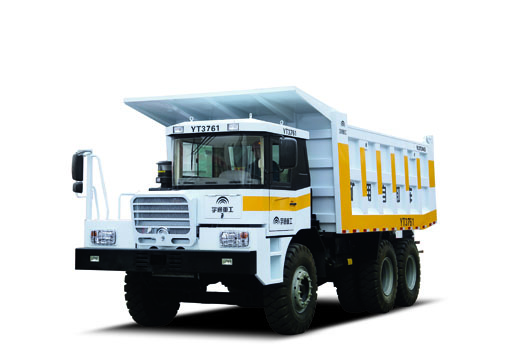
The challenge: bench width, ramp grade and parts supply
Bench width. The pit was still in its early pushback, with benches around 30 to 35 m wide. A 90 to 100 t truck would have turned slowly on those benches and been under-loaded most cycles, which kills cost per tonne. The 50 t class was the right size to turn in the bench and fill cleanly.
Ramp grade. The climb out of the pit ran at 7 percent sustained, with a worst 200 m section at the top of the ramp. A truck chosen on flat-road fuel economy would have crawled up that section and overheated its brakes on the descent. The spec had to hold cycle time at full GVW on that ramp and use the retarder on the way down.
Parts supply. The old fleet's parts were taking longer and longer to arrive, and a single missing component was holding a truck out of production. The replacement had to come with a parts plan that did not strand the mine on a 45-day sea freight for a consumable.
The solution: YT3621 and YTG50 matched to the shovel
The mine's existing shovel bucket took roughly 5 to 6 passes to fill a 50 t truck body, which is exactly the loader-to-truck match that keeps cycle time tight. We spec'd the YT3621 and YTG50 around that bucket: a rigid frame with enough power-to-weight to climb the 7 percent ramp at full GVW, and a retarder system that controls speed on the descent without riding the service brakes. The dump body was sized for the 2.6 t/m3 copper ore so the truck reached rated payload without overfilling on the bench.
On the parts side, we bundled a starter fast-moving-parts kit with the first order: filters, seals, brake linings, brush sets and seal kits, sized to the mine's two-shift pattern. A commissioning engineer spent two weeks on site for installation, first-shift check-out and operator training in Spanish (arranged through our local interpreter). Sea freight from Shanghai to San Antonio ran the planned 40 to 50 days; the kit meant the mine was not waiting on that freight for day-to-day consumables.
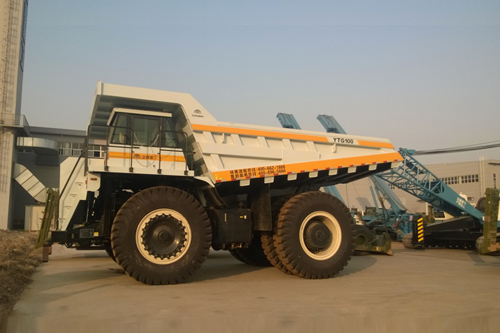
The results: uptime and tonne-km cost after six months
After six months of two-shift operation, the mine reported that the YT3621 and YTG50 fleet was holding uptime at or above the outgoing trucks, with no major unscheduled stoppage traced to a manufacturing defect. Per-tonne-km haul cost - combining fuel, tyres, maintenance and downtime - came in under the legacy fleet, because the new trucks carried fewer worn-out ageing-component failures and the retarder reduced brake lining consumption on the ramp descent.
The mine's operations engineer noted that the trucks "climbed the ramp without losing cycle time, and the brake job interval on the descent was longer than what we were used to." That is the number that matters on a copper pit: the truck makes its cycle up the ramp and does not sit in the shop every two months for brake work.
Why the mine chose Yutong
The tender was not decided on sticker price alone. Three points moved the decision. First, the 50 t class matched the existing shovel and bench, so the mine did not have to change its loading fleet to fit the truck. Second, the parts kit and commissioning plan removed the risk that a new supplier would leave the mine waiting on shipping. Third, the truck spec held on the 7 percent ramp, which is where the outgoing trucks were losing cycle time. The mine now has a repeatable template: same truck class, same parts kit, same commissioning plan, when it renews the next bench's fleet.
For buyers running copper or similar hard-rock pits in South America or Africa, the same approach applies: start from the shovel bucket and the worst 200 m of ramp, size the truck to the bench, and plan the parts kit before the ship sails. The Africa mining equipment page walks through the same logic for African copper, gold and iron operations. Browse the full range on the mining dump trucks page.
Frequently asked questions
Why did the Chilean mine choose the 50-ton class?
The early benches were under 35 m wide and the existing shovel bucket took 5 to 6 passes to fill a 50 t truck. A larger 90 to 100 t truck would have turned slowly on those benches and been under-loaded. The 50 t YT3621 and YTG50 class matched the loading tool and the bench width.
What was the haul cycle and ramp grade?
The shovel-to-ore haul was about 2.4 km one way with a 7 percent sustained ramp out of the pit. The trucks needed enough power-to-weight to hold cycle time on the ramp and strong retarder on the descent. The YT3621 and YTG50 were specified against that worst 200 m of ramp.
How was spare-parts support handled?
A starter fast-moving-parts kit shipped with the first order. Sea freight from China to San Antonio runs roughly 40 to 50 days; critical parts go by air. A commissioning engineer spent two weeks on site for first-shift check-out and operator training.
What were the measured results after six months?
The fleet ran two shifts a day. Reported uptime held above the mine's target, and per-tonne-km haul cost came in under the outgoing diesel trucks of a similar class once fuel, tyres and maintenance were combined. Brake lining life improved on the retarder-assisted descent.
Run the same numbers for your pit
Send us your daily tonnage, one-way haul distance, worst ramp grade, bench width, material density and local diesel price, and our mining engineering team will match you to the right truck class across the Yutong range. We export to over 60 countries and build to FOB / CIF terms with the full customs document set. Request the YT3621 or YTG50 spec sheet on the downloads page.