










What African municipal sanitation programs need
African cities are expanding fast, and municipal cleaning departments and private sanitation contractors are replacing old manual sweeping and rented fleets with dedicated trucks. The duty is not uniform: a coastal tourist city needs quiet boulevard sweepers, a dense inland capital needs residential refuse compactors, and a dusty mining or industrial city needs water sprinklers to keep roads down. We have supplied sanitation trucks across Nigeria, Kenya, Ghana, Ivory Coast, Senegal, Ethiopia, Tanzania and South Africa, and the product mix below is what those programs actually run.
| Task | Equipment | Typical buyer |
|---|---|---|
| Boulevard / promenade cleaning | Street sweeper | Coastal or tourist city |
| Residential waste collection | Refuse compactor | Dense capital city |
| Road dust / watering | Water sprinkler | Dusty or dry-season city |
| Construction dust control | Dust suppression | Urban construction site |
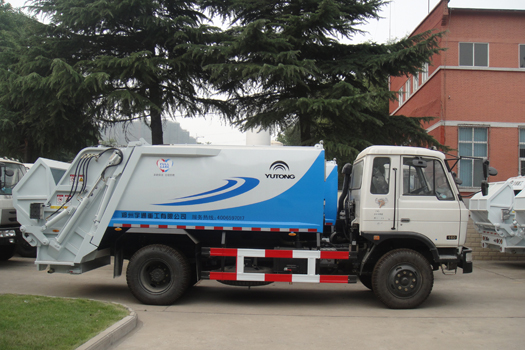
Sweepers, compactors and water trucks
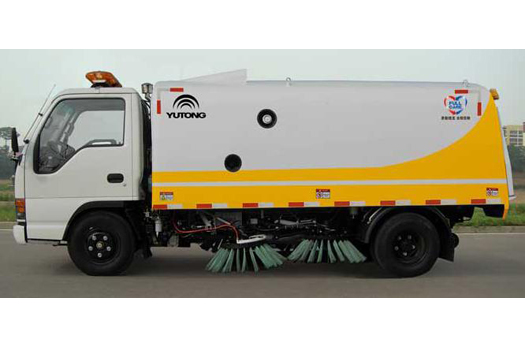
A street sweeper cleans paved boulevards and market access roads where manual sweeping cannot keep up. A refuse compactor collects residential waste and compacts so the truck holds more bins per trip before tipping at the transfer station. A water sprinkler truck wets dusty roads in the dry season and washes paved streets. For construction-site dust, a dust suppression truck emits a directed mist that binds airborne particles at the active face. The full range is on the environmental sanitation machinery page.
Because African cities run hot, we spec water tanks and cooling for the ambient climate, and size the tank to the route's refill frequency. A sweeper that runs out of water halfway through a boulevard route is useless; the tank and the filling point have to match the route.
Why municipal buyers pick Yutong sanitation trucks
Municipal procurement weighs up-front cost against total operating cost. A truck that breaks down on a residential route draws public complaints, so uptime and parts availability matter as much as the purchase price. We bundle a starter fast-moving-parts kit with the first order, so the city is not waiting on a 40-day sea freight for a filter or brush. For a worked example of a residential electric collection route, see the China municipal garbage case; the route-planning logic transfers to African city collection.
For buyers running dust control on urban construction, the construction dust control case shows how suppression and sprinkler coverage keeps dust inside the site boundary. Mining buyers should also look at the Africa mining equipment page for pit trucks and drills.
Export, logistics and support
A sanitation truck ships as a complete built-up vehicle, usually by ro-ro or containerised depending on size. We prepare the commercial invoice, packing list, bill of lading, export declaration, CE/ISO certificates and certificate of origin; the importer of record handles local clearance and duty. Sea freight to West African ports runs roughly 35 to 45 days, to Mombasa 30 to 40 days, and to Durban 25 to 35 days.
Spare parts are the make-or-break for a municipal fleet. The starter kit covers brushes, filters, seals and water-system consumables sized to the fleet, and we recommend holding a 90-day kit on site for the first year. More on the after-sales support page.
Logistics, customs and payment at a glance
| Route | Sea freight | Typical incoterms |
|---|---|---|
| Shanghai / Qingdao to West African ports | ~35-45 days | CIF your port |
| Shanghai / Qingdao to Mombasa | ~30-40 days | CIF Mombasa |
| Shanghai / Qingdao to Durban | ~25-35 days | CIF Durban |
| Inland to city depot | + overland by road | DAP depot option |
Payment terms are standard T/T: 30 percent deposit with the order, 70 percent balance before shipment. For city governments and established sanitation contractors we can discuss an irrevocable L/C at sight from an acceptable bank. We quote in US dollars on FOB, CIF or DAP terms. Request the spec sheet on the downloads page or through the contact form.
Frequently asked questions
Which African cities buy sanitation equipment?
We supply municipalities and sanitation contractors in Nigeria, Kenya, Ghana, Ivory Coast, Senegal, Ethiopia, Tanzania and South Africa. The mix is sweepers, refuse compactors and water sprinklers.
What truck fits a hot African climate?
We spec water tanks and cooling for the ambient conditions, and choose diesel or electric drivetrains based on depot charging. Tanks are sized to the local water supply and route refill frequency.
How is water supply handled?
The tank is sized to the route length and refill frequency, and we advise on filling points so the truck does not run out of water mid-route.
What payment terms apply?
Standard is 30 percent T/T deposit and 70 percent before shipment. For city governments and established contractors we can discuss an irrevocable L/C at sight. We quote in US dollars.
How are spare parts supported?
A starter fast-moving-parts kit ships with the order. Sea freight to West Africa is 35 to 45 days, to Mombasa 30 to 40 days, to Durban 25 to 35 days. We recommend a 90-day kit on site for the first year.
Size a sanitation fleet for your city
Send us the city, the cleaning tasks (boulevard sweeping, residential collection, road watering), the fleet size and the nearest port, and our sanitation engineering team will match trucks across the Yutong range. We quote in US dollars on FOB, CIF or DAP terms with the full customs document set.