










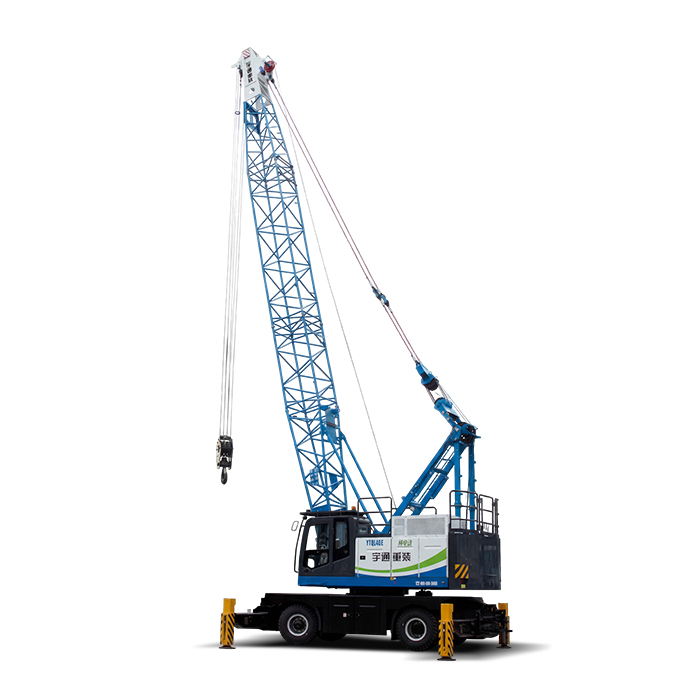
Product Overview
Zero‑emission electric port rubber‑tyred crane, 40t &70t models for port terminal cargo handling, energy‑saving, stable performance for harbour lifting works.
Performance Features
The YTQL40E Pure Electric Port Tire Crane incorporates Yutong's standard reliability, serviceability, and operator-comfort package. Contact our engineering team for a detailed feature walkthrough.
Technical Parameters
| Specifications available on request. |
Expert Guide
The YTQL40E Pure Electric Port Tire Crane (model YTQL40E Pure Electric Port Tire Crane) is a purpose-built electric port tire crane from Yutong Heavy Industries, designed for container terminal gantry lifting, bulk cargo ship unloading, steel yard material handling, and RoRo terminal operations.. What distinguishes this platform is its focus on pure-electric drivetrain with battery or shore-power supply, rubber-tire steering for yard travel, high-duty-cycle hoist, and port-grade corrosion protection.. Every structural, hydraulic, and electrical decision is benchmarked against the daily rhythm of real work sites, where reliability between scheduled maintenance windows directly determines profitability.
Application Scenarios
Operators deploy the YTQL40E Pure Electric Port Tire Crane across a wide range of conditions. In municipal and commercial fleets, it is chosen for its predictable duty cycle and low operating cost. In industrial and infrastructure projects, it is specified where container terminal gantry lifting, bulk cargo ship unloading, steel yard material handling, and RoRo terminal operations. demand a machine that can keep pace with aggressive schedules. The platform also adapts well to mixed-use environments — for example, moving from daytime collection or lifting work to night or off-shift operation without a change of vehicle class.
Technical Highlights
The YTQL40E Pure Electric Port Tire Crane delivers a carefully balanced set of chassis, superstructure, and powertrain parameters. Underneath the sheet metal, the engineering emphasizes pure-electric drivetrain with battery or shore-power supply, rubber-tire steering for yard travel, high-duty-cycle hoist, and port-grade corrosion protection.. Controls are arranged around the operator rather than around assembly convenience, and wear components are grouped so that routine service can be completed without specialized tooling. This attention to serviceability is what allows the machine to hold its residual value over a 10-year horizon.
Selection Guidance
Choosing the right configuration comes down to matching lifting capacity and boom radius to vessel class, evaluating electric energy supply (battery swap vs shore connection), and selecting tire and steering configuration by yard layout.. Buyers should also plan for total cost of ownership: energy or fuel per work cycle, tire and consumable life, insurance class, and local after-sales support. Yutong's engineering team routinely helps customers compare two or three configurations side by side on a per-ton or per-cycle cost basis before a purchase decision.
Why Yutong
Yutong Heavy Industries is the core enterprise of Yutong Group, combining construction machinery and special-purpose vehicle manufacturing under one roof. That vertical integration — from chassis and cab to superstructure and electric powertrain — means the YTQL40E Pure Electric Port Tire Crane is delivered as a tuned system rather than an assembly of third-party components. Global customers benefit from independent import and export rights, ISO and CE documentation, and a parts and service network that covers Southeast Asia, the Middle East, Africa, and Central Asia.
Related Products
Why Choose Yutong Pure-Electric Port Tire Crane
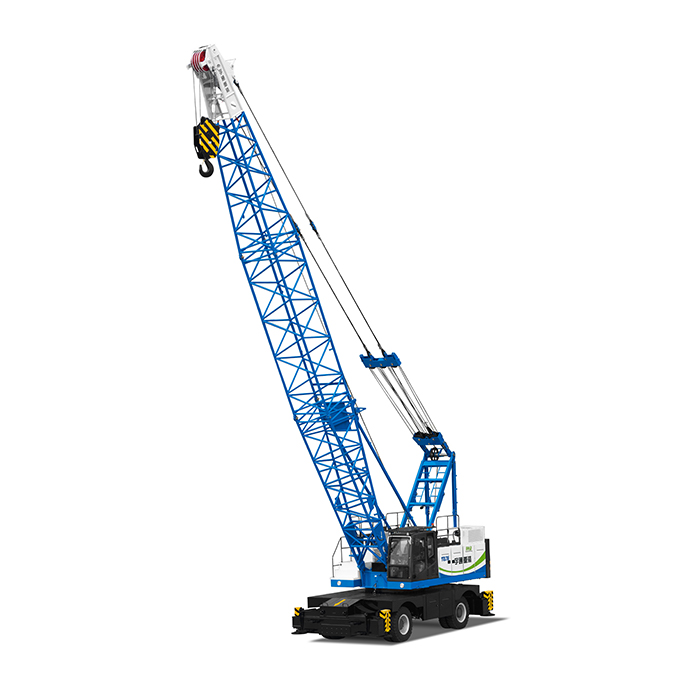
Ports are moving fast to zero emission. Container terminals and bulk berths sit inside urban air-quality zones, and shipping lines increasingly require green-port equipment to call. A diesel mobile harbor crane vents exhaust across the cargo face and burns a lot of fuel in a stop-start lift cycle; Yutong's pure-electric YTQL40E and YTQL70E run the hoist, slewing and travel from an on-board battery with shore-power top-up, so the yard operates with zero local exhaust and far lower noise at the quayside.
The platform is built for port duty. A high-duty-cycle hoist handles repeated lifts, rubber-tyred steering lets the crane move between berths and holds without a fixed rail, and port-grade corrosion protection stands up to the salt air. The 40-ton YTQL40E suits general cargo and container work; the 70-ton YTQL70E handles heavier steel and bulk loads. Because the crane is electric, energy cost per cycle is a fraction of a diesel equivalent on a grid-charged terminal.
Yutong Heavy Industries is the core enterprise of Yutong Group, with independent import and export rights and ISO and CE documentation. For export terminals we localize the charging and grid-voltage package and supply the full export document set, so the crane clears customs and connects to your berth power on arrival.
How to Choose the Right Electric Port Tire Crane
Match capacity and boom radius to the vessel class
The YTQL40E suits general cargo and mid-size container work; the YTQL70E is for heavier steel, project cargo and bulk. Start from the heaviest lift and the outreach to the vessel's hold, then check the load chart at that radius rather than the headline capacity.
Choose battery vs shore-power supply by yard layout
If the crane moves around the terminal and between berths, a battery pack with fast top-up between shifts is the practical option. If it works a fixed berth, shore-power connection removes battery concerns entirely. We size the energy system to your duty cycle and shift pattern.
Specify corrosion and tires to the marine environment
Salt air accelerates corrosion, so the crane ships with port-grade anti-corrosion treatment. Choose tire and steering configuration by yard surface — paved container yard vs mixed bulk ground — so the rubber-tyred travel does not become a maintenance problem.
Common Applications
Container terminal gantry lifting
Container yards need clean, quiet lifting near urban terminals. Recommended class: YTQL40E pure-electric for repeated container moves in a low-emission zone.
Bulk cargo ship unloading
Bulk holds run heavy lifts through the shift. Recommended class: YTQL70E for the heavier duty cycle, battery or shore-powered for continuous unloading.
Steel yard and project cargo handling
Steel coils and project cargo are large but few per shift. Recommended class: YTQL70E where the load weight exceeds the 40-ton class.
RoRo and multi-purpose terminal operations
RoRo ramps and mixed cargo need a mobile, self-positioning crane. Recommended class: rubber-tyred YTQL40E or YTQL70E that travels the apron without a rail.
Green-port and low-emission berths
Terminals targeting green-port certification ban diesel exhaust at the face. Recommended class: pure-electric YTQL series as the zero-emission replacement for mobile harbor cranes.
Export Compliance & After-Sales Support
Each electric port crane ships with the battery, charging and operator-manual documentation localized to the destination grid, plus the full export set — factory certificate of conformity, packing list, commercial invoice and certificate of origin — so customs clearance and berth connection are not delayed. We advise on plug and voltage standards for the charge point.
The crane carries a 12-month or 2,000-hour warranty, backed by global spare-parts support. Hoist components, wire rope, tires and contactor kits are quoted as spare-parts packages, and the export engineering team replies within 48 hours. Send us your vessel class, typical load and shift pattern to market@yutonggroup.com and we will recommend the model and energy supply.
Frequently Asked Questions
What lifting capacity does the electric port tire crane cover?
The YTQL series covers the 40-ton YTQL40E and the 70-ton YTQL70E, matching container gantry lifting, bulk ship unloading and steel yard material handling. Capacity at boom radius, not the headline figure, decides the model.
Why choose a pure-electric port crane over diesel?
Port terminals run continuous, high-duty-cycle lifts. A pure-electric crane produces zero local exhaust and far lower noise in the yard, meets green-port and low-emission zone rules, and cuts energy cost per cycle because grid power is cheaper than diesel. It is also built with port-grade corrosion protection for the marine environment.
How long does the battery last and how is it charged?
The crane runs a full working shift on battery, and can use either on-board charging during breaks or shore-power connection while docked. Choose battery or shore supply based on whether the crane moves around the yard or works a fixed berth. We size the energy supply to your duty cycle.
Can it travel between berths on rubber tyres?
Yes. The rubber-tyred steering lets the crane move around the terminal yard and between holds without a fixed rail, which is why it suits RoRo, bulk and multi-purpose terminals rather than a fixed container gantry.
What port applications is it suited to?
Container terminal gantry lifting, bulk cargo ship unloading, steel yard material handling and RoRo terminal operations. The 70-ton model handles heavier loads; the 40-ton model suits general and container work.
What is the lead time and warranty?
Standard configurations ship within 4–8 weeks; customized boom and energy packages take 8–12 weeks. The crane carries a 12-month or 2,000-hour warranty with global spare-parts support.
Does Yutong export port cranes to my country?
Yutong holds independent import and export rights and supplies electric port tire cranes to Southeast Asia, the Middle East, Africa and Central Asia with the charging and documentation package localized to your grid. Tell us the destination port.