










Why Australian mine duty is a different spec problem
Australian mining equipment is concentrated in two demand pools that matter for sizing: the Pilbara iron ore province of Western Australia, where dense iron ore is moved on wide benches over long, multi-kilometre hauls to the crusher or the port rail loadout, and the newer hard-rock and brine lithium operations across Western Australia that draw on the same pit-logistics template. The rock is dense and abrasive, the benches are wide by design, and the haul cycles are long enough that uptime and brake thermal management - not headline payload - decide fleet economics.
Australian sites also run to some of the most stringent safety and compliance expectations in the industry. Plant that enters a mine must go through site-specific acceptance, carry approved plant tags, and the arriving operators must complete site induction and a safety management process. That shapes what we supply: not just the truck, but the documentation pack and machine configuration that lets the mine operator accept it. Below we walk through the duty cycle, the machine class that fits, the container vs RORO shipping question, and the parts-and-dealer support planning. The full range is on the mining machinery category page, and a worked example of an Australian iron ore operation is on the iron ore Australia case study.
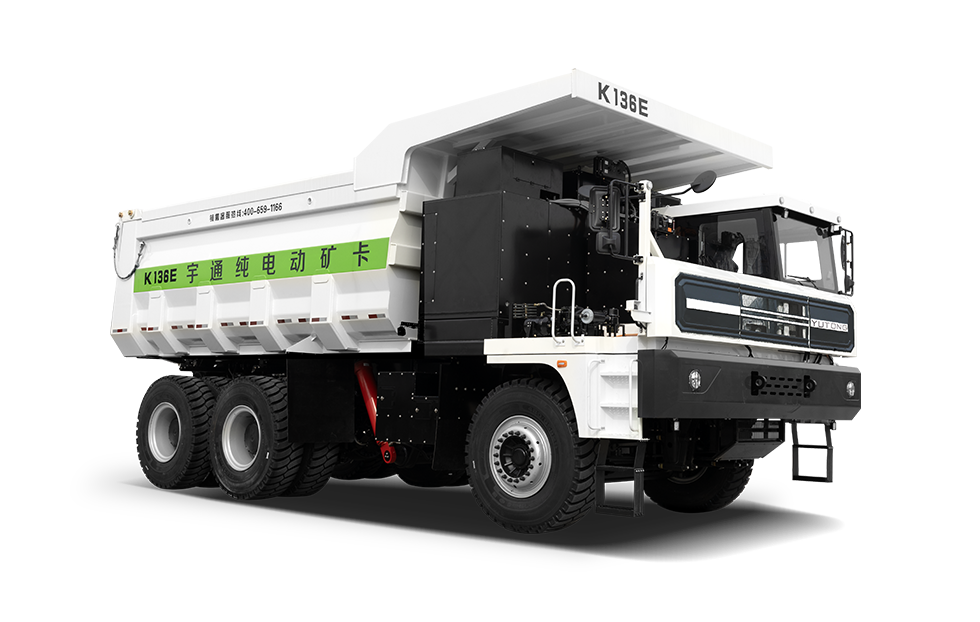
The Australian duty cycle: dense ore, wide benches, 24/7 haul loops
Dense ore sets the body. Iron ore loads heavily per bucket - denser than coal and most base-metal ore - so a body that is volume-mismatched to payload will either trip overloaded or leave rated capacity on the bench. The 42 m³ U-shaped body on the YTK105E at 70 t is sized so a wheel loader reaches rated load in the planned pass count, which is the number that actually determines cycle time on a wide bench.
Wide benches and long hauls favour the 70-100 t rigid class. On a Pilbara-style cycle the truck spends most of its shift loaded on the haul road, not spotting under the loader. That favours the larger rigid class - the YTG100 and the 90-100 t diesel class - and it puts retarder and brake thermal management high on the spec. Electric trucks turn the loaded descent into regenerative braking that returns energy to the pack, which matters on long ramps.
Battery-swap fits 24/7 iron ore fleets. A Pilbara fleet runs around the clock and cannot afford a truck sitting on a charger. The YTK136E uses a battery-swap architecture - the depleted pack is exchanged for a charged one in minutes rather than waiting for a slow top-up - which is why it is the electric model discussed first for continuous-shift iron ore duty. The wider electric and range-extended line is on the new energy mining truck page.
| Application | Machine | What to verify before purchase |
|---|---|---|
| Pilbara iron ore, long hauls, 24/7 | 90 t battery-swap YTK136E | Bench width for turning; swap-station staging; grade profile for regen braking |
| Medium hard-rock pit, grid available | 70 t electric YTK105E | Charging access; 42 m3 body vs loader pass count; site power supply |
| High-throughput surface iron ore | 70-100 t rigid YTG100 / YTK140D class | Rated payload vs ore density; retarder cooling on long ramps |
| Stockpile, rehandling, crusher feed | Wheel loader (wheel-loaders.html) | Bucket fill factor vs truck pass count; tyre duty on abrasive ore |
| Bench opening in hard rock | Rotary blasthole drill (rotary-blasthole-drilling-rigs.html) | Hole diameter and pattern vs fragmentation target; bit consumption |
Wheel loaders and drills for the Australian pit
The haul truck is only half of the cycle. At the stockpile, the crusher feed and the rehandling yard, a wheel loader sets the rate at which trucks are loaded. The wheel loader line is the natural partner to a truck fleet - matched in bucket size to the truck body so the loader reaches rated payload in three or four passes, which is the pass-count rule of thumb that keeps the bench productive. On the opening side of the pit, the rotary blasthole drilling rigs set the fragmentation that the loader and truck then have to move; in dense Australian hard rock, the drill pattern and bit consumption decide whether the downstream cycle runs smoothly or spends its day on oversize.
Buyers comparing class and powertrain often start on the mining dump truck selection guide, which works through payload, body volume, gradeability and cycle time before price. For a Southern Hemisphere comparison, the Latin America mining equipment page and the Chile mining equipment page show the same truck class applied to high-altitude copper duty.
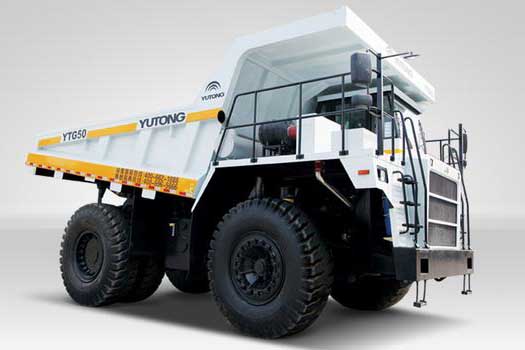
Logistics: container vs RORO, ports, transit, documentation
Containerised vs RORO is a size decision. Wheel loaders, drill rigs and smaller support equipment ship containerised from Chinese ports. Rigid haul trucks are too tall, heavy and long for standard containers, so they move as RORO (roll-on/roll-off) vessels or as flat-rack breakbulk - the truck drives on under its own power at loadout and drives off at discharge, which avoids the crane and lashing complexity of a knocked-down unit. The choice between RORO and breakbulk is set by vessel availability and the unit's dimensions at the time of shipment.
Port choice follows the mine. Western Australian Pilbara operations discharge through Fremantle or, depending on the site, nearer north-west ports; the final leg is then a long road move across the outback to the pit. Transit from Chinese ports to an Australian west-coast port is roughly 18 to 30 days depending on the service, after which the overland leg to a remote Pilbara site adds days of its own. We quote FOB, CIF Australian port or DAP site so the landed-cost comparison is explicit.
| Equipment | Shipping mode | Typical transit (planning figure) |
|---|---|---|
| Wheel loader / drill rig | Containerised | About 18-25 days to west-coast port |
| Rigid haul truck (70-100 t) | RORO or flat-rack breakbulk | About 25-30 days to discharge port |
| Port to Pilbara mine site | Road / heavy haul | Adds days depending on site |
| Documentation | Commercial invoice, packing list, bill of lading, export declaration, certificate of origin | For Australian customs clearance by importer |
Parts and dealer network. A remote Australian fleet cannot run on just-in-time delivery. We ship a starter kit of fast-moving wear parts with the first order, air-freight critical components while sea-freight consumables follow, and as the fleet builds work toward a local dealer or service point - the network options are on the dealer network page and the consumables planning on the spare parts page. For long-haul Pilbara sites the recommendation is a planned parts buffer sized to the overland distance, not a single central warehouse.
Frequently asked questions
Which mining trucks do you supply to Australian mines?
The rigid class runs 70 t to 100 t rated payload - the YTG100 and the diesel YTK105D/130D/140D - plus the electric YTK105E at 70 t and the battery-swap YTK136E at 90 t for 24/7 fleets. Wheel loaders for stockpile duty and rotary blasthole drill rigs ship alongside.
Do battery-electric mining trucks suit Pilbara operations?
They suit a site that can plan for them. The YTK136E uses battery-swap so a 90 t truck never waits on a slow charge through a 24/7 shift, and regenerative braking on long ramps returns energy to the pack. The YTK105E at 70 t with a 42 m3 body suits medium hauls. The decision depends on bench width, haul cycle and swap-station staging.
How do you ship equipment from China to Australia?
Wheel loaders, drills and smaller units go containerised. Rigid haul trucks ship as RORO or flat-rack breakbulk. A common route is Chinese ports to Fremantle for Western Australian operations; transit is roughly 18 to 30 days. We provide the full export document set for Australian customs clearance.
What safety and compliance should a buyer verify?
Australian mine sites have strict site-access and safety-management expectations: approved plant tags, a safety management plan, site induction for operators and fit-for-purpose ROPS/FOPS cabs. We supply the machine documentation; the site-specific induction and plant acceptance process is run by the mine operator. We describe the process and do not issue certification numbers.
How is parts and dealer support handled in Australia?
We ship a starter kit of fast-moving wear parts with the first order, air-freight critical components while sea-freight consumables follow, and work toward a local dealer or service point as the fleet builds. For long-haul Pilbara sites we recommend a planned parts buffer rather than just-in-time delivery.
Send us your bench plan and daily tonnage
Tell us the mine location, ore type and density, bench width, one-way haul distance, ramp grade and daily tonnes to move, and our mining engineering team will size the machine across the Yutong mining dump truck range - rigid diesel, battery-swap electric or range-extended - matched to a wheel loader and drill, and quote FOB, CIF Australian port or DAP site in US dollars. For the same truck class in high-altitude copper duty see the Chile mining equipment page and the regional comparison on the Latin America page.