










The project at a glance
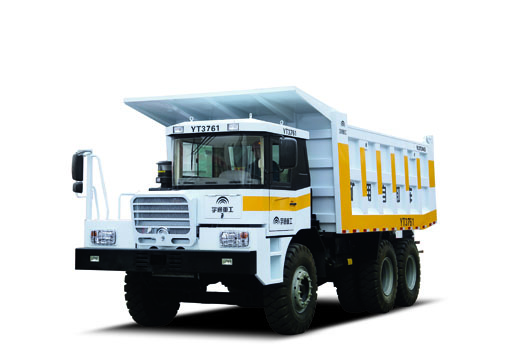
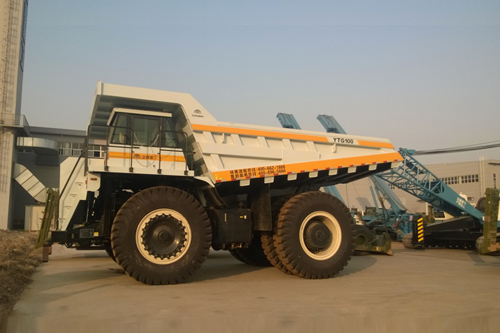
The customer is an open-pit iron ore operation in the Pilbara region of Western Australia. The mine was running a mixed fleet of 90 to 110 t rigid trucks from two legacy brands. As the units aged, availability slipped and the mine wanted a staged fleet renewal on the deeper, wider benches. The tender asked for a 100 t-class truck that matched the existing 17 m3 electric rope shovel, held cycle time on an 8 percent pit ramp, and could be supported with parts shipped from China. The chosen model was the YTG100 rigid mining truck.
| Item | Value |
|---|---|
| Location | Pilbara, Western Australia, open-pit iron ore |
| Ore density | ~2.8 t/m3 (dense, abrasive hematite) |
| Loading tool | 17 m3 electric rope shovel, 4-5 passes per truck |
| One-way haul | ~3.2 m shovel to crusher run of mine pad |
| Ramp grade | 8 percent sustained, worst 300 m section |
| Bench width | ~60-70 m (deep-pit wide benches) |
| Supplied units | YTG100 100 t rigid trucks |
| Operation | Two 12-hour shifts per day |
The challenge: wide benches, dense ore and a hard ramp
Shovel match. On a wide iron ore bench the loading tool sets the truck cycle. The existing rope shovel took 4 to 5 passes to fill a 100 t body, which is the sweet spot: the shovel never waits and the truck never runs under-loaded. Oversizing to a 150 t truck would have stretched the shovel to 7 to 8 passes and added minutes to every load.
Dense, abrasive ore. Hematite at 2.8 t/m3 loads the body faster by volume than copper ore. If the body is over-sized for the density, the truck reaches rated payload on volume before it reaches the bench, which over-fills the tyres and the frame. The YTG100 body was sized so the truck hits rated payload on the 2.8 t/m3 material without heaping over the side.
The 8 percent ramp. The climb out of the pit runs at 8 percent sustained, with a worst 300 m section near the crest. A truck chosen on flat-road fuel numbers would have bogged down on that section and ridden the service brakes on the way in. The spec had to hold target speed at full GVW on the ramp and lean on the retarder for the descent.
The solution: YTG100 matched to the shovel and the ramp
We sized the YTG100 around the rope shovel bucket and the worst 300 m of ramp. The rigid frame carries enough power-to-weight to climb the 8 percent grade at full GVW, and the retarder controls descent speed so the service brakes stay cool on the run into the pit. The dump body was lined for abrasive hematite, and the tyre spec was matched to the haul-road rolling resistance the mine measured on its grade profile.
Because the truck only works productively when the bench ahead of it is drilled and blasted clean, the mine also runs a rotary blasthole drilling rig on the same bench plan. The YTR120C class puts 170 mm blast holes in the hematite to a pattern that gives the shovel a clean dig face and the truck a consistent fill. Fragmentation from that drill pattern is what keeps the truck body filling in 4 to 5 passes instead of leaving oversize boulders to slow the shovel.
On the support side, a starter fast-moving-parts kit shipped with the first order: filters, brake linings, suspension bushes and hydraulic seals sized to the two-shift pattern. A commissioning engineer spent ten days on site for first-shift check-out, pre-start walkaround training and a basic fault-finding handover. Sea freight from Shanghai to Port Hedland ran the planned 18 to 25 days; the kit meant the mine was not waiting on that freight for day-to-day consumables.
The results: cycle time, tyre cost and uptime after twelve months
After twelve months of two-shift operation, the mine reported that the YTG100 fleet held cycle time at the shovel match target: the rope shovel kept loading continuously, and the trucks climbed the 8 percent ramp without losing the planned speed. Availability on the new units held above the mine's target, with no major unscheduled stoppage traced to a manufacturing defect in the first year.
Tyre cost was the line the mine watched most closely, because dense hematite and graded haul roads are hard on rubber. With the body sized to the ore density and the load centred, reported tyre life came in line with the outgoing 100 t class once the haul roads were graded to the same standard. The mine's maintenance lead noted that the retarder did most of the braking on the descent, so brake lining intervals were longer than the outgoing fleet that rode the service brakes into the pit.
Why the mine chose Yutong
The decision was not made on sticker price. Three points moved it. First, the 100 t class matched the existing rope shovel, so the mine did not have to change its loading fleet to fit the truck. Second, the parts kit and commissioning plan removed the risk that a new supplier would leave the mine waiting on shipping for a consumable. Third, the truck held on the 8 percent ramp, which is where the older mixed fleet was losing cycle time. The mine now has a repeatable template when it renews the next bench's trucks: same class, same parts kit, same commissioning plan.
For buyers running iron ore or similar dense-rock pits in Australia, Brazil or West Africa, the same approach applies: start from the shovel bucket and the worst 300 m of ramp, size the body to the ore density, and plan the parts kit before the ship sails. The full range of rigid units is on the mining dump trucks page, and the drill side of the bench plan is on the blasthole drilling rigs page. More export detail is on the mining machinery category page.
Frequently asked questions
Why size the truck to the shovel bucket?
The 17 m3 rope shovel takes 4 to 5 passes to fill a 100 t body. That keeps the shovel working continuously. A 150 t truck would need 7 to 8 passes and slow the shovel cycle on every load.
What ramp grade was the truck built around?
The pit ramp runs at 8 percent sustained over 1.8 km, with a worst 300 m section near the crest. The YTG100 was specified to hold target speed at full GVW on that section and use the retarder on the descent.
How did tyre cost compare?
Iron ore at 2.8 t/m3 is dense. The body was sized so the truck reaches rated payload without overfilling, keeping the load centred. Reported tyre life matched the outgoing 100 t class once haul roads were graded to the same standard.
How was parts support handled?
A fast-moving-parts kit shipped with the first order. Sea freight to Port Hedland runs 18 to 25 days; critical parts go by air. A commissioning engineer spent ten days on site for first-shift check-out and operator training.
Run the same numbers for your pit
Send us your daily tonnage, one-way haul distance, worst ramp grade, bench width, ore density and local diesel price, and our mining engineering team will match you to the right truck class across the Yutong range. We export to over 60 countries and build to FOB or CIF terms with the full customs document set. Request the YTG100 spec sheet on the downloads page.