










Why Chile specs equipment differently
Chile produces about a quarter of the world's copper mine output in recent years (USGS Mineral Commodity Summaries), and the ore comes out of deep open pits in the Atacama region and the high Andes. The pit profile drives the equipment spec: long ramps at 8-10 percent grade, high altitude that derates naturally aspirated diesels, dust that finds every unsealed filter housing, and daylight temperatures that swing between hot desert afternoons and near-freezing nights. A machine that survives that cycle is not the same machine you would spec for a temperate lowland pit.
The Chilean market is also where the electric mining truck question is being answered first, because cheap solar-backed daytime power and a national lithium strategy have pushed grid-connected pits toward electrification. Below we walk through the truck class that fits the pit, the altitude engineering, and the export and payment mechanics. The full Latin American picture is on the Latin America mining equipment page, and a worked example of the 40-70 t class through a copper operation is on the Chile copper mine case study.
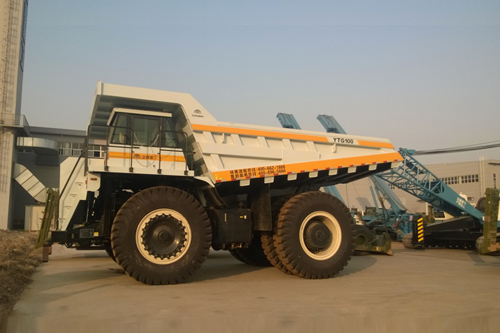
The Chilean duty cycle: deep pits, long ramps, high altitude
Altitude derating is real. Above roughly 1,500 m, air density drops and a naturally aspirated diesel loses power - the common rule of thumb is a few percent per 300 m of additional altitude, which is why Andean mines spec turbocharged engines matched to site altitude and let the truck controller manage cooling on long climbs. An electric truck removes this variable entirely, because motor output does not depend on air density; that is one of the quiet reasons the YTK105E and YTK90E get asked about first for high-altitude pits.
Long ramps put brakes to work. A loaded descent at 8-10 percent grade on a multi-kilometre ramp is the hardest thermal cycle on the machine. Electric trucks run regenerative braking on that leg and return energy to the pack; diesel trucks burn it on brake grids. For diesel fleets still in service, brake cooling and retarder configuration should be on the spec sheet, not assumed.
Copper density sets the body. Copper ore at 2.6-2.8 t/m3 loads heavier per bucket than coal, so body volume is matched to the truck's rated payload - the 42 m³ U-shaped body on the YTK120E is an example of a payload-matched box for dense rock, sized so the loader reaches rated load in the planned pass count.
| Pit profile | Truck class | Powertrain | Typical fit |
|---|---|---|---|
| Small / early-stage pit | 40-50 t rigid (YT3621, YT3761) | Diesel | Narrow benches, shorter ramps |
| Medium pit, grid connected | 60-70 t (YTK90E, YTK105E) | Electric | Short haul loops, solar-backed charging |
| Large open pit | 70-90 t (YTK120E, YTK136E) | Electric / swap | Wide benches, 24/7 production fleets |
| Deep pit, long ramps | 90-100 t (YTK136RE, YTK140HE) | Range-extended / hybrid | Long one-way hauls, partial grid |
Grid power and the green copper agenda
Chilean mining power prices have been pushed down by the Atacama solar build-out, and buyers of copper for the EV and grid supply chain increasingly ask for green copper - copper produced with a documented lower carbon footprint. The haul loop is the most visible diesel line item on an open pit, which is why electrification of the truck fleet is moving up mine agendas, not just ESG reports. Where the pit has a grid connection, an electric truck changes the economics: energy per tonne-kilometre drops, maintenance drops with no engine oil circuit, and the emissions profile of the haul loop falls without touching the bench plan.
The lithium side matters too. Chile's salars and the national lithium strategy point to expanded brine and hard-rock production, with the same pit-logistics questions as copper: dust, altitude, water scarcity and long logistics chains to the port. The new energy mining truck page covers the full 60-100 t electric line-up - fast-charge, battery-swap and range-extended - and the fleet telematics page covers how battery state, energy per cycle and charger availability are managed across an electric fleet.
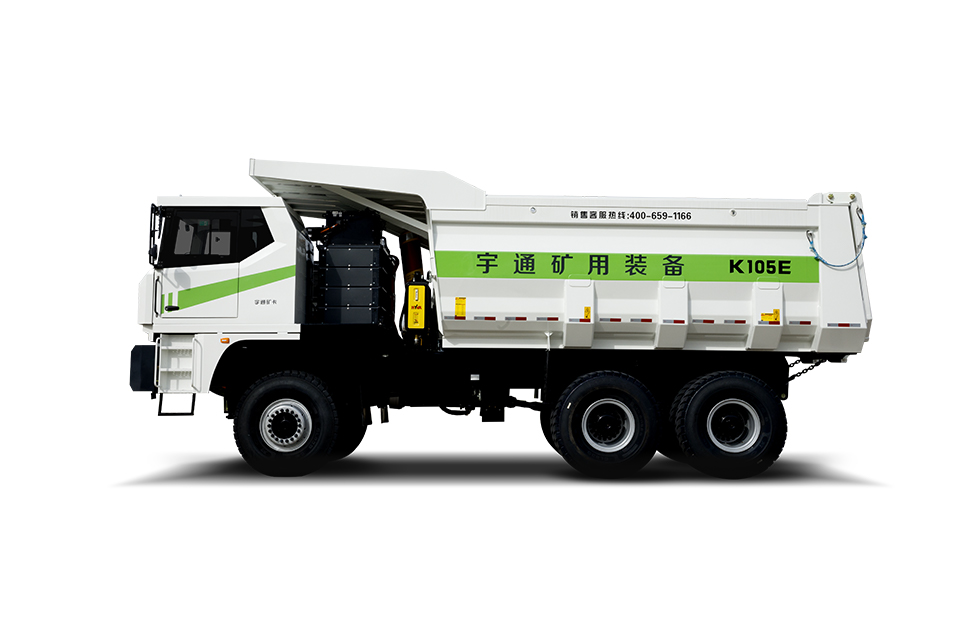
Desert and altitude engineering
Dust. Atacama sites get wind-blown dust that wears seals, clogs filters and shortens hydraulic life. The practical package is heavy-duty air filtration, sealed cab pressurisation and a dust-service schedule written into the maintenance plan rather than discovered in the field.
Thermal management. Daytime heat plus altitude-thin air makes cooling a design problem, not an accessory. Radiator and charge-air cooling are sized for the site; on electric models the battery thermal management keeps the pack in its operating window through hot afternoons and cold Andean nights, which is why the LFP chemistry was selected for mine duty in the first place.
Operator environment. Long shift cycles at altitude are hard on operators. The FOPS/ROPS cab with air conditioning and sealed dust protection is standard on the mining line; operator training on high-altitude driving and braking is covered on the operator training page.
Parts logistics. The same desert that taxes the machines taxes the supply chain. We ship fast-moving wear parts in a starter kit with the first order and can air-freight critical components to Santiago or Antofagasta while sea freight takes its 30-40 days; holding a 90-day starter kit on site is the standard recommendation for the first year, detailed on the spare parts page.
Logistics, customs and payment: the practical part
Rigid mining trucks ship from Shanghai or Qingdao, either knocked-down or on their own axle line; drill rigs ship containerised. The discharge port choice is driven by where the mine is: Valparaíso serves central Chile, while Antofagasta and Iquique put the equipment closest to the northern mining region. The truck then travels the final leg by road or rail to site, which in Chile means some of the best-developed mine access roads in South America - but also long distances and high-altitude passes.
| Route | Sea freight | Typical incoterms |
|---|---|---|
| Shanghai / Qingdao to Valparaíso | ~30-40 days | CIF Valparaíso |
| Shanghai / Qingdao to Antofagasta | ~30-40 days | CIF Antofagasta |
| Shanghai / Qingdao to Iquique | ~30-40 days | CIF Iquique |
| Port to northern mine site | + road / rail leg | DAP site option |
Payment is standard T/T - 30 percent deposit with the order, 70 percent before shipment - with an irrevocable letter of credit at sight available for established mining customers and larger fleets. Quotes are in US dollars on FOB, CIF or DAP terms so you can compare landed cost on an equal basis. Request the actual spec sheet and price on the downloads page or through the contact form.
Frequently asked questions
Which mining trucks do you supply to Chile?
The rigid range runs 40 t to 100 t - YT3621, YT3761, YTG50, YTG100 and the diesel YTK105D, YTK130D and YTK140D class - plus the electric YTK90E, YTK105E, YTK120E and YTK136E for grid-connected pits. Blasthole drill rigs and support equipment ship alongside the trucks.
Do trucks need special configuration for high-altitude mines?
Yes. Above roughly 2,500 m, air density drops and a naturally aspirated diesel loses power; the standard practice is turbocharger matching and derating for altitude. Electric trucks are not affected the same way because motor output does not depend on air density. Confirm the site altitude and ramp profile and we spec the drivetrain, cooling and cab package for it.
Can you ship mining equipment to Chile?
Yes. Sea freight from Shanghai or Qingdao to Valparaíso, Antofagasta or Iquique runs roughly 30 to 40 days. We quote FOB, CIF or DAP and ship the full export document set for local clearance by the importer.
What payment terms do you offer?
Standard is 30 percent T/T deposit with the order and 70 percent before shipment. For established mining customers and larger fleets we can discuss an irrevocable letter of credit at sight from an acceptable bank.
Do electric mining trucks make sense in Chile?
Where the pit has grid access and power prices are competitive - and Atacama solar pushes daytime power down - the electric route lowers energy cost per tonne-kilometre and cuts Scope 1 emissions on the haul loop. The YTK90E through YTK136E cover 60 t to 90 t; the range-extended YTK136RE suits pits without a grid.
Send us your pit profile and daily tonnage
Tell us the mine location, altitude, daily tonnes to move, ore density, bench width, one-way haul distance and ramp grade, and our mining engineering team will size the truck across the Yutong mining dump truck range - diesel, electric, swap or range-extended - and quote FOB, CIF or DAP in US dollars. For the full regional context see the Latin America page; for a similar iron ore operation in Australia, see the Australia mining equipment page.