











26m 3-Section Bridge Inspection Vehicle
Sinotruk Bawang 4-axle 26m bridge inspection vehicle with 3-section telescopic platform, model ZYM5322JQJ40D626HZ.
View Details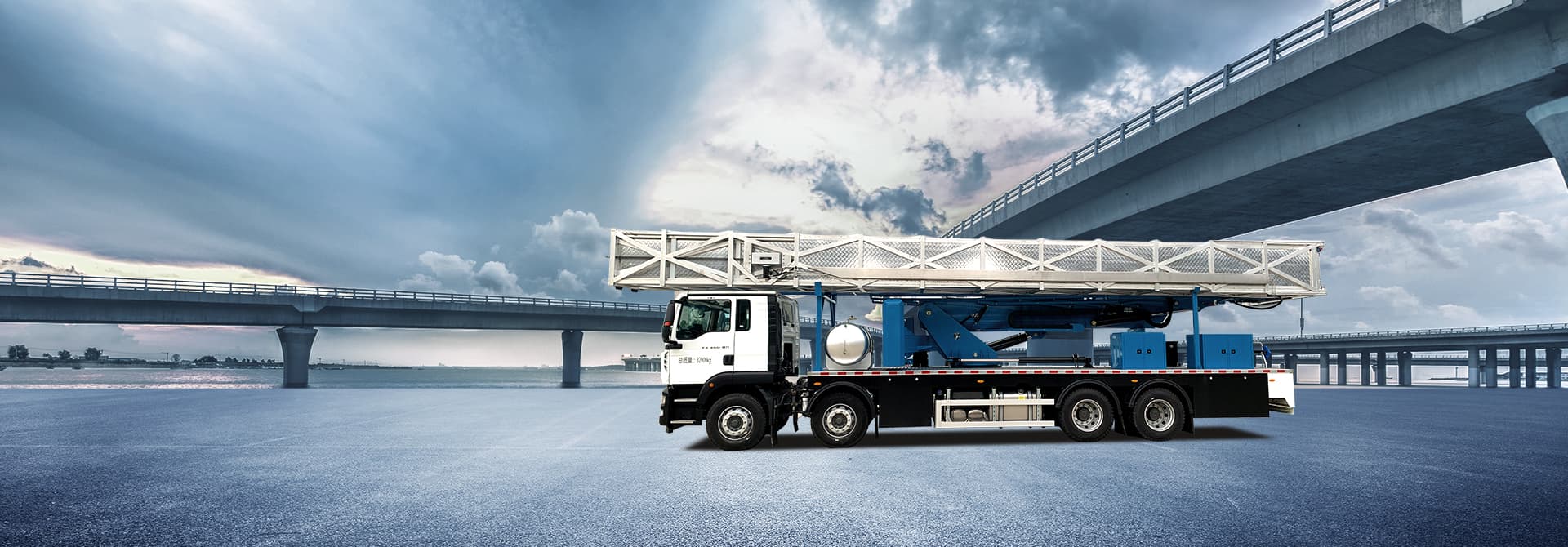
The ZYM5323JQJ40D624HZ is a 4-axle bridge inspection vehicle built on the Sinotruk Bawang heavy-duty chassis, purpose-built for under-deck access on highway bridges, urban overpasses, and railway crossings. Its 2-section aluminum alloy platform extends 24 meters horizontally beneath the deck, giving inspectors a stable walkway to examine girders, bearings, expansion joints, and pier substructures without closing the full carriageway.
The ZYM5323JQJ40D624HZ Sinotruk Bawang 4-axle bridge inspection vehicle is engineered for structural inspection, routine maintenance, and light repair work on a wide range of bridge types. Mounted on a 4-axle Sinotruk Bawang chassis with air suspension, the vehicle combines road-going mobility with a compact under-bridge access system that deploys within minutes at each job site.
At the heart of the machine is a 2-section working platform fabricated from 6-series high-strength aviation aluminum alloy. The two sections overlap by 3.2 meters and extend to a maximum inspection reach of 24 meters. The aluminum construction reduces platform weight by approximately 30 percent compared to an equivalent steel platform, which in turn lowers axle load and leaves more headroom on the chassis for payload and fuel capacity.
The main boom features a hexagonal cross-section chosen for its bending and torsion resistance under combined bending and lateral loads. When fully extended, the boom achieves a maximum side-crossing width of 5.2 meters and a maximum railing-crossing height of 6.4 meters, allowing the platform to pass over sidewalks, guardrails, and median barriers that would otherwise block access. The counterweight stays within the vehicle footprint during operation, so the machine never obstructs adjacent traffic lanes.
Outriggers use a two-stage telescopic design that operators can set to full or half extension depending on site conditions. In half-extended mode, the operating width narrows to just 2.85 meters, making the vehicle suitable for emergency lane closures, ramp work, and narrow urban bridges where a full outrigger footprint is not feasible. Real-time outrigger cameras mounted at two positions give the driver visual feedback during deployment, preventing contact with bridge railings or street furniture.
The self-propelled under-bridge drive uses a hydraulic transfer case rather than small hydraulic wheel motors. This configuration delivers a larger tire contact patch and greater adhesion, which the manufacturer identifies as the most stable and reliable self-walking method. Travel speed under the bridge is 15 meters per minute, controlled from the work platform by the inspector.
A dual braking system adds a second layer of safety: when the vehicle is stationary for work, both the transfer case brake and the chassis brake engage. Releasing the travel handle automatically disengages the chassis brake, eliminating creep caused by a misapplied differential lock or forgotten brake. An automatic pressure-compensation circuit links the underbody stabilizer cylinders to the vertical truss and platform cylinders, so deployment is synchronized without separate operator inputs.
Standard equipment includes a water tank for washing down the vehicle and crew after work, a diesel generator for on-site power, and an anemometer that triggers an alarm at Beaufort 6 wind speeds. The upper-body travel lock secures the working assembly during road transit, and three proximity switches on the second rotation provide layered position control rather than a single warning sensor.
Yutong delivers this vehicle as a factory-integrated system: chassis, hydraulic system, platform, controls, and safety interlocks are calibrated together and tested before shipment. Each unit passes an 8 percent cross-slope tipping test on the production line — well above the 3 percent industry minimum — before release to the customer.
| Chassis & Powertrain | ||
|---|---|---|
| Chassis model | / | ZZ1327N466GF1K (Sinotruk Bawang) |
| Engine model | / | MC07H.35P-61 |
| Rated power | kW / PS | 258 / 350 |
| Emission standard | / | China VI |
| Max driving speed | km/h | 110 |
| Dimensions & Weight | ||
| Wheelbase | mm | 1800 + 4575 + 1400 |
| Overall (L × W × H) | mm | 13720 × 2550 × 4000 |
| Total mass | kg | 32000 |
| Working Range | ||
| Under-bridge horizontal working range | m | 0 – 26 |
| Max platform reach (2-section) | m | 24 |
| Max under-bridge depth | m | 8.5 |
| Max side-crossing width | m | 5.2 |
| Max railing-crossing height | m | 6.4 |
| Platform Capacity & Motion | ||
| Platform uniform load | kg | 800 (600 with main boom fully extended) |
| Platform front-end load | kg | 400 (300 with main boom fully extended) |
| First rotation range | ° | 0 – 90 |
| Second rotation range | ° | 0 – 180 |
| Self-Propelled System | ||
| Drive type | / | Hydraulic transfer case drive |
| Travel speed | m/min | 15.00 |
The working platform uses two overlapping sections (3.2 m overlap) in 6-series high-strength aviation aluminum alloy. The aluminum construction cuts platform weight by 30 percent versus steel, freeing chassis capacity and improving fuel economy during road transit. The hexagonal main boom delivers high bending and torsional stiffness for stable positioning even when the platform is fully extended.
With a maximum side-crossing width of 5.2 meters and railing-crossing height of 6.4 meters, the vehicle can pass over typical sidewalks, concrete barriers, and guardrails on both sides of the bridge. The counterweight stays within the vehicle footprint at all times, so adjacent lanes remain open to traffic.
The two-stage telescopic outriggers support both full and half extension. In half mode, the operating footprint narrows to 2.85 meters — narrow enough for emergency lane closures, urban ramps, and bridges with limited shoulder width. Cameras at two outrigger positions feed live video to the cab, preventing contact with bridge railings.
Under-bridge travel uses a transfer-case-driven system rather than small hydraulic wheel motors. The full tire contact patch provides better traction and stability on uneven bridge decks. Travel speed is 15 m/min, controllable from the platform.
Standard safety equipment includes an anemometer (Beaufort 6 alarm), three proximity switches on the second rotation, dual braking (transfer case + chassis), automatic pressure compensation for synchronized cylinder deployment, and an upper-body travel lock for road transit. Every unit passes an 8 percent cross-slope tipping test before delivery.
The Sinotruk Bawang chassis uses air suspension, which deflates during work to lower the center of gravity and improve stability. Compared to leaf-spring chassis, the air-suspension configuration saves roughly 1 ton of curb weight, allowing the 4-axle unit to reach the 32-ton total mass limit while maintaining good ride quality on the road.
Routine structural inspection of highway overpasses, box girder bridges, and T-beam bridges where the underside needs visual, ultrasonic, or photographic examination.
Access to bridge abutments, bearings, and expansion joints on railway overcrossings without blocking rail traffic below.
Narrow outrigger footprint suits urban arterial bridges, ramps, and overpasses where lane closures are limited by traffic management constraints.
Platform capacity of 800 kg supports inspectors, NDT equipment, hand tools, and small repair materials for sealing joints, cleaning drains, and replacing bearings.
The ZYM5323JQJ40D624HZ provides a maximum inspection reach of 24 meters with its 2-section aluminum platform, and a maximum under-bridge working depth of 8.5 meters. The horizontal working range under the bridge deck spans 0 to 26 meters, covering most highway overpasses and urban bridges.
The vehicle is built on a Sinotruk Bawang 4-axle chassis (model ZZ1327N466GF1K) equipped with a MC07H.35P-61 diesel engine rated at 258 kW (350 PS). It meets China VI emission standards and reaches a maximum road speed of 110 km/h.
The working platform supports a uniform distributed load of 800 kg, reduced to 600 kg when the main boom is fully extended. The front-end load capacity is 400 kg, reduced to 300 kg at full boom extension. The platform uses 6-series high-strength aviation aluminum alloy, saving 30% weight compared to steel.
The two-stage telescopic outriggers can be partially extended to narrow the operating width to just 2.85 meters. This allows work in emergency lanes, ramps, and other restricted-traffic situations where fully extended outriggers would block the entire road.
Standard safety equipment includes an anemometer (alarm at Beaufort 6+), real-time outrigger monitoring cameras, three proximity switches on the second rotation, upper-body travel lock, dual braking system, and automatic pressure compensation. The vehicle passes an 8% cross-slope tipping test before delivery, well above the 3% industry standard.
The 24m model uses a simpler 2-section platform with 3.2m overlap and a 5.2m side-crossing width, making it more compact and cost-effective for standard highway bridges. The 26m model adds a third telescoping section with chain drive, reaches 26m, narrows down to 10m minimum reach for tight spaces, and uses a wider 1.32m platform. Choose the 24m for routine inspection of standard spans; choose the 26m for wider bridges and confined-space access.
Yes. Yutong Heavy Industries exports bridge inspection vehicles and construction machinery to over 60 countries across Asia, Africa, the Middle East, South America, and Eastern Europe. We provide factory-direct sales, spare parts support, and operator training with each delivered unit. Contact our export team for pricing, lead time, and regional availability.
Sinotruk Bawang 4-axle 26m bridge inspection vehicle with 3-section telescopic platform, model ZYM5322JQJ40D626HZ.
View Details
High-efficiency 4-axle 26m truss-type bridge inspection vehicle, model ZYM5322JQJ12D626HZ.
View Details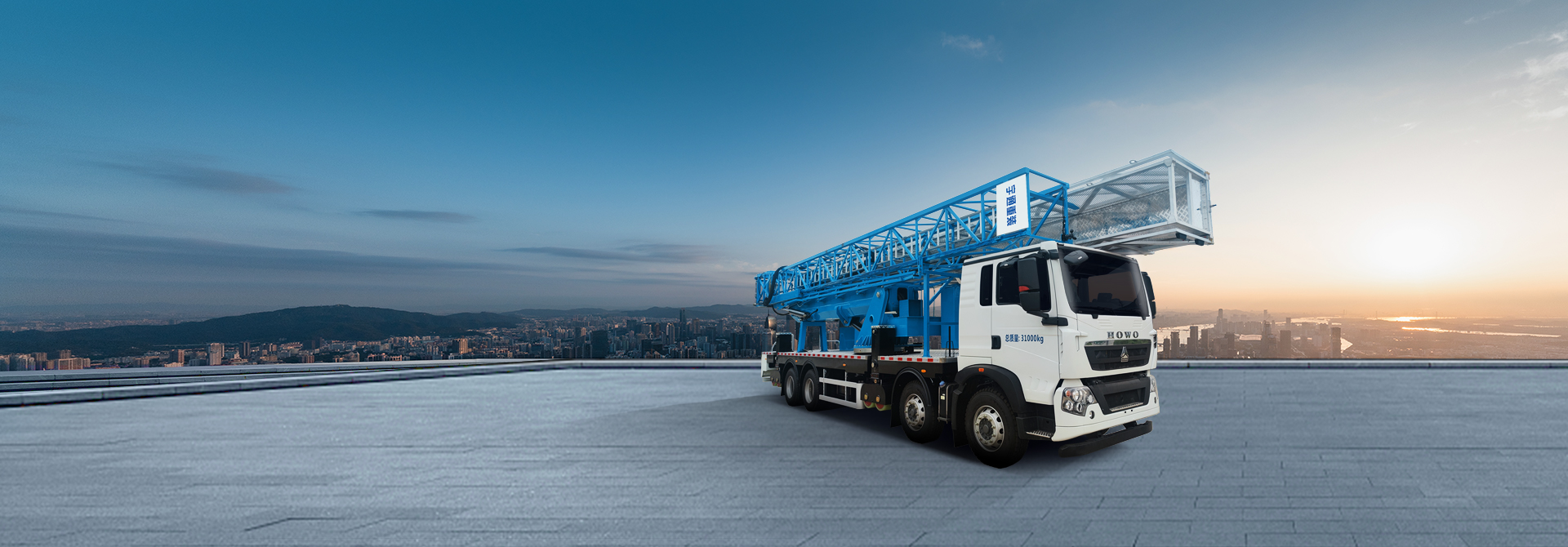
Upgraded 4-axle 26m truss-type bridge inspection vehicle, model ZYM5310JQJ40D622HZ.
View Details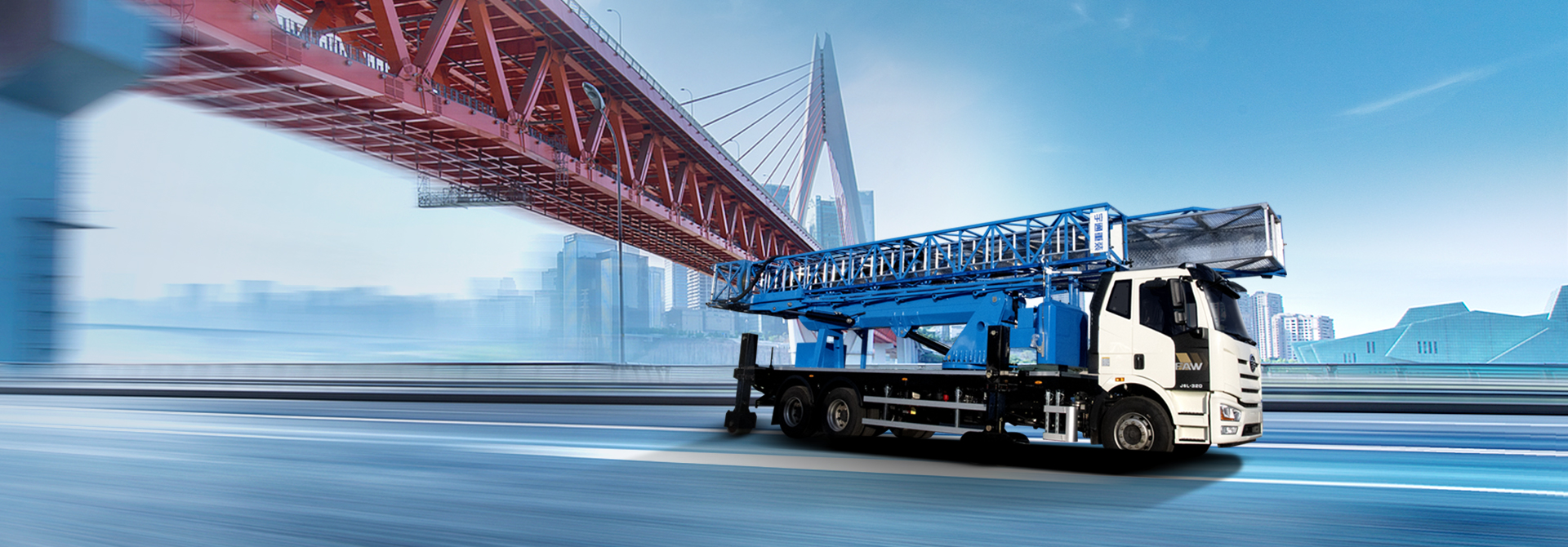
Honor edition 3-axle 23m truss-type bridge inspection vehicle, model ZYM5253JQJ12D623H.
View Details