










Why the Russian market specs equipment differently
Russia's mine output is concentrated in Siberia and the Far East - coal, iron ore, copper, nickel, gold and diamonds pulled out of open pits and underground operations where winter temperatures routinely fall to -40 deg C and below, and where the nearest port or service centre can be thousands of kilometres away. A machine that is well-provisioned for a temperate mine will not start, will not build oil pressure, and will crack a hydraulic line on the first cold morning. That operating reality, more than the headline tonnage, is what drives the spec sheet here.
In recent years several Western equipment brands pulled back from direct supply to the Russian market, and Chinese manufacturers have become the main channel for new rigid haul trucks, drills and construction machinery. That shift has raised the practical questions Russian buyers now ask first: does the truck start in January, how do we move it 5,000 km inland, what is the certification pack, and how do we pay? Below we walk through the cold-weather engineering, the truck class that fits the pit, the rail-and-customs route, and the settlement options. The full mining line is on the mining machinery category page, and the truck comparison logic is on the mining dump truck selection guide.
Cold-weather engineering: designing for -40 deg C and below
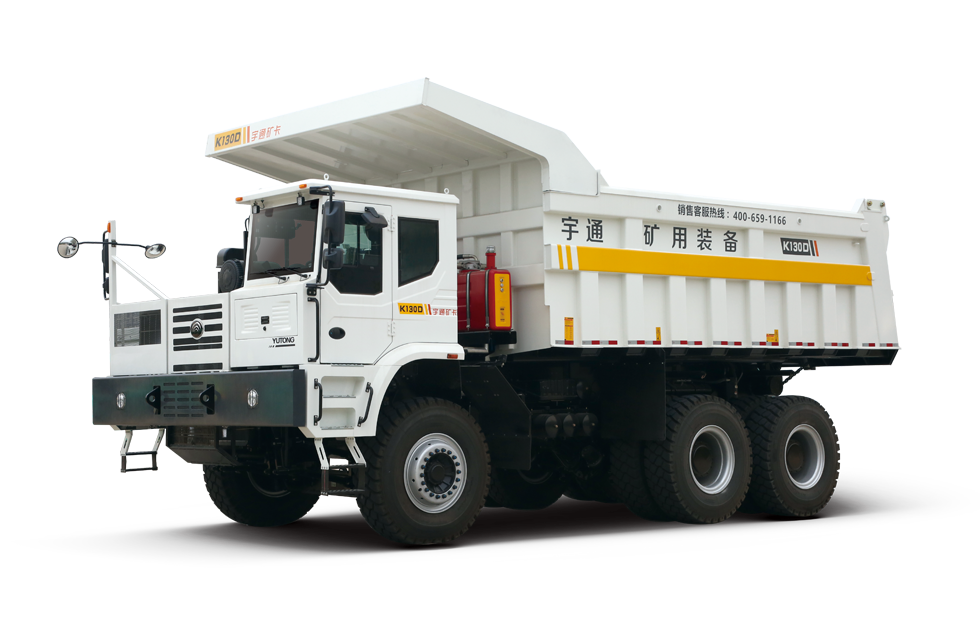
Cold start is the first design problem. At -40 deg C a standard diesel will not turn over fast enough, and untreated thick oil will score bearings before they are lubricated. The cold package therefore starts with an engine block heater and a fuel/water pre-heater, so the engine coolant and sump are brought up to starting temperature before cranking; a heated battery box keeps the lead-acid batteries in their power window, because available cranking current roughly halves as temperature falls. The YTK130D 90-100 t truck is offered with this package as a build option for Siberian duty.
Hydraulics and seals change with temperature. Hydraulic oil that is thin enough at 40 deg C is gel-like at -40 deg C, slows the hoist cycle and strains the pump. Winter-grade low-viscosity hydraulic fluid is specified, and hoses and seals are selected from low-temperature compounds that do not go brittle and crack when flexed in the morning. Cab heating and insulation keep the operator compartment workable through a 12-hour shift, which matters because operator fatigue in extreme cold is a real safety issue on a haul road.
Parts reach is the hidden spec. A remote Yakutia or Krasnoyarsk mine cannot wait six weeks for a sea container. Fast-moving wear items - filters, hoses, brake components, lamp modules - are air-freighted to the site as a 90-day starter kit with the first order, and critical components can be rushed by air freight while sea-freight consumables follow. This is worked through on the spare parts page and the field support side on the service page.
| Truck class | Cold-weather configuration | Best-fit Russian mine type |
|---|---|---|
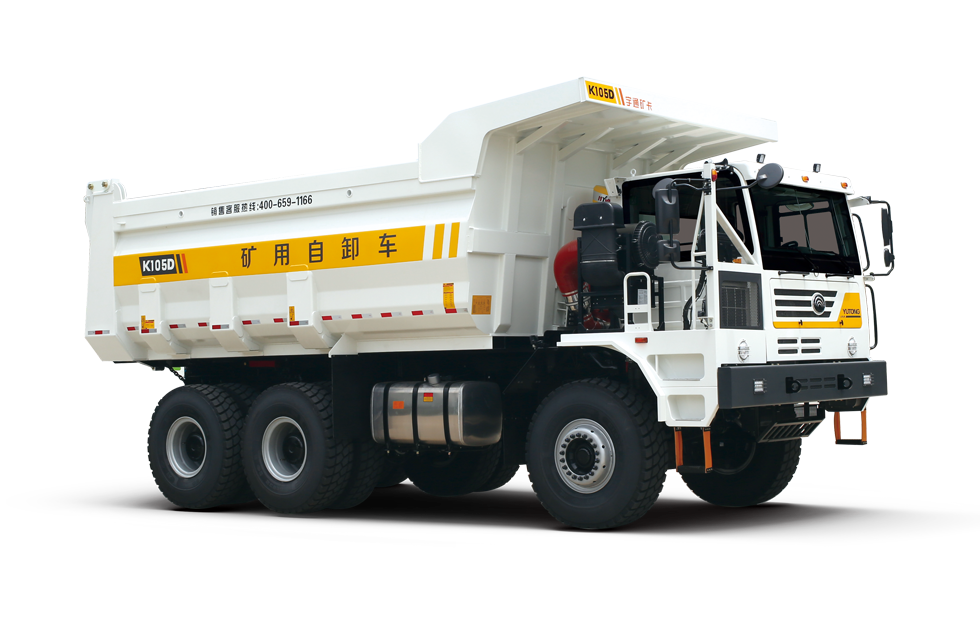
| 70 t diesel (YTK105D) | -40 deg C package: block heater, heated batteries, winter hydraulic oil and hoses | Small-to-medium coal or gold pits, shorter hauls, road-accessible sites |
| 90-100 t diesel (YTK130D) | -40 deg C package plus insulated cab and brake-cooling matched to long ramps | Large Siberian coal, iron ore and copper open pits, railhead-served sites |
| 100 t diesel (YTK140D) | Full cold package for high-tonnage winter fleets | High-throughput surface mines in Krasnoyarsk and Kuzbass-type basins |
| 90 t range-extended (YTK136RE) | 117 kWh buffer plus genset; cold package for the electric drivetrain | Pits without a charging grid where a pure-electric pack cannot be sustained through winter |
Drills and construction machinery for hard rock and infrastructure
Siberian hard rock is abrasive, and the drill that opens the bench sets the fragmentation that the truck fleet lives with. The rotary blasthole drilling rigs are offered for the large-diameter blast holes in hard coal and metal mines, with the same winterisation logic - heated operator cabin, cold-start package, winter lubricants. On the infrastructure side, road and rail construction projects across the Far East and the Arctic rely on wheel loaders and earthmoving equipment for stockpiling, rehandling and site prep; the wheel loader line is the natural partner to a truck fleet for yard and stockpile duty.
The range-extended YTK136RE deserves a specific note for Russia. Many remote Russian pits have no grid connection and no fast-charging infrastructure, so a pure-electric truck that depends on site power cannot operate; the range-extender genset keeps the 117 kWh buffer charged through the shift, giving the operator the efficiency of an electric drivetrain without the charging-station dependency. This is explained alongside the broader electric line on the new energy mining truck page.
Logistics, customs and payment: the practical part
Two sea gateways. Equipment ships from Chinese ports and enters Russia through two practical gateways: Vladivostok on the Pacific serves the Far East and eastern Siberia, while St. Petersburg serves the European part and the Urals. From the gateway the unit moves inland on the 1520 mm broad-gauge rail network - the defining logistics fact for Russian mining, because rail gauge differs from the standard 1435 mm and equipment moving overland from China must either move on the broad-gauge network after a border transfer or come by sea. Rail is the sensible route for the long inland legs to Yakutia, Krasnoyarsk and Norilsk; heavy road haul is reserved for the final railhead-to-site kilometres.
EAC certification. Equipment placed on the Eurasian Economic Union market must generally meet the technical regulation of the Customs Union (TR CU) and carry EAC marking. The exact confirmation scheme depends on the machine category and engine emissions class; we work with the Russian importer and a local certification body to assemble the EAC document pack. We describe the framework here and do not issue or claim certificate numbers - those are issued by the notified body after testing.
| Segment | Mode | Typical planning figure |
|---|---|---|
| China port to Vladivostok | Sea freight | About 7-12 days |
| China port to St. Petersburg | Sea freight | About 35-45 days via European ports |
| Gateway to mine railhead | 1520 mm broad-gauge rail | Days to weeks depending on distance |
| Railhead to site | Road / heavy haul | Final kilometres; arranged locally |
Settlement. Quotes are issued in US dollars. Standard settlement is T/T - 30 percent deposit with the order, 70 percent before shipment - routed through correspondent banking channels. For established mining customers and larger fleets we can discuss an irrevocable letter of credit at sight from an acceptable bank; the specific routing is agreed case by case with the importer because cross-border payment channels for this market evolve. We do not name or commit to specific banks in general marketing material. Request the actual spec sheet and landed-cost quote on the contact form.
Frequently asked questions
Which mining trucks do you supply to Russia?
The rigid diesel range runs 40 t to 100 t rated payload - the YTK105D at 70 t, the YTK130D at 90-100 t and the YTK140D at 100 t - plus the range-extended YTK136RE for pits with no charging grid. Rotary blasthole drills and wheel loaders ship alongside, all offered in a cold-climate package rated for -40 deg C.
How do you configure a truck for -40 deg C winters?
The cold package covers an engine block heater and fuel/water pre-heater, heated batteries and battery box, a heated and insulated cab, winter-grade hydraulic oil, and winter hoses and seals rated for low temperature. We also recommend a 90-day starter kit of wear parts air-freighted to site, because remote mines cannot wait for a 40-day sea leg.
What certification is required to sell equipment in Russia?
Equipment placed on the EAEU market must generally meet the technical regulation of the Customs Union (TR CU) and carry EAC marking. The exact confirmation scheme depends on the machine category; we work with the importer and a local certification body to assemble the EAC document pack. We describe the framework and do not issue certificate numbers.
How is equipment transported to a Siberian or Far East mine?
Most units arrive by sea to Vladivostok or St. Petersburg, then move inland on the 1520 mm broad-gauge rail network to a railhead near the mine, followed by a short road leg. Rail is the practical route for the long inland legs; road is used only for the final kilometres. We quote CIF port and can arrange DAP site.
What payment terms apply for Russian buyers?
Quotes are issued in US dollars. Standard settlement is T/T - 30 percent deposit with the order, 70 percent before shipment - through correspondent banking channels. For established mining customers and larger fleets we can discuss an irrevocable letter of credit at sight from an acceptable bank. Routing is agreed case by case with the importer.
Send us your winter operating profile and mine location
Tell us the mine region, the lowest site temperature, daily tonnes to move, one-way haul distance, ramp grade and how the equipment reaches site, and our mining engineering team will size the truck across the Yutong mining dump truck range - diesel, range-extended or electric - in the -40 deg C cold package, and quote CIF Vladivostok or St. Petersburg in US dollars. For the same truck class into other hard-market regions see the Africa construction machinery page and the Middle East construction machinery page; for special-vehicle applications see Middle East special vehicles.