










Why a GCC fleet specs its special vehicles differently
The Gulf city operates in conditions a temperate-market machine is not designed for. Daytime pavement and air temperatures sit around 45-50 degree C through the summer; shamal winds carry fine sand that enters every unsealed housing; the coastal strip - Jeddah, Dammam, Abu Dhabi, Dubai - adds high humidity and salt air on top of the heat; and municipal water is scarce, so a sweeper that dumps clean water on the road is wasteful by default. At the same time, the road network itself is unusually elevated: cities were built fast on multi-lane interchanges, viaducts and sea-crossing bridges, which means the bridge stock is young, dense and needs planned under-deck inspection rather than occasional repair.
That combination changes the spec sheet for every vehicle in the special vehicle range. Below we walk through the three lines that dominate a Gulf municipal and infrastructure fleet - the bridge inspection vehicle on the viaduct network, the municipal sweeper fleet for sand and debris, and the concrete mixer truck feeding high-rise and infrastructure pours - then the heat-and-dust engineering that ties them together. The wider regional picture is on the Middle East construction machinery and Middle East sanitation equipment pages, and a worked municipal example is the UAE urban road sweeper case.
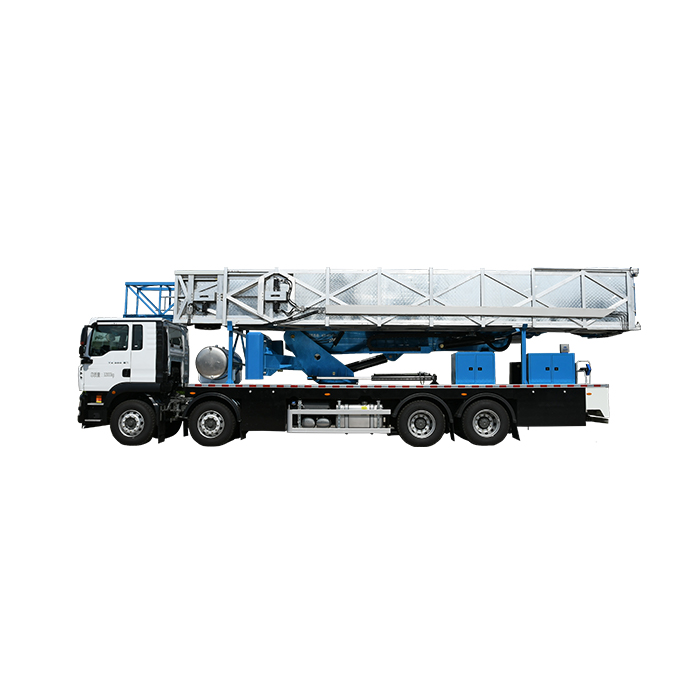
Bridge inspection on the elevated highway and viaduct network
Reach has to clear the kerb and the guardrail. A Gulf viaduct is a box-girder or T-beam structure carrying 3-6 lanes, with a pedestrian barrier and often a service kerb. The truss platform on the bridge inspection platform crosses the sidewalk by 2,100-2,500 mm and climbs over a 2,200 mm guardrail, then extends horizontally under the deck. The standard model gives an under-bridge horizontal working range of roughly 10,325-18,000 mm; the longer variant reaches about 11,800-21,000 mm, which is the class to match to your widest span rather than your average.
The platform is a working surface, not a basket. Rated platform load is 600 kg, dropping to 300 kg in the remote end position, and it swings 180 degree under the deck so two inspectors plus NDT equipment - crack measurement, ultrasonic testing, sampling tools - can work the underside of a girder in one setup. The truss self-propels along the span at up to about 16 m/min, so repositioning between pier lines is quick. Setup is 15-30 minutes: position the multi-axle truck, deploy outriggers, lower the platform.
Wind is the Gulf constraint. Open desert crossings and coastal bridges expose the lowered platform to sustained shamal gusts. Operation is limited below about 13.8 m/s with an on-board anemometer and automatic platform locking in high wind - worth confirming is fitted, because a vehicle that has to pack up every afternoon in wind loses half its productive window. The truss range covers the 20 m to 26 m class; an on-shore comparison of the under-deck access logic is on the bridge inspection case.
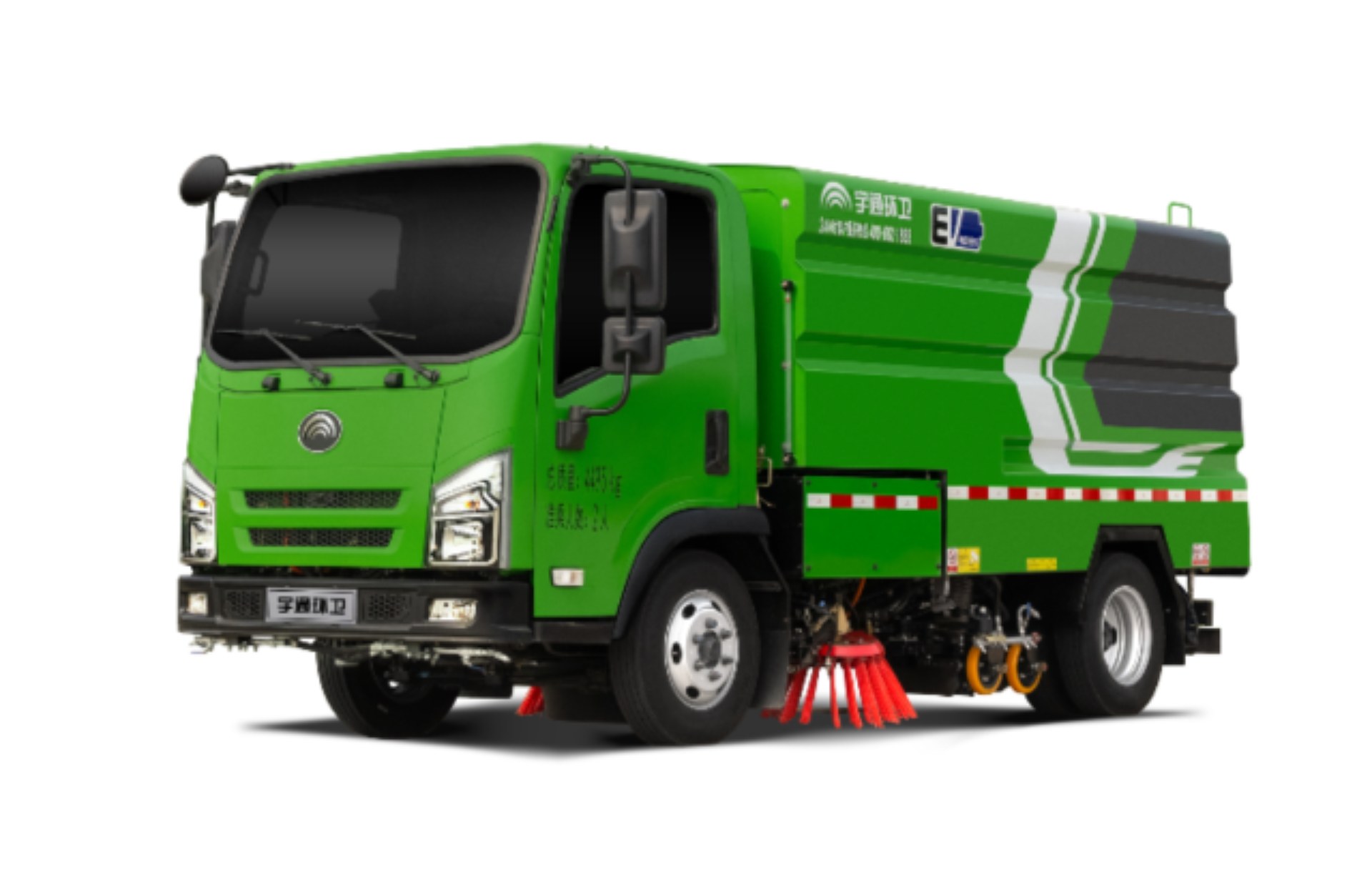
Municipal sweeping: sand and construction debris, not leaf litter
The debris load is mineral, not organic. A European or North American sweeper spec is dominated by autumn leaves and street sanding; a Gulf city sweeper deals with wind-blown quartz sand, tracked construction spoil at site gates, and fine dust that rises at the broom. That is why the wet-sweep units in the sweeper truck range - the TSLT0D6 class - are the default: a water spray at the broom dampens the dust at pickup so the truck does not drive a visible plume down a boulevard. A dry sweeper raises a dust cloud that defeats the purpose on a 40 degree C afternoon.
Size to the road width and the tip distance. A 5-6 t unit (YTZ5050TSL70E, YTZ5060TSL70F) has the turning radius for old-town alleys and campus roads under about 8 m. Move to an 18 t wet-sweep unit for 10-20 m secondary and arterial roads, where a large hopper cuts the number of runs back to the disposal point. For downtown plazas, hospital grounds and tunnels where noise and tailpipe emissions are restricted, the electric sweeper-scrubber line - compact 4 t units such as the YTZ5043TXSD0BEV up to 12 t and 18 t machines - sweeps, high-pressure washes and reclaims dirty water in one pass.
Water reclaim matters where water is priced. The reclaim circuit on a sweeper-scrubber recovers the dirty water after it has done the cleaning work, so the truck covers more pavement per tank and makes fewer refill stops. In a water-scarce GCC municipality that is not a convenience feature - it is the difference between a sustainable route plan and one that depends on tanker delivery. Electrical systems on the electric units are sealed and control panels are IP-rated, which is the baseline requirement for humidity and dust exposure.
Concrete delivery in the heat
High-rise and infrastructure pours in Gulf cities run on a steady mixer-truck loop from central batching plants to congestive downtown sites. The published range is the diesel concrete mixer truck line: the YTZ5255GJB33E at 8 m³ with feed rate at least 2.7 m³/min and discharge at least 0.65 m³/min, and the YTZ5255GJB34E at 9 m³, both on a 6×4 Sinotruk ZZ1257N3847C chassis. The heat changes the job, not the drum: concrete slump loss accelerates with ambient temperature, so transit time, drum revolution rate at discharge and the cooling of the hydraulic drive are planned around a 45-50 degree C day rather than assumed. For buyers sizing a fleet, the mixer truck selection guide walks through drum volume versus site distance and traffic constraints; a parallel northern-market comparison of the construction-machinery logic is the Russia construction machinery page.
Application x machine x Gulf environment
| Application | Machine class | GCC environment consideration |
|---|---|---|
| Elevated highway & viaduct inspection | Truss bridge inspection vehicle, 20-26 m class; platform reach ~10,300-21,000 mm; 600 kg platform load | Outrigger stability on hot asphalt; on-board anemometer & auto-locking for shamal wind below ~13.8 m/s; sealed hydraulic and electric controls against sand |
| Coastal bridge & sea-crossing maintenance | Long-reach truss variant (~11,800-21,000 mm horizontal); 180° under-deck swing | High humidity and salt air; corrosion-protected structure and fastener treatment; cab air filtration |
| Arterial road sweeping, sand & construction spoil | 18 t wet-sweep unit (TSLT0D6 class) | Water spray at broom to suppress dust plume in 45-50°C heat; large hopper cuts tip trips; chassis on Sinotruk/Dongfeng/Foton/JAC for local service |
| Old-town alleys & compact districts | 5-6 t sweeper (YTZ5050TSL70E, YTZ5060TSL70F) | Tight turning under 8 m streets; wet-sweep option to control dust in dry, windy conditions |
| Downtown plazas, tunnels, low-emission zones | Electric sweeper-scrubber, 4 t to 18 t (YTZ5043TXSD0BEV class) | Zero local emission and low noise at work point; water reclaim stretches scarce municipal water; IP-rated sealed electrics |
| High-rise & infrastructure concrete delivery | 8 m³ (YTZ5255GJB33E) and 9 m³ (YTZ5255GJB34E) mixer on 6×4 chassis | Slump loss in heat; drum speed and hydraulic cooling planned around daytime temperature; feed ≥2.7 m³/min, discharge ≥0.65 m³/min |
Heat-and-dust engineering and regional service support
Sealed, filtered and cooled. The common engineering thread across all three lines is sealing against fine sand and thermal management against sustained heat. Electrical enclosures and control panels are sealed (IP-rated on the electric sweeper-scrubbers); hydraulic circuits run filtered return so abrasive quartz sand does not score pumps and valve spools; and the air-conditioned cab carries a dust filtration stage so operators work a shift without breathing the shamal. Cooling systems - radiator, charge-air and hydraulic oil cooler - are sized for the Gulf ambient rather than the temperate default, because a derated engine in the afternoon is an unproductive truck in a paid fleet. Because municipal water is scarce, wet-sweep spray and sweeper-scrubber reclaim capacity are sized to the daily route's refill plan rather than the largest available tank.
Parts and response. Sweepers carry a 12-month or 20,000 km warranty and the bridge inspection vehicles a 12-month warranty, with technical response within 48 hours. Wear items - broom skirts, suction filters, spray nozzles, hydraulic seals and structural platform parts - are quoted as starter kits with the first order, and service is delivered through the regional dealer network rather than a long sea-freight wait. We ship the full export document set for local clearance and quote in US dollars on FOB, CIF or DAP terms; start the conversation on the contact page.
Frequently asked questions
Which special vehicles do you supply to the Middle East?
Three lines: truss-type bridge inspection vehicles in the 20 m to 26 m class for elevated highways and viaducts; municipal sweepers and sweeper-scrubbers from 5 t compact units up to 18 t wet-sweep machines for Gulf-city roads; and diesel concrete mixer trucks in 8 m³ and 9 m³ sizes on 6×4 chassis. Each is specified for daytime heat, wind-blown dust and coastal humidity rather than shipped as a generic temperate-market unit.
How do bridge inspection vehicles cope with viaducts on Gulf highways?
The truss platform extends horizontally beyond the kerb to an under-bridge working reach of roughly 10,300 mm to 21,000 mm depending on model, swings 180 degree under the deck, and carries a rated platform load of 600 kg (300 kg in remote position). Setup takes about 15 to 30 minutes with outriggers, and operation is wind-limited below about 13.8 m/s with on-board anemometer locking, which matters on open Gulf crossings.
Should a Gulf city buy a dry sweeper or a wet-sweep unit?
For sand, construction debris and wind-blown dust, a wet-sweep TSLT0D6 unit is the default because the water spray at the broom suppresses the dust plume a dry sweeper would raise. Choose a compact 5 to 6 t unit for alleys under 8 m and an 18 t unit for 10 to 20 m arterial roads where a large hopper reduces tip trips. Water reclaim on sweeper-scrubbers stretches limited municipal water supplies.
What changes on a mixer truck for 50 degree C daytime heat?
Concrete sets faster in heat, so drum speed and discharge timing are planned around the ambient temperature, and the drivetrain and hydraulic circuit are cooled for sustained hot-weather operation. The 8 m³ unit (feed at least 2.7 m³/min, discharge at least 0.65 m³/min) and 9 m³ unit on a 6×4 Sinotruk chassis are the standard Gulf spec; we size the drum and cooling package to the planned transit time.
What warranty and parts support do you offer in the GCC?
Sweepers carry a 12-month or 20,000 km warranty and bridge inspection vehicles a 12-month warranty, with technical response within 48 hours. Wear items - broom skirts, suction filters, nozzles, hydraulic and structural parts - are quoted as starter kits, and we work through the regional dealer network for on-site service. Quotes are in US dollars on FOB, CIF or DAP terms.
Send us your fleet profile and summer temperature
Tell us the city, the bridge stock (span width, deck height, viaduct share), the road widths and daily debris load, and the typical summer daytime temperature and transit distance for your concrete pours. Our engineering team will size the truss class, the sweeper mix and the drum volume across the Yutong special vehicle range - and quote FOB, CIF or DAP in US dollars. For the mining side of the region see the Middle East mining equipment page; for the lifting equipment feeding the same infrastructure, see the regional hoisting equipment page for how crawler cranes are specified off-road.