










Start from the pile design, not the rig brochure
Most rotary drilling rig selection mistakes happen at the first step: someone picks a rig class off a price list and then makes the piles fit the rig. The reverse is faster and cheaper. Your project already has fixed numbers — pile diameter, design depth, ground conditions (soil type, SPT values, rock presence), daily pile count target, and whether the site has grid power. A good rig choice is simply the smallest machine that still drills your deepest, hardest pile without stalling. Below is the decision tree we run with customers, followed by the parameter definitions that piling engineers usually argue about.
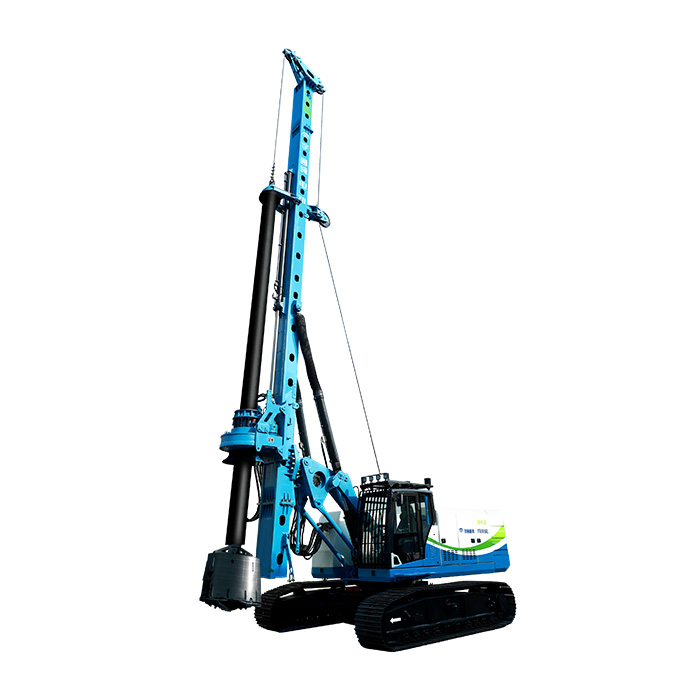
The decision tree: five questions before you spec a rig
1. Bore diameter and depth. The design drawings give the pile diameter and toe elevation. Calculate total depth from working platform to pile toe. A 800 mm bore to 30 m suits a medium rig; a 1500 mm bore to 60 m in rock needs a larger torque class.
2. Ground conditions. Clay and sand are soft; weathered rock and hard soil need high torque and an interlocking Kelly. Read the geotechnical report. If rock is expected, specify torque at least 120 kN·m or step up to the YTR230Dpro class.
3. Fuel type. Urban sites with noise and emission limits favour electric rigs such as the YTR166AE or YTR206AE. Remote sites without power access need a fuel-fired rig like the YTR300Dmax.
4. Production rate. Divide total pile count by available working days to get piles per day. A larger rig drills faster in hard ground but costs more to mobilize. Match the rig to the required daily rate.
5. Budget and TCO. Compare purchase price, energy cost, tool wear and downtime together. Electric rigs have higher upfront cost but far lower energy cost per metre drilled on grid-powered sites.
The parameters engineers actually argue about
These five terms are where two buyers "compare" rigs that are not comparable at all. Get the definitions right and the table comparison becomes honest.
| Parameter | What it really means | How to use it in selection |
|---|---|---|
| Max drilling diameter | Largest bore the rig can cut with standard tools. | Must exceed your design pile diameter. Add margin for casing and over-reaming. |
| Max drilling depth | Deepest bore achievable with the standard Kelly bar. | Must cover your deepest pile toe. Longer depth needs a longer mast and 5-section Kelly. |
| Max torque (kN·m) | Rotational force available at the drill string. | Soft soil needs moderate torque; rock needs 120 kN·m or more. Match to the geotech report. |
| Crowd pressure (kN) | Downward force applied to keep tools cutting. | Soft soil needs crowd to maintain penetration; rock needs crowd plus torque together. |
| Kelly bar type | Friction (soft soil, fast retract) or interlocking (rock, high torque). | Match to ground. Friction Kelly in rock stalls; interlocking Kelly in soft soil is overkill. |
| Mast height | Vertical reach of the rig, determines Kelly length. | Taller mast = deeper bore but taller transport height and more assembly time. |
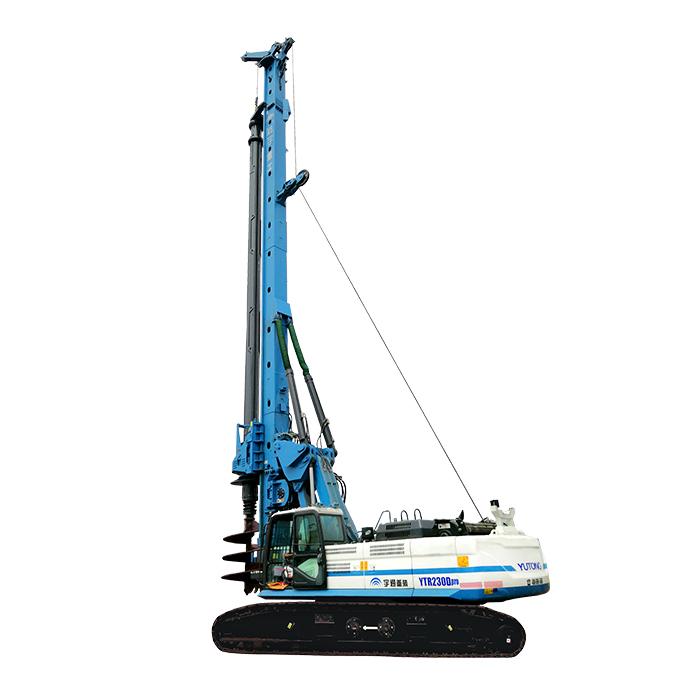
Match the rig to the project: urban, bridge, rural, rock
Urban building foundations. Noise and emission restrictions favour electric rigs. The YTR236HES or YTR306HE run on grid power with lower noise and zero exhaust, ideal for city-centre piling where neighbours complain about diesel fumes.
Bridge and highway foundations. Often remote sites with mixed soil and weathered rock. A fuel-fired rig such as the fuel-fired rotary drilling range works without a power cable and handles variable ground.
Rural and remote projects. No grid access, long moves between pile locations. A self-contained fuel rig is the only practical choice. The YTR266HE range-extended model bridges the gap where power is intermittent.
Hard rock and deep piles. Bores over 50 m in weathered rock need high torque and interlocking Kelly. The larger rigs in the electric rotary drilling rig range deliver the torque without the noise of a diesel in urban rock.
Electric vs fuel: the TCO that decides it
The honest comparison is not rig class on a spec sheet; it is energy cost, maintenance cost and infrastructure cost over the project. A fuel-fired rig has near-zero infrastructure cost and works anywhere, but it carries high per-metre fuel cost and on-site emissions. An electric rig costs more to buy and needs a grid connection or generator, but it uses a fraction of the energy cost per metre drilled and has fewer wearing parts in the powertrain. The break-even point moves hard with your local diesel price and electricity tariff, so plug those two numbers in before you decide. For urban sites where noise and exhaust are regulated, the electric rig is often the only compliant option regardless of TCO.
| Powertrain | Purchase price | Energy cost per m | Infrastructure | Best fit |
|---|---|---|---|---|
| Fuel-fired diesel | Lower | High | None | Remote sites, no grid, variable ground |
| Pure electric | Higher | Low | Grid connection | Urban piling, noise/emission limits, long program |
| Range-extended electric | Higher | Medium | Minimal | Sites with intermittent power, mixed urban/rural |
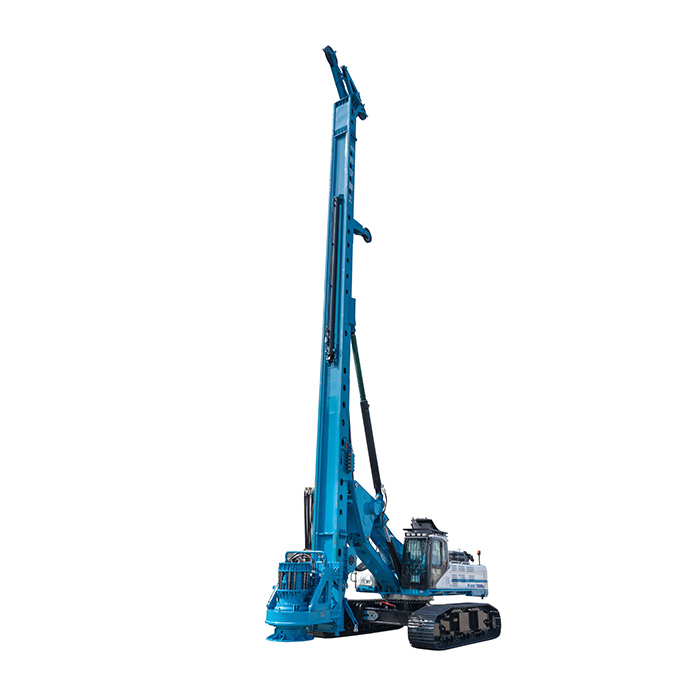
Five mistakes we see on real sites
1. Undersizing torque for rock. A rig rated for soft clay stalls in weathered rock, burning tools and delaying the program. Read the geotech report and spec torque for the hardest layer.
2. Friction Kelly in rock. A friction Kelly bar cannot transfer high torque without slipping. Use interlocking Kelly where rock is expected.
3. Specifying by shallowest pile. The deepest pile sets the mast and Kelly length. Design from the toe of the deepest bore, not the average.
4. Ignoring site power access. An electric rig on a site without grid connection needs a generator, which erodes the energy savings. Confirm power before ordering electric.
5. Buying on sticker price only. The cheapest rig can be the slowest on hard ground, losing more in delayed schedule than it saved upfront. Build the production-rate model.
Frequently asked questions
What size rotary drilling rig do I need for my piles?
Start from the required bore diameter and depth, then match torque and Kelly bar length. A 600 to 1200 mm bore to 30 m suits a medium rig. A 1500 mm bore to 60 m in rock needs a larger torque class. Oversizing wastes mobilization cost; undersizing stalls in hard ground.
What is the difference between torque and crowd pressure?
Torque (kN·m) rotates the drill string and breaks rock; crowd pressure (kN) pushes tools downward to keep cutting. Soft soil needs crowd more than torque. Hard rock needs both. Always check both ratings against your ground conditions.
Electric or fuel-fired rotary drilling rig?
Electric runs on grid power with lower energy cost and zero emissions, ideal for urban piling. Fuel-fired works anywhere without a power cable, suited to remote rural sites. If the site has grid access and a multi-month program, electric usually wins on operating cost.
What is a Kelly bar and why does it matter?
The Kelly bar is the telescopic shaft that transfers torque and crowd to the tool. Interlocking Kelly handles hard rock; friction Kelly suits softer soils and retracts faster. Match the type to your ground: friction for clay and sand, interlocking for weathered rock.
How does pile depth affect rig selection?
Depth determines mast height and Kelly bar length. A 30 m bore needs a standard 4-section Kelly. A 60 m bore needs a longer mast and 5-section Kelly, changing the rig class and transport weight. Spec from the deepest planned pile.
What drilling method suits my ground?
Bucket drilling works in clay and sand. Core barrel and rock auger work in weathered rock. Continuous flight auger suits granular soils. The rig must accept the tool type your ground requires.
What is the export lead time?
Standard configurations ship within 4 to 8 weeks; custom mast or Kelly packages take 8 to 12 weeks. The rig carries a 12-month or 2,000-hour warranty with global spare-parts support. Right-hand-drive and local calibration options are available.
Send us your pile design and we will size the rig
Tell us the pile diameter, design depth, ground conditions from the geotech report, daily pile count target, and whether the site has grid power, and our foundation engineering team will match you to the right class across the Yutong rotary drilling rig range — from the medium electric class up to the large fuel-fired and range-extended models. We export to over 60 countries and build to FOB / CIF shipment terms with the full customs document set.