










The project at a glance
The customer is a municipal sanitation department running residential waste collection on a dense city route. The collection runs early in the morning on narrow streets, where diesel truck noise and exhaust draw complaints. The tender asked for electric refuse trucks that could collect the planned bins per shift, compact the load, and run quietly on early-morning loops. We supplied the electric refuse compactor class for the route.
| Item | Value |
|---|---|
| Route | Dense residential, narrow streets, early morning |
| Duty | Planned bins collected per shift loop |
| Compaction | On-board compaction to hold load per trip |
| Power | Battery-electric, depot charging between shifts |
| Supplied units | Electric refuse compactors |
| Noise brief | Quiet early-morning operation on narrow streets |
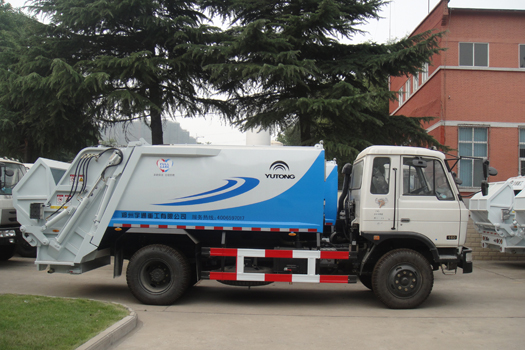
The challenge: early-morning noise, compaction and a fixed residential loop
Early-morning noise. Residential collection runs before people wake. A diesel refuse truck on a narrow street wakes the neighbourhood with engine noise and exhaust. The city wanted a quiet truck so the early run did not draw complaints.
Compaction sets bins per trip. A refuse truck has to compact so it holds more bins before tipping. If the compaction ratio is weak, the truck makes extra trips to the transfer station, which stretches the shift and raises cost. The compaction mechanism has to hold the load compacted through the loop.
Fixed loop, many stops. A residential route is a repeated loop with many bin stops. The battery has to cover the route's bins and distance, and charging at the depot between shifts means the truck starts the loop full every morning.
The solution: electric refuse compactor sized to the residential loop
We spec'd the electric refuse compactor around the route's bins per shift. The on-board compaction holds the load compacted so the truck collects the planned bins before tipping, and the battery covers the loop distance. Because the route is a fixed loop starting and ending at the depot, the truck charges between shifts and does not need mid-day charging. The broader refuse line is on the refuse garbage trucks page, with compactors detailed on the trash compactor page.
The electric drive removes engine noise and exhaust on the narrow early-morning streets, which is the reason the city specified electric in the first place. The sanitation category overview is on the environmental sanitation machinery page.
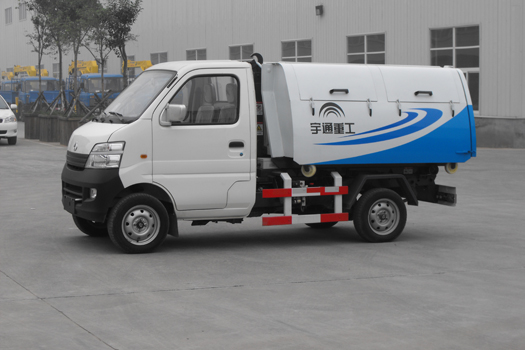
The results: bins per shift and quiet early-morning runs
On the residential loop, the trucks collected the planned bins per shift with the compaction holding the load to the route design, so no extra trips to the transfer station were needed. The quiet electric operation cut early-morning noise on the narrow streets, and the city reported fewer resident noise complaints on the route. Depot charging between shifts meant every truck started the loop full, with no mid-day charging interruption.
The sanitation crew supervisor noted that the trucks "ran the whole residential loop without waking the street, and the compaction held so we did not double back to the transfer station." On a municipal route, those are the two numbers: cover the bins quietly, and compact enough to avoid extra trips.
Why the city chose Yutong
The tender came down to noise, compaction and route fit. First, the electric truck ran quiet and exhaust-free on early-morning narrow streets. Second, the compaction held the load so the route stayed on one loop. Third, depot charging between shifts removed mid-day charging. The city now has a repeatable spec for the next residential route: electric compactor for early-morning loops, sized to the bins per shift, charged at the depot.
For municipal sanitation departments switching residential collection to electric, start from the bins per shift, the route distance and the depot charging setup, then size the compactor. The refuse range is on the refuse garbage trucks page, and the sanitation category overview is on the environmental sanitation machinery page.
Frequently asked questions
Why go electric on a residential waste route?
Collection runs early when people sleep. A diesel truck is loud and emits exhaust on narrow streets. An electric truck runs quiet and exhaust-free, which is why cities switch early-morning routes to electric.
How is compaction handled?
The on-board compaction runs off the battery and hydraulic system. The compaction ratio sets how many bins the truck holds before it needs to tip at the transfer station.
How is the route planned around range?
The residential loop is a fixed route with many stops. The battery is sized to the route's bins and distance, with depot charging between shifts so the truck starts full.
What were the bins-per-shift results?
The trucks held planned bins per shift, compaction kept the load to route design, and the quiet early-morning run reduced resident noise complaints on narrow streets.
Spec an electric refuse fleet
Send us the bins per shift, route distance, compaction requirement and depot charging setup, and our sanitation engineering team will match electric refuse trucks across the Yutong range. We export to over 60 countries on FOB or CIF terms with the full customs document set.