










Start from the haul cycle, not from the battery brochure
Most electric mining truck selection mistakes happen at the first step: someone picks a payload class off a price list and then makes the mine fit the truck. The reverse is faster and cheaper. Your pit already has fixed numbers — daily tonnage, one-way haul distance, ramp grade, shovel bucket size, bench width, and the mine's power source and tariff. A good electric truck choice is simply the smallest vehicle that still moves those numbers on the available charging cycle. Below is the decision tree we run with customers, followed by the parameter definitions that mine engineers usually argue about.
The decision tree: five questions before you spec a truck
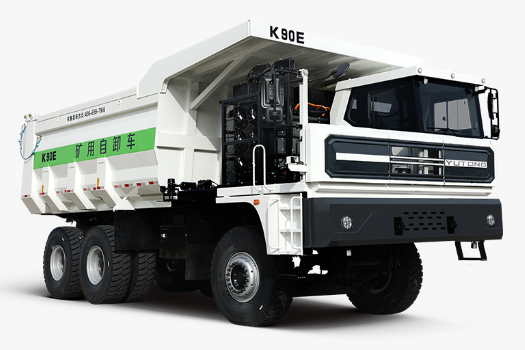
1. Payload class matched to the shovel. A 60 to 70 t truck such as the YTK90E pairs with a 10 to 12 m3 shovel. A 90 to 100 t truck such as the YTK105E pairs with a larger shovel. Target 4 to 6 shovel passes.
2. Haul cycle length. Under 3 km one way, the truck returns to a known charge or swap point. Over 5 km, battery range limits productivity. Measure the actual cycle distance before choosing the battery size.
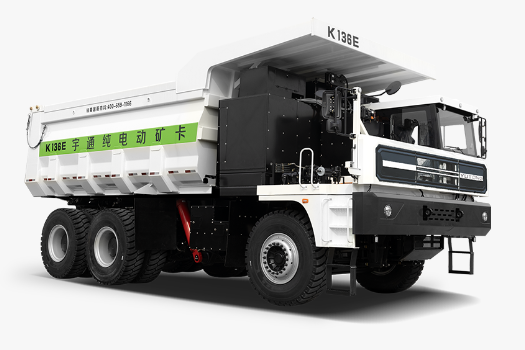
3. Charging model: swap or charge. A swap station suits 24-hour continuous fleets. Fast charging suits smaller fleets with predictable idle time. The YTK136E uses battery swap; the YTK120E is a charge-based model.
4. Mine power source. Grid power makes electric economics work. Diesel-generator power erodes the savings. Check the mine's electricity tariff before ordering.
5. Budget and TCO. Compare purchase price, infrastructure, energy cost and maintenance together. A higher upfront price is justified only if the per-tonne-km energy saving covers it.
The parameters engineers actually argue about
These five terms are where two buyers "compare" electric trucks that are not comparable at all. Get the definitions right and the table comparison becomes honest.
| Parameter | What it really means | How to use it in selection |
|---|---|---|
| Rated payload (t) | Maximum ore mass the truck is engineered to carry. | Match to required tonnes per cycle. Never exceed; overloading kills tyres and battery range. |
| Battery capacity (kWh) | Stored energy, sets range on one charge or swap. | Must cover a full production cycle plus margin. Longer haul = more kWh needed. |
| Charging model | Battery swap, fast charge, or range-extended. | Swap for 24 h fleets; charge for small fleets; range-extended for no full infrastructure. |
| Regenerative braking | Recovers energy on the descent. | More valuable on pits with net downhill haul. Saves energy and brake wear. |
| Infrastructure | Charger or swap station required at the pit. | Budget for this before comparing truck prices. Swap stations cost more but save truck downtime. |
| Gradeability | Sustained slope climbable at full payload. | Match to worst ramp. Electric torque handles grades well but battery drain rises on climbs. |
Match the class to the mine: coal, copper, iron, lithium
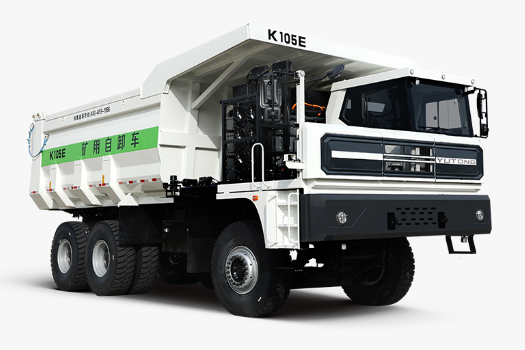
Coal mines. Coal is light (0.8 to 1.0 t/m3), so the truck hits body volume before payload. A 60 to 70 t electric truck such as the YTK90E with a large body works well where the mine runs on grid power and wants to cut pit diesel fumes.
Iron ore and hard rock. Dense (2.5 to 2.8 t/m3), so trucks reach payload quickly. The 90 to 100 t class — YTK105E or YTK145E — moves more tonnes per cycle on wide benches.
Copper pits. Often large benches with long ramps and net downhill haul to the crusher. Regenerative braking recovers energy on the descent. A 90 to 120 t electric truck keeps cycle time steady through the life-of-mine pushback.
Lithium and soft-rock mines. Younger, narrower pits with lighter overburden. The 60 to 70 t class is agile on tighter benches. For a direct model comparison, see the YTK90E vs YTK105E comparison.
Swap vs charge vs range-extended: the TCO that decides it
The honest comparison is not truck size on a spec sheet; it is infrastructure cost, energy cost and truck productivity over five years. Battery swap keeps the truck working: a swap takes minutes, so the vehicle never waits. This suits a large fleet on 24-hour shifts, where idle time at a charger would cost production. Fast charging is simpler and cheaper to install for a single truck or small fleet, but it ties the truck to a charging window. A range-extended model such as the YTK136RE runs electric around the pit and uses a diesel extender for the rare long move — a lower-risk first step. A hybrid such as the YTK140HE offers similar flexibility. For the full lineup, see the new-energy dump truck range.
| Powertrain | Purchase price | Energy cost per t-km | Infrastructure | Best fit |
|---|---|---|---|---|
| Battery swap | Higher | Low | Swap station | Large fleets, 24 h continuous shifts |
| Fast charge | Higher | Low | Charger bank | Smaller fleets, predictable idle time |
| Range-extended | Higher | Medium | Minimal | Mines without full charging infrastructure |
| Hybrid | Higher | Medium | Minimal | Transition fleets, mixed duty cycles |
Five mistakes we see on real sites
1. Buying on battery size without the mine tariff. An electric truck saves money only if the electricity is cheap. Diesel-generated power erodes the case. Check the tariff first.
2. Fast-charging a 24-hour fleet. Trucks waiting at chargers lose production. For continuous shifts, battery swap is the productive choice.
3. Ignoring regenerative braking opportunity. A pit with net downhill haul recovers energy on every descent. This is a reason to go electric, not an afterthought.
4. Under-sizing the payload for the shovel. If the shovel needs 8 passes to fill the truck, cycle time collapses. Target 4 to 6 passes.
5. Forgetting infrastructure in the budget. A swap station or charger bank is a major capital cost. Build it into the business case before comparing truck sticker prices.
Frequently asked questions
What payload class of electric mining truck do I need?
Start from daily tonnage and the shovel bucket size. A 60 to 70 t truck pairs with a 10 to 12 m3 shovel on benches under about 30 m wide. A 90 to 100 t truck pairs with a larger shovel on wider benches. Target 4 to 6 shovel passes to fill the truck.
Battery swap or fast charge?
Battery swap keeps the truck productive on 24 h pits (a swap takes minutes). Fast charge is cheaper to install for a small fleet with predictable idle time. Choose swap for continuous production; charge for smaller fleets.
What haul cycle length suits an electric truck?
Electric works best on short, repeatable cycles of 1 to 3 km one way, where the truck returns to a known charge point. Over 5 km, battery range becomes limiting. A range-extended model bridges the gap for longer hauls.
How does mine electricity supply change the decision?
An electric truck needs a grid connection or generator at the charge point. Grid power makes the economics work. If the mine runs on diesel generators, the savings shrink. Check the mine's power source before ordering.
Does regenerative braking really save energy?
Yes. The electric truck converts the descent into battery charging instead of heating brake discs. On pits with net downhill haul, it recovers a meaningful share of the energy spent climbing. It also saves brake replacements.
What is the TCO break-even for electric vs diesel?
Electric costs more to buy and needs infrastructure, but uses a fraction of the energy cost per tonne-km. In high-diesel-cost regions with cheap grid power, break-even can be under three years. In remote mines on diesel-generated power, the case weakens.
Is a range-extended truck a good first step?
A range-extended model runs electric around the pit and uses a diesel extender for rare long moves. It bridges the gap for mines without full charging infrastructure. It is a lower-risk first step when transitioning from diesel.
Send us your haul numbers and we will size the electric truck
Tell us the daily tonnage, one-way haul distance, ramp grade, bench width, material density, mine power source and local electricity tariff, and our mining engineering team will match you to the right class across the Yutong electric mining truck range — from the 60 t YTK90E up to the 145 t YTK145E, plus swap, charge and range-extended options. We export to over 60 countries and build to FOB / CIF shipment terms with the full customs document set.