










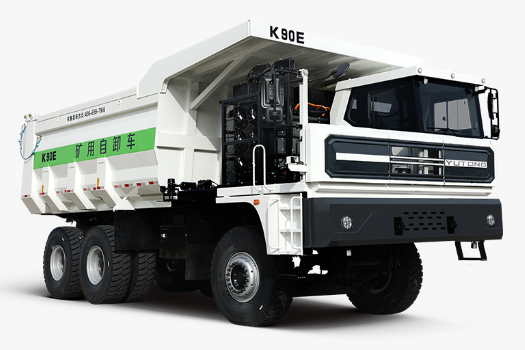
YTK90E — 60 t class
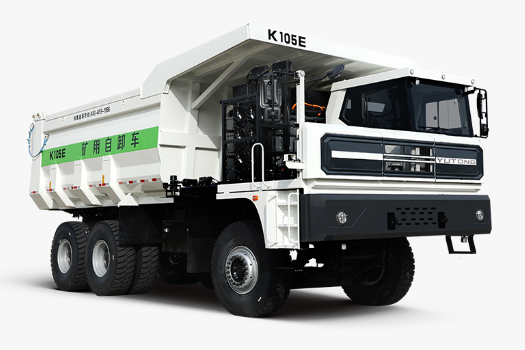
YTK105E — 70 t class
Side-by-side specification comparison
Both trucks share the Yutong Rui-Control E electric drive platform, so cab, control architecture and service approach are familiar across the fleet. The meaningful differences are payload, body size, and the duty cycle each one rewards.
| Parameter | YTK90E | YTK105E |
|---|---|---|
| Rated payload | ~60 tonnes | ~70 tonnes |
| Powertrain | Pure electric, Rui-Control E | Pure electric, Rui-Control E |
| Typical pairing shovel | 5–8 m3 loader / shovel | 10–15 m3 loader / shovel |
| Best bench width | Under ~30 m, tighter pits | Wide benches, hardened haul roads |
| Charging | Fast charge during breaks | Fast charge during breaks; larger pack |
| Strongest application | Coal, lithium, narrow / young pits | Iron ore, copper, high-production hard rock |
| Purchase price band | Lower of the two | Higher of the two |
The payload gap: 10 tonnes per cycle changes everything
The core difference is simple arithmetic. The YTK90E carries roughly 60 tonnes per cycle; the YTK105E carries roughly 70. That is about a 16% payload increase on every trip. On a wide bench with a shovel big enough to fill both trucks in four to six passes, the YTK105E moves more tonnes per hour and usually wins on cost per tonne — fewer trucks, fewer operators, fewer cycles for the same daily target.
The catch is that the maths only holds if the YTK105E can actually work. Its larger body and longer wheelbase need wider turning space and a shovel sized to it. On a bench under about 30 m, or with a 5 to 8 m3 shovel that needs eight passes to fill the bigger truck, the YTK105E's cycles slow down and the YTK90E can deliver more tonnes per hour despite carrying less per trip. Match the truck to the shovel and bench before you compare payload.
Battery, range and charging
Neither truck is designed to run an 8-hour shift on one charge like a road EV. They are built around the open-pit cycle: load, haul, dump, return, top-up during driver changeover and meal breaks. The YTK105E's higher payload and larger vehicle mass mean it carries a correspondingly larger battery pack to hold the same productive cycle, while the YTK90E uses a smaller, lighter pack.
What you should actually size is your measured cycle: one-way haul distance, loaded uphill grade, and empty return. Send us those numbers and the local grid supply, and we will quote charger capacity and battery configuration to keep the fleet moving. If your pit runs 24 hours and cannot spare charging windows at all, step up to the battery-swap YTK136E rather than forcing a fast-charge truck to wait at the charger.
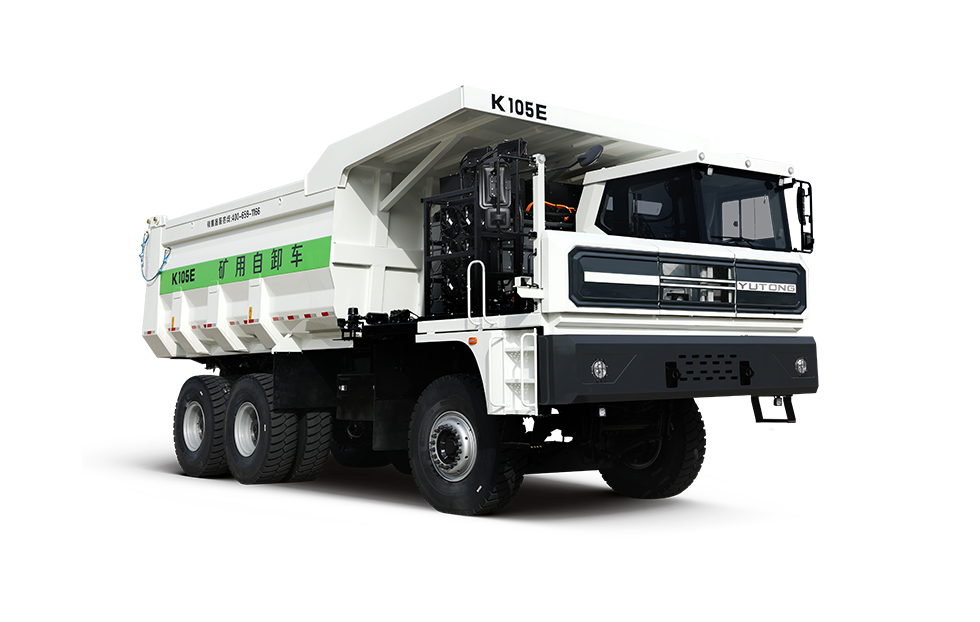
Which duty cycle fits which truck
Choose the YTK90E when: your benches are under ~30 m wide; your shovel is 5 to 8 m3; you mine lighter material such as coal or lithium overburden; or you are converting a small fleet to electric and want lower capital outlay per truck.
Choose the YTK105E when: your benches are wide and hardened; your shovel is 10 to 15 m3; you haul dense iron ore or hard rock; and your production target rewards carrying 70 t every cycle. If your site needs more than 70 t, the YTK120E 80-tonne model continues the ladder.
Five-year TCO: why the smaller truck is not always cheaper
The YTK90E costs less to buy, but cost per tonne moved is the number that matters. If the YTK105E needs two trucks instead of three to hit the same daily tonnage, it saves one cab, one operator shift, one set of tyres and one charging slot per year — often more than closing the purchase-price gap. Conversely, if the YTK105E is under-loaded on a narrow bench, every cycle wastes its extra capacity and the YTK90E wins on TCO. Run the model with your own operator cost, local electricity tariff and tyre prices before you commit either way.
| YTK90E (60 t) | YTK105E (70 t) | |
|---|---|---|
| Strengths | Tighter turning; lower capital; suits small shovels and narrow pits | More tonnes per cycle; fewer trucks for the same target; strong on dense rock |
| Watch out | Cannot maximise wide benches and large shovels | Needs wide benches and a matched shovel or it gets under-loaded |
| Best sites | Coal, lithium, young / narrow pits | Iron ore, copper, high-production hard rock |
Frequently asked questions
What is the main difference between the YTK90E and YTK105E?
The YTK90E is a 60-tonne pure-electric truck and the YTK105E is a 70-tonne pure-electric truck. The YTK105E carries about 10 tonnes more payload per cycle on a larger body; the YTK90E is lighter and turns in tighter space. Both use the same Rui-Control E platform.
Which truck moves more tonnes per shift?
On a wide bench with a large shovel, the YTK105E's extra 10 tonnes per cycle wins. On a narrow bench where the larger truck cannot load cleanly, the agile YTK90E can deliver more tonnes per hour through more unobstructed cycles.
How do charging and range compare?
Both use fast charging during break windows for the short open-pit cycle. The YTK105E carries a larger pack for its higher payload; the YTK90E a smaller one. Productive range depends on your measured haul distance and ramp grade, which we spec to your actual cycle.
When should I choose the YTK90E over the YTK105E?
Choose the YTK90E for benches under ~30 m, 5 to 8 m3 shovels, lighter overburden, or a small fleet starting its electric conversion. Choose the YTK105E for wide benches, dense hard rock and a production target that needs 70 t every cycle.
Do both support battery swap?
These two are fast-charge pure-electric models. For 24-hour fleets that cannot wait at a charger, the battery-swap YTK136E and range-extended YTK136RE sit one class up. Tell us your shift pattern and we will recommend the right charging strategy.
Not sure which one fits your pit?
Send us your daily tonnage target, bench width, shovel bucket size, one-way haul distance and worst ramp grade. We will model both the YTK90E and YTK105E against your numbers and send spec sheets plus a side-by-side TCO estimate. Browse the full electric and diesel mining truck range to compare further.