










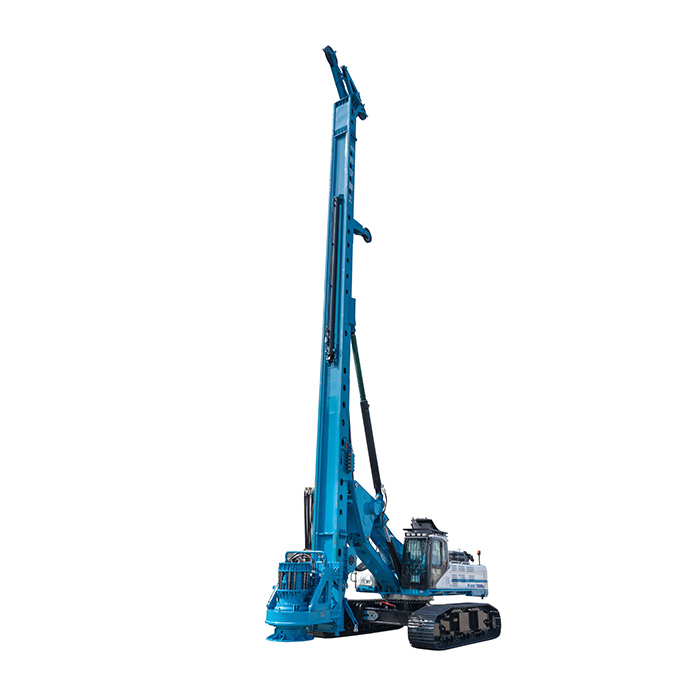
YTR300Dmax — mid-large workhorse
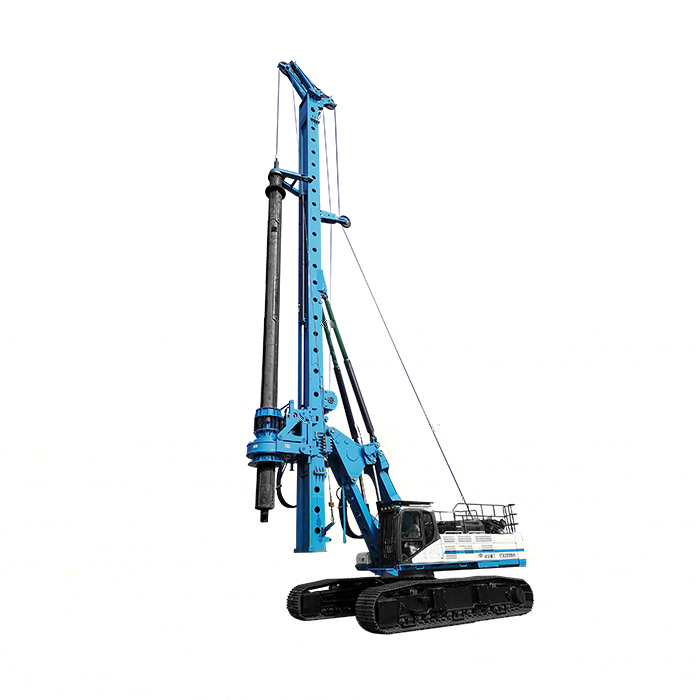
YTR360Dpro — large, deep, high torque
Side-by-side specification comparison
Both rigs are self-propelled, fuel-fired rotary drilling rigs built for bored piles, diaphragm walls and deep foundation work. The split is the mast length and the rotary torque envelope. Figures are typical ordering data; the final spec is tuned to your pile schedule and ground.
| Parameter | YTR300Dmax | YTR360Dpro |
|---|---|---|
| Power | Diesel engine, self-contained | Diesel engine, self-contained |
| Mast class | Mid-large pile depth | Larger, deeper mast |
| Torque envelope | Covers standard commercial piles | Higher torque for large / rock piles |
| Best pile diameter | Standard commercial range | Larger diameter shafts |
| Fuel efficiency per metre | Better on standard piles | Higher draw on heavy duty |
| Purchase price band | Lower of the two | Higher of the two |
Start from the pile schedule, not the brochure
The YTR300Dmax is the mid-large workhorse. It covers the majority of commercial piling: building foundations, bridges and plant pads within its mast and torque envelope. The YTR360Dpro steps up in mast depth and rotary torque for larger diameter shafts, deeper sockets and harder ground. The mistake to avoid is buying the bigger rig because it looks more capable; a rig carrying unused capability burns fuel and capital on every standard pile.
Reverse the risk too. If your project has a handful of deep, large-diameter rock-socketed piles, a YTR300Dmax that is at the edge of its envelope will drill them slowly or struggle. The YTR360Dpro then pays for itself on those few hard piles. Pull the maximum pile diameter and depth from your drawings and match them to the rig envelope before anything else.
Torque, mast and ground conditions
Rotary drilling rigs are limited by two numbers: torque at the tool and mast/string capacity. In sand and clay, head torque is rarely the binding constraint, and the YTR300Dmax moves fast. In weathered rock or a hard socket, the YTR360Dpro's higher torque keeps the tool cutting instead of stalling, and its deeper mast reaches the longer shafts. Groundwater and casing requirements add another constraint: a rig that can hold the casing and drill string must be sized for the combined load, not just the open-hole depth.
Transport and site access follow the same logic. The larger YTR360Dpro breaks down into heavier loads that need more transport permits and more setup time. On a tight urban site with restricted access, the smaller YTR300Dmax may simply be the one that can get in and out efficiently.
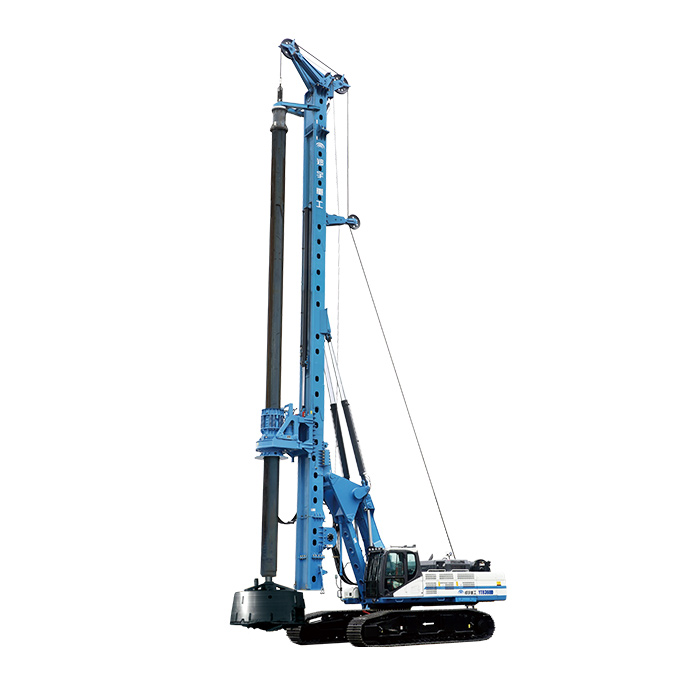
Which rig fits which workload
Choose the YTR300Dmax when: most of your piles sit in the standard commercial envelope; ground is sand, clay or weak rock; you want better fuel efficiency per metre; and site access is tight.
Choose the YTR360Dpro when: you have large-diameter deep shafts, hard rock sockets, or a recurring deep-pile workload. For a step up in the same family, the YTR230Dpro sits below in the range, and electric options such as the YTR266HE run on quiet electric drive.
Fleet TCO: use the smallest rig that finishes the job
The cheapest rig that can complete your pile schedule is usually the right one. The YTR300Dmax has lower capital and better fuel economy on standard piles, so on a conventional commercial piling program it wins on cost per linear metre. The YTR360Dpro only wins when the alternative is being unable to drill a pile, or drilling it so slowly that the programme slips. A mixed fleet, with one large rig for the hard piles and smaller rigs for the standard ones, is often the most cost-effective real-world setup.
| YTR300Dmax | YTR360Dpro | |
|---|---|---|
| Strengths | Lower capital; better fuel economy; easier site access | Deeper, larger piles; higher torque; handles hard rock sockets |
| Watch out | At the envelope edge on large deep rock piles | Overkill and higher fuel draw on standard piles |
| Best work | Commercial piling, sand / clay, tight sites | Large deep shafts, hard rock, heavy-duty programs |
Frequently asked questions
What is the difference between the YTR300Dmax and YTR360Dpro?
Both are fuel-fired rotary rigs. The YTR360Dpro is the larger, higher-torque, deeper-mast rig for bigger and deeper piles. The YTR300Dmax is the mid-large workhorse covering most commercial piling at lower capital and better fuel economy.
How do I match the rig to my pile design?
Work from the pile schedule: maximum diameter, maximum depth and ground type. The YTR360Dpro covers the large-diameter, deep, hard-rock end. The YTR300Dmax handles the standard envelope. Oversize the rig and you waste fuel and capital; undersize it and you cannot finish the pile.
Does the bigger rig always drill faster?
No. On standard piles in soft ground the YTR300Dmax drills efficiently. The YTR360Dpro earns its size only when the pile is at the edge of the smaller rig's capability. On easy ground it carries unused mass and burns more fuel per metre.
When should I choose the YTR360Dpro?
Choose it for large-diameter deep shafts, hard rock sockets, or a recurring deep-pile workload. Choose the YTR300Dmax for the wider commercial market where most piles sit in its envelope and fuel economy matters.
Not sure which diesel rig matches your pile schedule?
Send us your pile diameters and depths, ground profile, casing requirements and site access. We will model the YTR300Dmax and YTR360Dpro against your drawings and send spec sheets plus a cost-per-metre estimate. Browse the fuel-fired rotary drill range or the full foundation equipment line-up.