










Battery electric heavy trucks: China's on-road electrification, now an export product
On-road heavy trucks consume a large share of a fleet's diesel bill, and the duty cycles that suit them are unusually regular. Port drayage, depot-to-depot trunking, urban spoil haul, ready-mix delivery and last-mile distribution all start and end at a base and run repeatable loops. That is exactly the duty shape a battery-electric truck is built for: high torque from standstill, regenerative braking returning energy on descents and in stop-start traffic, and no engine idling while the vehicle is stationary at a loader, a pour or a dock.
China industrialized battery-electric heavy trucks on these fixed loops first. What overseas buyers now see is not a trial fleet but a manufactured product family with integrated chassis, cab and high-voltage system, supported by charger planning and export documentation. This page is the new-energy, zero-carbon transport view of that family. If you want the full on-road product range — diesel and new energy together — the heavy-truck range portal is the reference page; the parent category is Special Vehicle. Off-highway electric haulage is a different machine: the 60-100 t rigid mining trucks are covered on the new-energy mining truck page, not here.
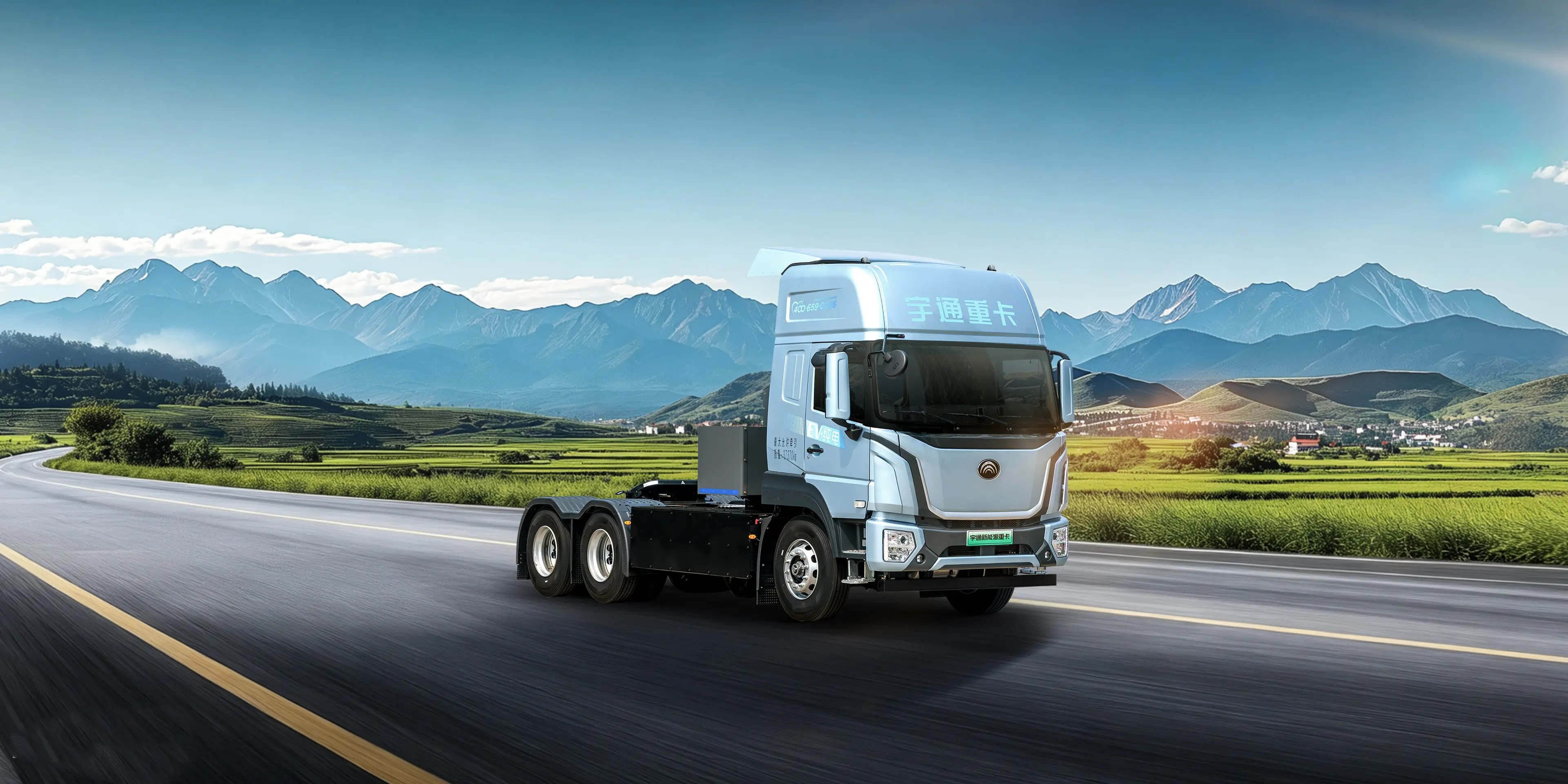
Electric tractor trucks: port drayage and fixed trunk loops
The battery-electric tractor is the highest-mileage entry point, because annual kilometres are what close the battery purchase price against lower per-kilometre energy and maintenance cost. The platform uses a high-torque electric axle that pulls a loaded semi-trailer away from depot gates without the lag of a diesel launching a heavy gearbox, and a dedicated electric driveline that lets a fleet plan charging around the trunk schedule rather than around fuel stops.
The duty it fits is fixed: container moves between port, rail hub and warehouse; shuttles inside steel mills and factory yards; scheduled inter-depot trunking on corridors that return to a home base. Overnight depot charging covers round trips that return each shift; DC fast charging at the turnaround point supports two-shift work. Fifth-wheel height and coupling are specified to match your existing trailer fleet. Read the full segment on the electric tractor truck page.
The on-road new-energy line-up at a glance
The table below maps each on-road segment to the duty it is specified for and the detail page that describes it. Rated figures are taken from the published product spec sheets; confirm body volume, payload and gross weight against your legal limits and material density before ordering. The mixer row links both to the segment page and to the detailed electric mixer model, whose published figures are quoted further down this page.
| Segment | Typical duty | Key differentiator | Detail page |
|---|---|---|---|
| Electric tractor truck | Port drayage, depot trunking, steel-mill and yard shuttle | High-torque electric axle; depot-charge or swap/pantograph architecture | Electric tractor truck |
| New energy dump truck | Urban spoil, aggregate and earthwork loops | 8x4 drive, sealed body, zero local emission at the site | New energy dump truck |
| New energy cargo truck | Urban multi-drop, wing-open box, cold-chain delivery | Wing-open sides for forklift loading; overnight AC depot charge | New energy cargo truck |
| Light electric truck | Last-mile parcel, retail replenishment, fresh-food distribution | T3S / T3 / T5 / T6 on the Ruikong E platform; modular body | Light electric truck |
| New energy mixer truck | Ready-mix plant-to-pour, tunnels and enclosed basements | Dedicated electric drum drive; 8x4; charges at the batching plant | New energy mixer truck |
| Electric mixer truck (detailed) | Commercial pours and high-rise concrete delivery | 282 / 352 kWh LFP, 280 kW rated / 430 kW peak, 4-speed AMT, dual-gun DC | Electric mixer truck spec |
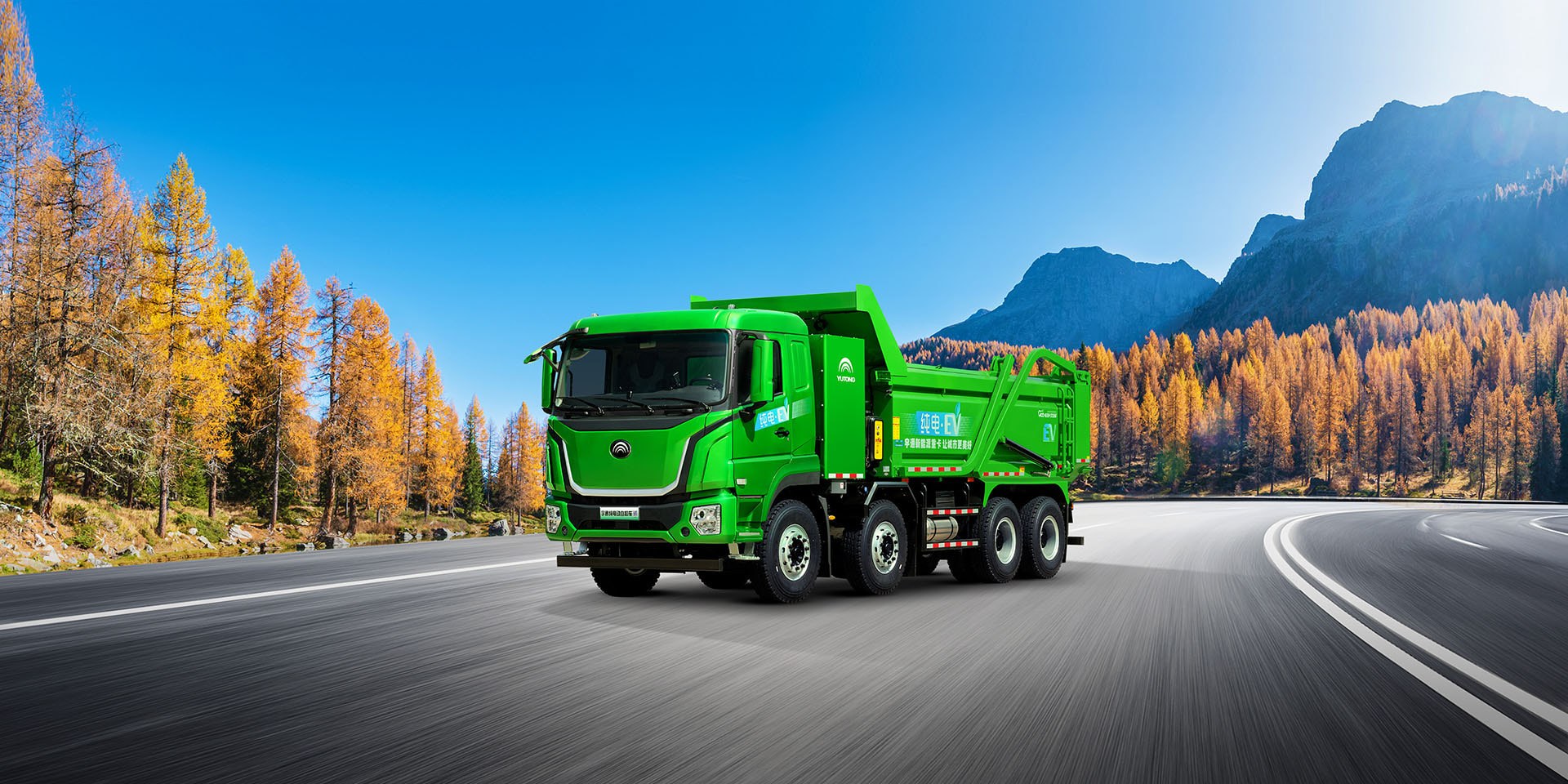
Electric dump trucks: urban spoil and earthwork loops
Urban construction sites run inside cities, where exhaust, noise and spillage are regulated hard. The new-energy dump truck is built as an 8x4 vehicle with a sealed tipper body and a reinforced chassis for repeated excavator loading, offered in versions for urban muck, highway aggregate haul and mining-area material transfer. Because it produces zero local emission at the work point, it can run in basement trenches and enclosed shafts where a diesel tipper simply cannot, and it meets the green-site and low-emission rules that increasingly restrict diesel trucks inside city limits.
The loop is fixed — load at the excavation, haul to the spoil yard, return — which suits a truck that charges on a slow depot charge or fast-charges at the turn-around. Size the body to your material: dense rubble hits the weight limit before the body is full, so a smaller stronger body is correct; light topsoil fills volume first, so a larger body pays. The segment detail is on the new-energy dump truck page.
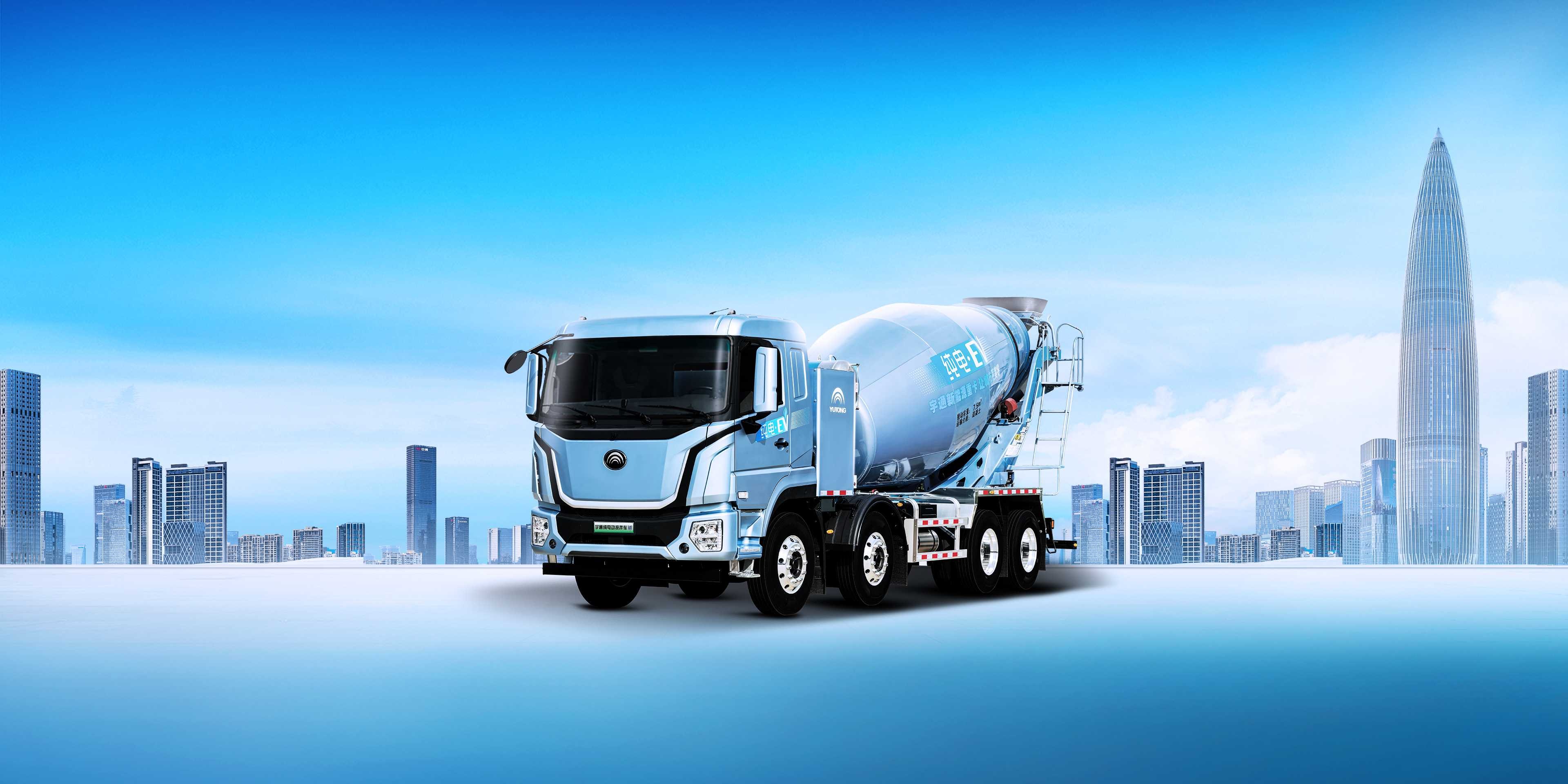
Electric concrete mixer trucks: the fixed batching-plant loop
A mixer works a tight rhythm: load at the plant, transit to the pour, rotate the drum continuously, discharge, wash out and return. A dedicated electric drive keeps the drum turning at a controlled speed without idling a diesel engine, which is both quieter at the pour and cleaner in tunnels and underground stations. The detailed electric mixer model measures 9760 x 2520 x 3730 mm and carries a 282 kWh standard or 352 kWh composite lithium iron phosphate pack, driven by a 280 kW rated / 430 kW peak motor through a 4-speed AMT, with dual-gun DC fast charging (per the published spec sheet).
Charging is planned at the batching plant, where the fleet returns between batches; a charger sized to the turnaround window tops the pack across the shift, and DC fast charging during wash-out supports back-to-back pours. The live city application is described in the electric mixer urban case, and the method for matching drum capacity to pour volume and transit time is on the concrete mixer truck selection guide. Full segment detail: new-energy mixer truck.
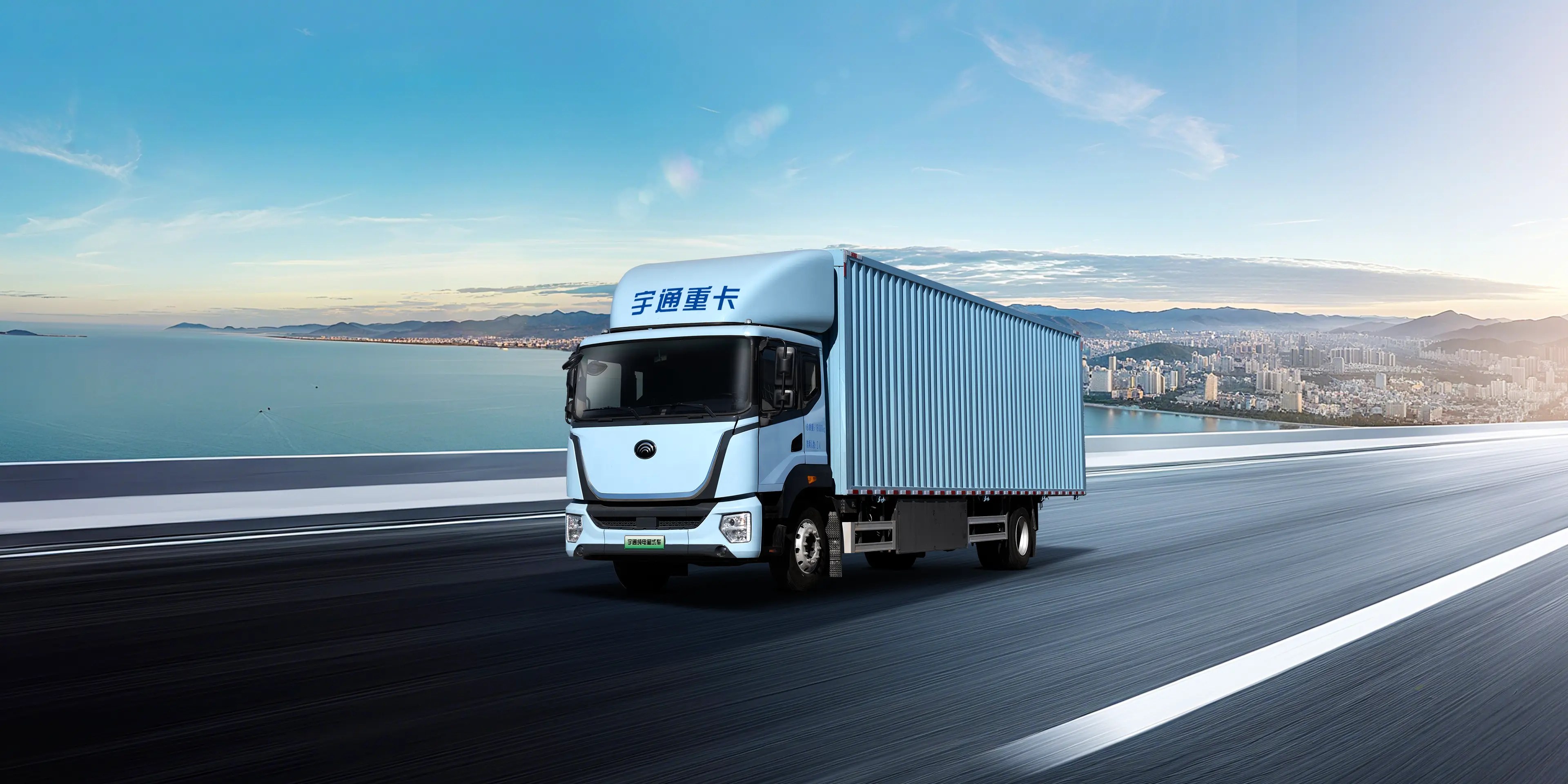
Electric cargo and light trucks: urban distribution and cold chain
The cargo line covers wing-open box vans, box-type transport and refrigerated bodies for urban logistics and cold-chain delivery. The side wings open wide so a pallet truck or small forklift can load from both sides, which is why this body is the standard choice for retail and palletised distribution. Urban delivery versions run a high-voltage lithium pack sized for multi-drop duty, with overnight AC depot charging in roughly 6 to 8 hours and DC fast top-up available during the working day if a route needs it.
Below the cargo class, the T-series light electric trucks — T3S, T3, T5 and T6 — cover urban distribution, express and parcel delivery, retail replenishment and cold-chain last-mile work on the Ruikong E platform, with modular van, railing or refrigerated bodies. Both classes avoid urban low-emission charges and run quietly on night rounds. Segment details: new-energy cargo truck and light electric truck.
Charging, battery swap, and the staged diesel-to-electric transition
Three charging strategies, chosen by shift pattern. Overnight AC charging at the depot is the lowest-cost option and covers any loop that returns to base each shift. DC fast charging at the turnaround point — the port gate, the spoil yard, the batching plant wash-out bay — keeps a two-shift fleet working instead of sitting on a charger. Battery swap exchanges a depleted pack for a charged one in minutes, which is the route for continuous, multi-shift operation where the truck must not stop; its economics depend on the fleet being large enough to amortise the battery pool over many trucks and shifts. Before any charger is ordered, the site power demand has to be calculated against the grid connection available, because a multi-truck DC depot can draw more than a small substation is sized for.
Export configuration and destination documentation. Each road-going truck is delivered with vehicle conformity documentation, battery and charger specifications, operator and maintenance manuals in the buyer's language, and axle, weight and coupling data for customs and registration. Yutong ships under its own import and export rights and supports fleets in Southeast Asia, the Middle East, Africa and Central Asia with a 12-month warranty, spare-parts kits for the body and the high-voltage system, and technical response within 48 hours. Confirm the plug, voltage and charger standard against your local grid before the order is placed.
Transition in three stages. Stage 1: pick the shortest, highest-mileage fixed loop in your fleet, put a small pilot group on overnight depot charge, and measure energy per kilometre on your real duty. Stage 2: once the numbers are known, add DC fast charging at the turnaround and extend the electric group to the next loop of the same shape. Stage 3: move to battery swap or pantograph charging for continuous, 24/7 operation. Throughout, fleet telematics tracks state of charge, energy per cycle and charger availability — see the fleet telematics page for how that data is read remotely. The same staged logic applies whether you are replacing diesel tractors, dumpers, mixers or vans.
| Strategy | Where it sits | Best operating pattern | Capital note |
|---|---|---|---|
| Overnight AC depot charge | Home depot | Single-shift loops that return to base | Lowest charger cost; needs grid capacity |
| DC fast charge | Turnaround point / plant | Two-shift, fixed loops | Higher charger rating; short charge windows |
| Battery swap | Swap station, battery pool | Continuous multi-shift fleets | Pool capital amortised over many trucks |
Frequently asked questions
How is this page different from the heavy-truck range page?
The heavy-truck page is the full product-family portal for the on-road truck range, covering diesel and new-energy models side by side. This page is the new-energy, zero-carbon transport angle only: battery-electric tractors, dumpers, mixers, cargo and light trucks, their charging and swap options, export configuration, and how a fleet transitions from diesel to electric in stages.
Which on-road truck segments does Yutong offer in battery-electric form?
Five segments: electric tractor trucks for port drayage and depot trunking; new-energy dump trucks for urban spoil and earthwork; new-energy concrete mixer trucks for batching-plant loops; new-energy cargo trucks for urban multi-drop and cold chain; and the T-series light electric trucks (T3S, T3, T5, T6) for last-mile distribution.
Do electric on-road trucks charge at the depot or swap batteries?
Both, depending on the duty. Overnight AC depot charging is the lowest-cost option for fixed loops that return to base each shift. DC fast charging at the turnaround point supports two-shift work. Battery swap suits continuous, multi-shift fleets where the truck must not stop to charge and the battery pool can be amortized across many vehicles.
What export documentation comes with an electric truck?
Each truck ships with vehicle conformity documentation, battery and charger specifications, operator and maintenance manuals in the buyer's language, and axle, weight and coupling data for customs and registration. Yutong handles the export under its own import and export rights, and supports fleets in Southeast Asia, the Middle East, Africa and Central Asia with spare-parts kits and 48-hour technical response.
How does a diesel fleet switch to electric in stages?
Stage 1: take the shortest, highest-mileage fixed loop and put a small number of trucks on overnight depot charge. Stage 2: measure kWh per kilometre on that loop, then add DC fast charging at the turnaround and extend the electric group. Stage 3: adopt battery swap or pantograph charging for continuous, multi-shift operation. Fleet telematics tracks state of charge, energy per cycle and charger availability throughout.
Send us your loop and we will size the electric fleet and chargers
Tell us the truck class you run today, the fixed loop distance, typical load, shift pattern, grid connection at your depot, and the daily tonnes or parcels to move. Our engineering team will match the Yutong on-road heavy truck range across tractor, dumper, mixer, cargo and light electric models, and size the depot or turnaround charging with the fleet. Off-highway electric haulage up to 100 t payload is handled on the separate new-energy mining truck line.