










Start from the load cycle, not from the brochure
Most wheel loader selection mistakes happen at the first step: someone picks a tonnage off a price list and then makes the material fit the machine. The reverse is faster and cheaper. Your site already has fixed numbers — material density, truck or hopper size, daily tonnes to move, stockpile height, ground conditions, and cycle distance between pile and truck. A good loader choice is simply the smallest machine that still moves your target tonnes without a queue at the truck. Below is the decision tree we run with customers, followed by the parameter definitions that equipment managers usually argue about.
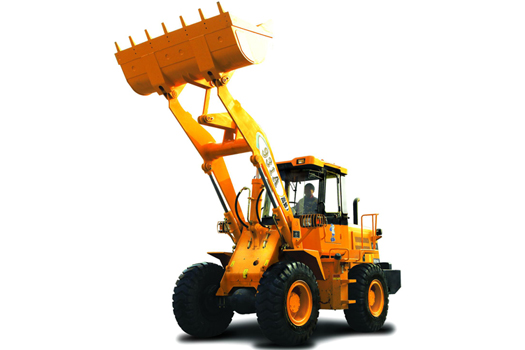
The decision tree: five questions before you spec a loader
1. Material density and truck size. Identify what you load (soil, gravel, ore) and what you load into (20 t truck, hopper, conveyor). Then size the bucket so it takes 3 to 5 passes to fill the target. Too few passes means the bucket is oversized; too many means it is undersized.
2. Daily production target. Divide daily tonnes by working hours to get tonnes/hour. Then divide by bucket tonnes per cycle to get required cycles/hour. A larger loader cycles fewer times but costs more to own.
3. Space and access. Tight stockpiles, buildings and landscaping yards favour a compact 3 to 4 t loader such as the 931A or 936H. Open quarries and wide yards favour a 5 to 6 t machine.
4. Ground conditions. Firm, paved yards let a wheel loader move fast. Soft, muddy underfoot conditions may need a tracked machine. Wheel loaders travel between sites on their own wheels; tracked machines need a low-loader.
5. Budget and TCO. Compare purchase price, fuel, tyre wear and downtime together. A slightly larger loader that cuts cycle time may beat a smaller one that takes extra passes.
The parameters engineers actually argue about
These five terms are where two buyers "compare" loaders that are not comparable at all. Get the definitions right and the table comparison becomes honest.
| Parameter | What it really means | How to use it in selection |
|---|---|---|
| Operating weight | Machine mass with full tank and standard bucket. | Used for ground pressure, haul-road and bridge loading. Not the rated load. |
| Rated bucket load | Maximum material mass the bucket carries without tipping. | The number to match against target tonnes per cycle. Never exceed it. |
| Bucket capacity (m3) | Heaped volume of the bucket. | Multiply by material density to get real tonnes. Confirm it stays under rated load. |
| Breakout force (kN) | Hydraulic force to pry material from the pile. | Hard-packed gravel and shot rock need high breakout force. Soft soil needs less. |
| Dump clearance at full lift | Height the bucket can raise while dumping. | Must clear the truck sidewall or hopper edge. Check against your target truck height. |
| Power (kW / hp) | Engine output for loading and travel. | More power handles heavier buckets and faster cycles on grades. Match to production target. |
Match the class to the application: construction, aggregate, farming
General construction. Soil, gravel, site cleanup. A 3 to 5 t loader such as the 952A or 953A balances power with maneuverability on building sites where space is tight.
Aggregate and quarry yards. Gravel, sand, shot rock. A 5 to 6 t heavy-duty loader such as the 956H or 966H handles dense material and high production targets, with enough breakout force for compacted piles.
Landscaping and farming. Light material, lawns, barn yards. A compact 3 to 4 t loader such as the 936H fits through gates and does less surface damage than a heavy machine.
Bulk material handling. Sugar, grain, coal. Light materials need a larger bucket volume per tonne. The bucket should be sized to hit rated load before it hits volume, or you carry half a bucket of material.
Wheel loader vs alternatives: which machine for the job
The honest comparison is not bucket size on a spec sheet; it is how the machine moves between pile and truck in your conditions. A wheel loader cycles fast on firm ground and drives between sites on its own wheels. A tracked loader works in soft, muddy conditions where wheels spin, but it moves slowly and needs a low-loader to travel. A wheel bulldozer pushes material in front and grades surfaces but does not lift and load trucks. A scraper cuts and haws soil in one machine for large earthmoving cuts. For loading trucks and stockpile work on firm ground, the wheel loader is the right tool. For pushing and grading, a bulldozer beats a loader.
| Machine | What it does | What it cannot do | Best fit |
|---|---|---|---|
| Wheel loader | Lift, load, stockpile | Does not grade or push long distances | Truck loading, stockpiles, yards |
| Wheel bulldozer | Push, grade, spread | Does not load trucks efficiently | Grading, pushing, site prep |
| Scraper | Cut, haul, spread soil | Does not load small trucks precisely | Large earthmoving cuts and fills |
Five mistakes we see on real sites
1. Oversizing for a tight site. A 6 t loader bought for a residential yard spends its life unable to turn around. Buy for the tightest working space.
2. Forgetting material density. A bucket that carries 4.5 t of soil carries 5.4 t of rock, overloading the machine. Always convert volume to tonnes.
3. Ignoring dump clearance. A loader that cannot clear the truck sidewall loses every cycle repositioning. Check dump height against your target truck.
4. Under-specifying breakout force for rock. A loader that cannot penetrate compacted gravel cycles slowly. Match breakout force to your hardest material.
5. Buying on sticker price only. The cheapest loader can be the slowest on heavy material, losing more in delayed production than it saved upfront. Build the cycle-time model.
Frequently asked questions
What size wheel loader do I need for my application?
Start from material density and the truck or hopper you load. A 3 t compact loader suits landscaping and light handling. A 5 to 6 t loader handles aggregates and construction. Rule of thumb: the bucket should take 3 to 5 passes to fill a 20-ton truck.
Operating weight or rated load - which matters?
Operating weight is the machine's own mass with fuel and bucket. Rated load is the max material mass the bucket carries without tipping. Haul roads and bridges load on operating weight; production targets match to rated load.
How does bucket capacity match material density?
Bucket volume times density equals tonnes carried. Loose soil is about 1.5 t/m3, gravel about 1.6 t/m3, ore about 1.8 t/m3. A 3 m3 bucket carries 4.5 t of soil but 5.4 t of rock. Confirm the figure stays under rated load.
What is breakout force and why does it matter?
Breakout force is the hydraulic force that pries material loose from the pile. Soft soil needs moderate force; compacted gravel and shot rock need high force. If the bucket cannot penetrate, cycle time collapses.
Compact or heavy-duty loader?
A 3 to 4 t compact loader works in tight spaces and on lawns. A 5 to 6 t heavy-duty loader handles aggregates and quarries where production rate matters more than footprint. Choose by space and material.
Wheel loader or tracked loader?
A wheel loader moves fast on firm ground and drives between sites. A tracked loader works in soft, muddy conditions where wheels spin, but moves slowly. Choose wheel loader for paved yards; tracked for soft underfoot.
What is the export lead time and warranty?
Standard configurations ship within 4 to 8 weeks; custom bucket and tyre packages take 8 to 12 weeks. The loader carries a 12-month or 2,000-hour warranty with global spare-parts support and right-hand-drive options.
Send us your material and target and we will size the loader
Tell us the material type and density, truck or hopper size, daily tonnes to move, stockpile height and ground conditions, and our earthmoving engineering team will match you to the right class across the Yutong wheel loader range — from the 3 t compact class up to the 6 t heavy-duty models. We export to over 60 countries and build to FOB / CIF shipment terms with the full customs document set.