










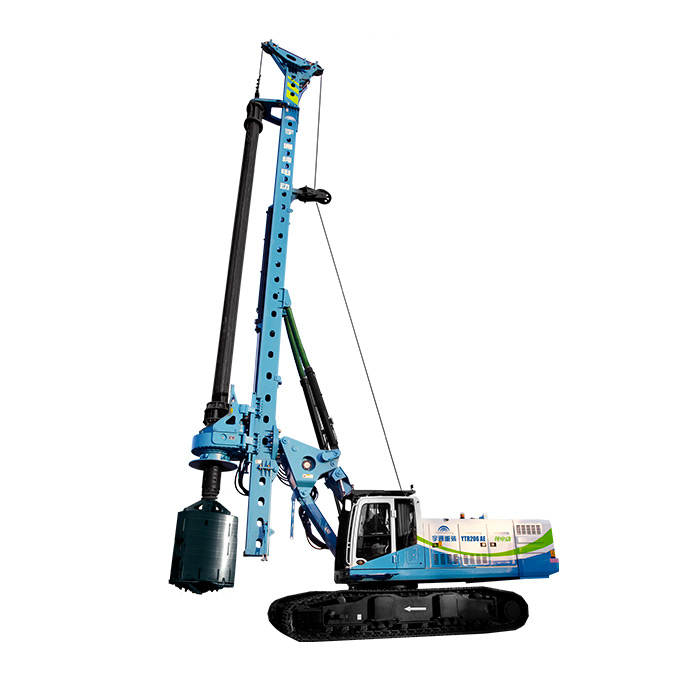
Electric rig — grid or range-extended
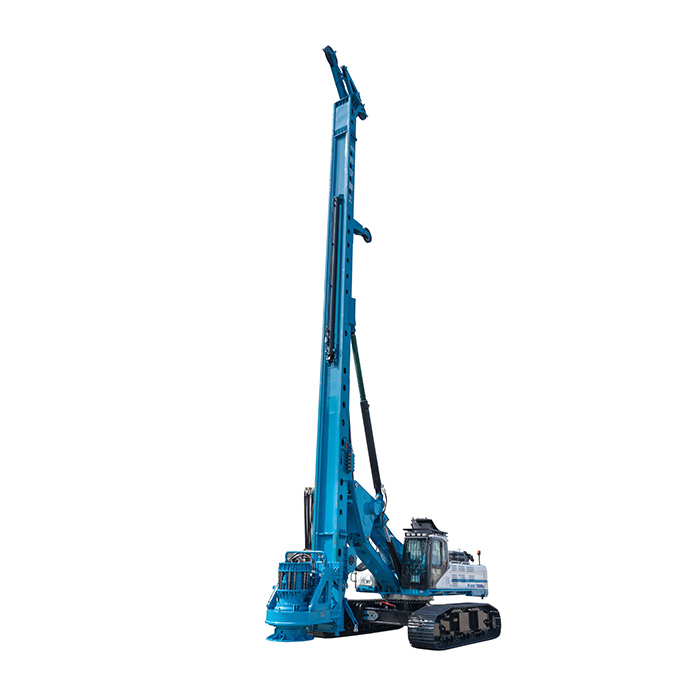
Diesel rig — self-contained fuel
Side-by-side comparison
Both rigs are rotary drilling machines that build bored piles and diaphragm walls. The drill string, mast and tooling are what deliver the pile; the power source changes cost, noise, exhaust and logistics. Use this table to match the energy source to your sites.
| Factor | Electric rig | Diesel rig |
|---|---|---|
| Energy cost / hour | Low (grid electricity) | Higher (diesel) |
| Site power | Three-phase mains or generator required | None beyond a fuel bowser |
| Noise | Low on a grid-fed rig | Engine noise present |
| Exhaust | None on a grid-fed rig | Diesel exhaust on site |
| Maintenance | No engine oil / filters / after-treatment | Full diesel service intervals |
| Best fit | Urban fixed jobs with mains power | Remote / moving / off-grid jobs |
Energy cost: cheap wire versus a fuel bill
An electric rotary drill running on grid electricity converts more of your money into drilling and less into fuel tax and combustion inefficiency. It also skips the whole diesel service stack: engine oil, filters, after-treatment regen and emissions testing. On a fixed urban job where three-phase power is laid on, that is a clear running-cost win, and it is why the YTR206AE class suits city foundations.
The catch is the cable. If mains power is too far, you hire a generator to feed the electric rig, and the generator burns diesel anyway. Now you carry both the electric rig and a generator's fuel and service. That is exactly where a diesel rotary drill such as the YTR300Dmax stays simpler: drive on, fuel up, start, no power engineer in the loop.
Noise, exhaust and urban sites
A grid-fed electric rig has no engine running, so it is quiet and produces no exhaust. That matters in a residential neighbourhood, on a hospital or metro project, or under night-work noise limits where a diesel rig would be silenced. Regulations on exhaust in enclosed spaces also favour electric. On an open greenfield, none of that matters, and the diesel rig's self-contained nature is the advantage.
Range-extended hybrid rigs sit between the two. They use electric drive for controllable torque but carry their own generator, so they work off-grid while still using less fuel than a pure diesel and running quieter under light load. They are the pragmatic choice for a mixed fleet that works some urban and some remote sites.
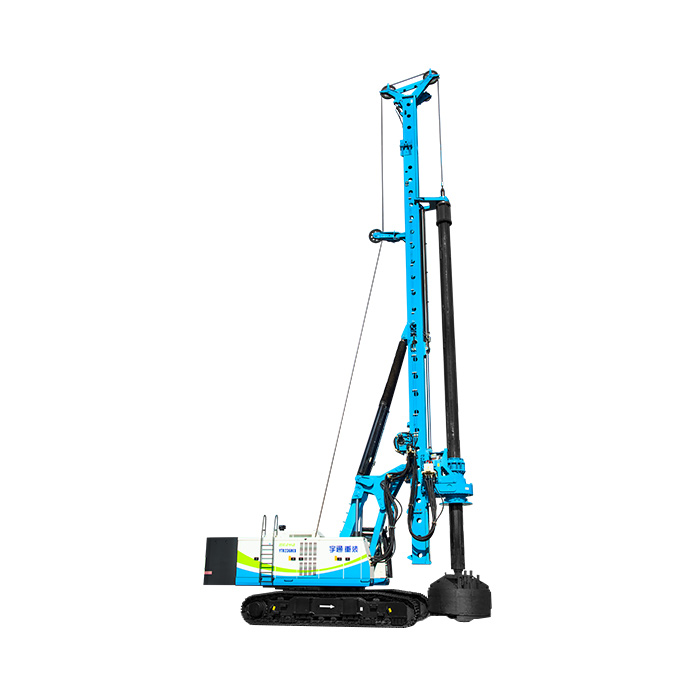
How to choose for your fleet
Go electric when: most of your work is urban with reliable mains power; noise and exhaust limits apply; and you want the lowest energy cost per drilled metre.
Go diesel when: your work is remote or moves between scattered sites; grid power is absent; and you want a self-contained machine with familiar maintenance. Go range-extended when you want electric efficiency but cannot guarantee mains at every site.
Five-year TCO
Total cost of ownership starts with purchase price but is decided by energy and maintenance over five years. The electric rig's lower fuel and service bill pays back only if it actually runs on cheap mains power; if it spends its life behind a hired diesel generator, that advantage disappears. The diesel rig's higher running cost is offset by zero power-infrastructure setup. Model your typical site power situation, local electricity tariff and diesel price before deciding. A mixed fleet is often the most realistic answer.
| Electric rig | Diesel rig | |
|---|---|---|
| Strengths | Cheap energy; quiet; no exhaust; low engine service | Self-contained; works off-grid; familiar maintenance |
| Watch out | Needs site power; generator option erodes savings | Fuel cost; engine service; noise and exhaust |
| Best sites | Urban fixed jobs with mains | Remote, moving, off-grid jobs |
Frequently asked questions
Is an electric rotary drill cheaper to run than a diesel one?
Per unit of work, grid electricity is usually cheaper than diesel, with no engine service. Add the cost of site power and any hired generator. On a fixed urban site with mains, electric wins; on a remote site behind a generator, diesel often breaks even.
Does the electric rig have less power than the diesel rig?
No. Electric drive delivers high controllable torque at low speed, ideal for rotary drilling. The choice is about energy source, not a power deficit. The constraint is always the supply, not the motor.
When does a diesel rig still make sense?
For remote or greenfield sites with no grid, a fleet moving between scattered projects, and where your team already knows diesel power trains. Diesel is self-contained: drive on, fuel up, start drilling.
What about range-extended hybrid rigs?
A range-extended rig uses electric drive with an onboard generator, so it works off-grid while keeping electric torque control and lower fuel use than pure diesel. It is the middle path when you cannot rely on mains at every site.
Not sure which power source fits your fleet?
Send us your typical site locations, whether mains power is usually available, your diesel price and electricity tariff. We will model electric, range-extended and diesel options and send spec sheets plus a five-year TCO estimate. Compare the electric YTR206AE and the diesel YTR300Dmax, or browse all foundation equipment.