










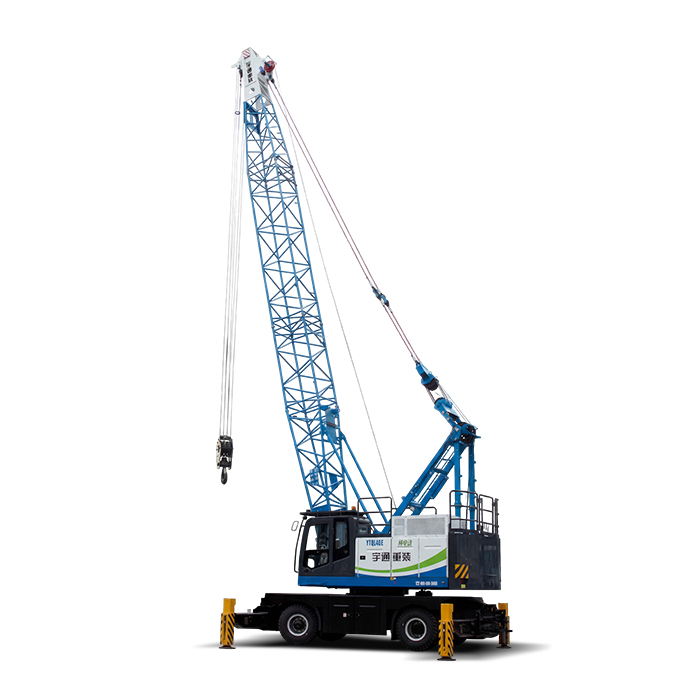
YTQL40E — 40 t class
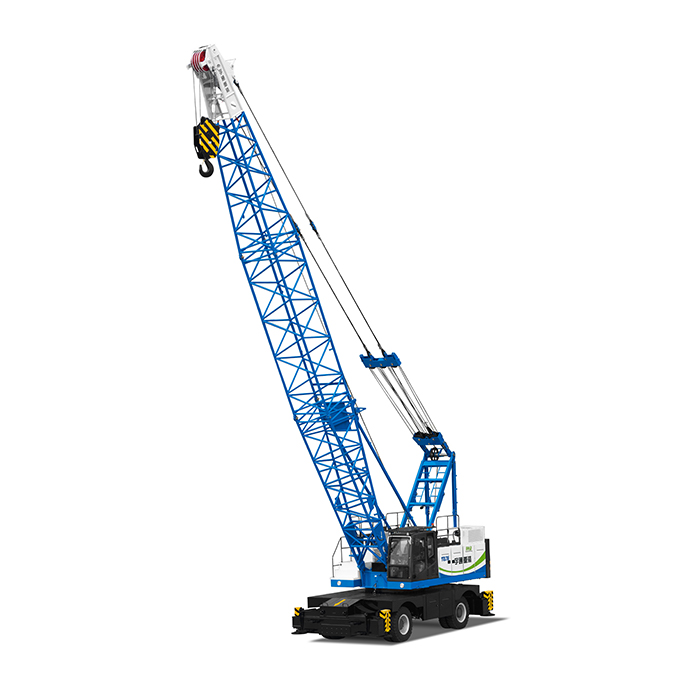
YTQL70E — 70 t class
Side-by-side specification comparison
Both are pure-electric rubber-tire port cranes that move around the quay, lifting containers and general cargo between vessels, trucks and storage. The split is capacity and outreach. Figures are typical ordering data; the final spec is tuned to your cargo mix and vessel size.
| Parameter | YTQL40E | YTQL70E |
|---|---|---|
| Rated capacity | ~40 tonnes | ~70 tonnes |
| Power | Pure electric | Pure electric |
| Outreach | Medium vessel reach | Longer, serves larger vessels |
| Typical cargo | Light containers, general cargo | Full containers, project cargo |
| Energy draw per move | Lower | Higher (heavier lifts) |
| Capital cost | Lower | Higher |
Capacity and outreach drive port productivity
The YTQL40E is a 40-tonne-class machine built for lighter container and general cargo moves. It cycles quickly and draws less energy per lift. The YTQL70E steps up to 70 tonnes, handling fully laden containers, heavy project cargo and the larger vessels that need longer outreach. On a busy container berth, the larger crane wins when the average load pushes the 40-tonne machine to its limit.
The trap is sizing the crane to your heaviest one-off lift instead of your average. If 90 percent of your moves are light containers, a YTQL70E spends most of its day carrying unused capacity and drawing more energy than it needs. If your typical cargo is a laden 40-foot box or heavy project cargo, the 40-tonne crane will be constantly constrained and slow the berth down. Match the crane to the median load, with margin for the heavy days.
Pure electric on the quay
Both cranes run on electric power, so they produce zero exhaust at the quayside and run quietly. That is a real advantage in urban ports and emission-controlled zones where diesel handling equipment is under pressure. It also means less on-board maintenance than a diesel crane: no engine oil, filters or after-treatment.
The trade-off is electrical infrastructure. A pure-electric port crane draws from the quay supply through a cable system or on-board energy storage. The 70-tonne crane's heavier lifts draw more peak power, so the quay supply and cable rating must be sized to it. Plan the power supply alongside the crane purchase, or the bigger machine will throttle back under load.
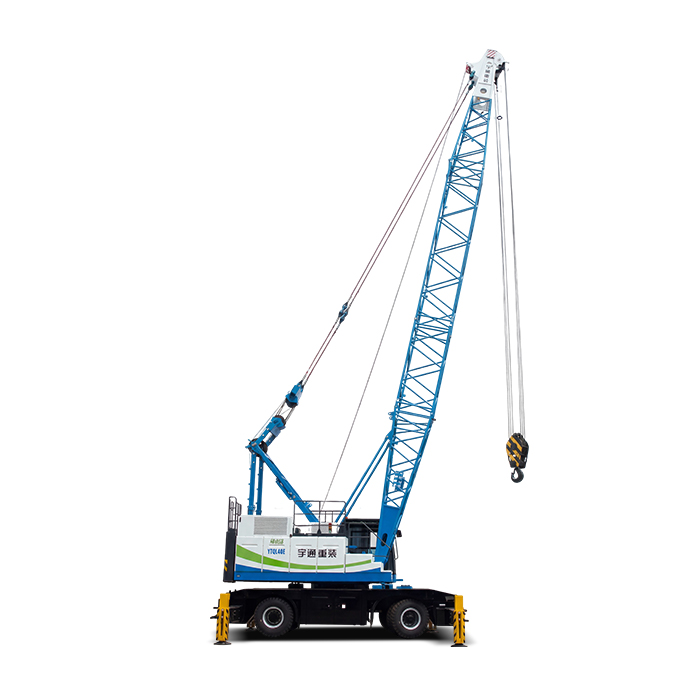
Which crane fits your cargo mix
Choose the YTQL40E when: your cargo is light containers and general cargo; vessels are medium size; and you want a lower-energy, lower-capital crane that cycles fast.
Choose the YTQL70E when: you handle laden containers, heavy project cargo or larger vessels needing long outreach; and the 40-tonne machine would be at its limit on a typical move.
Port operations TCO
Cost per container moved is the metric. The YTQL40E costs less to buy and less energy per light move, so on a light-cargo berth it wins on cost per move. The YTQL70E wins when it clears a berth that the smaller crane cannot keep up with: fewer delayed vessels, fewer second crane calls. The quay power supply is part of the comparison, not an afterthought. We model both cranes against your cargo profile, vessel size and available quay supply.
| YTQL40E (40 t) | YTQL70E (70 t) | |
|---|---|---|
| Strengths | Lower capital; less energy per light move; fast cycling | Handles heavy containers and project cargo; long outreach |
| Watch out | At its limit on heavy laden moves | Higher capital and peak power draw |
| Best berths | Light containers, general cargo, medium vessels | Laden containers, heavy cargo, larger vessels |
Frequently asked questions
What is the capacity gap between the YTQL40E and YTQL70E?
The YTQL40E is 40-tonne class and the YTQL70E is 70-tonne class. The larger crane handles laden containers, heavy project cargo and larger vessels; the 40-tonne crane suits lighter work at lower capital and energy draw.
How do outreach and handling cycle compare?
The 70-tonne crane reaches further and lifts heavier loads, serving larger vessels. The 40-tonne crane cycles quickly on lighter lifts. Match the crane to your average cargo weight rather than your heaviest one-off lift.
Both are electric — what does that mean for the port?
Both produce zero on-port exhaust and run quietly, suiting urban and emission-controlled ports. They draw from the quay supply, so power and cable must be sized to the crane's duty, especially the heavier 70-tonne model.
When should I choose the YTQL70E?
Choose it for heavy container moves, project cargo and larger vessels where the 40-tonne crane would be at its limit. Choose the YTQL40E for lighter general cargo and container handling where agility and lower energy cost per move matter.
Not sure which electric port crane fits your berth?
Send us your average and peak cargo weights, vessel size, containers per shift and available quay power supply. We will model the YTQL40E and YTQL70E and send spec sheets plus a cost-per-move estimate. Browse the pure-electric port crane range or all hoisting equipment.