










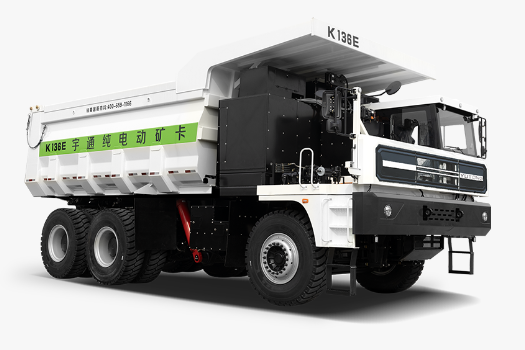
YTK136E — battery swap
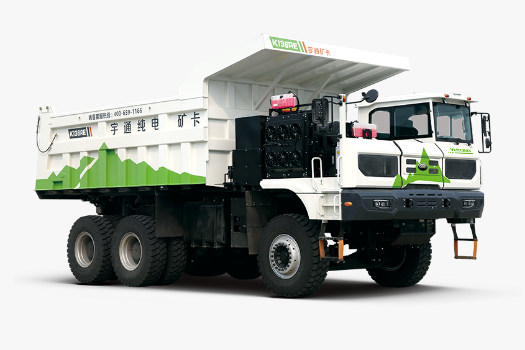
YTK136RE — range extended
Side-by-side specification comparison
Both trucks share the same ~90-tonne-class chassis, cab and electric drive, so the operator and maintenance experience is nearly identical. The split is how each one carries and replenishes energy. That difference drives everything else: infrastructure, fuel cost and fleet economics.
| Parameter | YTK136E | YTK136RE |
|---|---|---|
| Energy strategy | Battery swap, pure electric | Range extender (onboard generator) |
| Refueling | Swap pack in minutes at station | Diesel tank, no station needed |
| Infrastructure | Swap station + grid supply | None beyond a fuel bay |
| Energy cost | Low (grid electricity) | Medium (diesel for generator) |
| Engine maintenance | None | Generator service intervals |
| Best fleet size | Large, single-site, 24 h | Small / dispersed / growing |
How each truck replenishes energy
The YTK136E is a pure-electric truck with no on-board generator. It runs on a swappable battery pack. When a pack runs low, the truck drives into a swap bay, the depleted pack is exchanged for a charged one in minutes, and the truck returns to the bench. The swapped packs charge on a bank, off the critical path, usually on cheap off-peak grid power.
The YTK136RE keeps the electric drive but adds an onboard range-extender generator that charges the battery while the truck works. It fills up like a diesel truck and never needs a swap bay or a dedicated charger. That freedom is the whole point: it goes to a greenfield pit with weak grid power and starts hauling on day one.
Infrastructure is the hidden cost driver
The YTK136E only pays off when the swap station is shared across enough trucks. The station itself, the grid connection and the spare pack bank are capital that has to be spread over the fleet. A small fleet cannot amortise that station, which is exactly where the YTK136RE shines: it needs nothing but a fuel bowzer.
Grid supply is the other deciding factor. A mine with a weak or intermittent power connection will struggle to charge a pack bank fast enough to keep a 24-hour electric fleet moving. The YTK136RE sidesteps that entirely because its energy comes from the diesel it carries. If your site has strong, stable three-phase power and you plan to run a dozen-plus trucks, the swap case gets strong fast.
Which strategy fits which operation
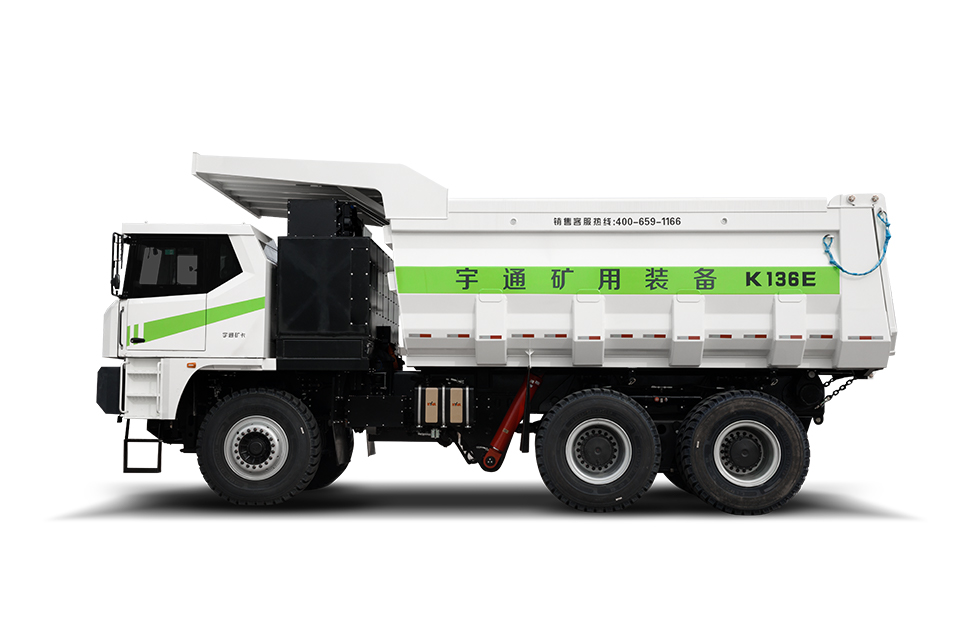
Choose the YTK136E when: you run a large, single-site, round-the-clock fleet; grid power is strong and stable; you want the lowest energy cost per tonne; and you can justify a swap station across ten or more trucks.
Choose the YTK136RE when: your fleet is small or spread across multiple pits; grid supply is weak; you want to start hauling immediately with no station build; or you are phasing a conversion and will add the swap option later. A hybrid mixed fleet is often the pragmatic middle path.
Five-year TCO: amortise the station or avoid it
The YTK136E has the lower energy cost per kWh because it uses grid electricity instead of diesel, and it has no engine to service. But you must pay off the swap station and pack bank. Divide that capital by the number of trucks: at twelve trucks it looks cheap per unit; at four trucks the station can dominate the budget. The YTK136RE carries no station cost but pays a fuel bill and generator maintenance bill on every shift, every year.
| YTK136E (swap) | YTK136RE (range extender) | |
|---|---|---|
| Strengths | Lowest energy cost; no engine maintenance; near-continuous uptime | No station build; works on weak grid; fast deployment |
| Watch out | Needs a large fleet and strong grid to amortise the station | Burns diesel; generator maintenance; higher energy cost |
| Best sites | Large single-site 24 h mines with stable power | Small, dispersed or greenfield pits |
Frequently asked questions
What is the difference between the YTK136E and YTK136RE?
The YTK136E is a battery-swap pure-electric truck that exchanges a depleted pack for a charged one at a station. The YTK136RE is range-extended: an onboard generator charges the battery on the move, so it needs no swap bay or charger.
Which gives more uptime, swap or range extender?
For a large fixed 24-hour fleet, the swap YTK136E delivers near-continuous running once a station is built. The YTK136RE needs no station and suits dispersed fleets, but its generator burns fuel and adds maintenance.
Which costs less per tonne over five years?
The YTK136E wins on energy cost when the fleet is large enough to amortise the station. The YTK136RE has lower upfront infrastructure but its fuel and engine maintenance raise TCO over time.
When should I choose the YTK136RE over the YTK136E?
Choose the YTK136RE for a small fleet, weak grid power, multiple dispersed pits, or a phased rollout. Choose the YTK136E for a large single-site round-the-clock fleet that can justify a swap station.
Not sure which energy strategy fits your mine?
Send us your fleet size, daily tonnage target, grid supply capacity, one-way haul distance and how many shifts you run. We will model the swap YTK136E against the range-extended YTK136RE, including station capital, and send spec sheets plus a side-by-side TCO estimate. Browse the new energy dump truck range or the full mining truck line-up.