










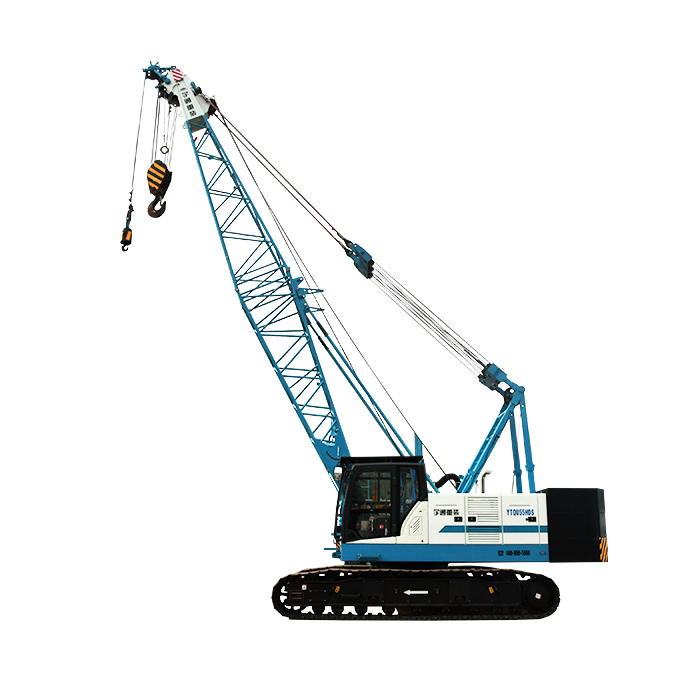
YTQU55HDS — 55 t class
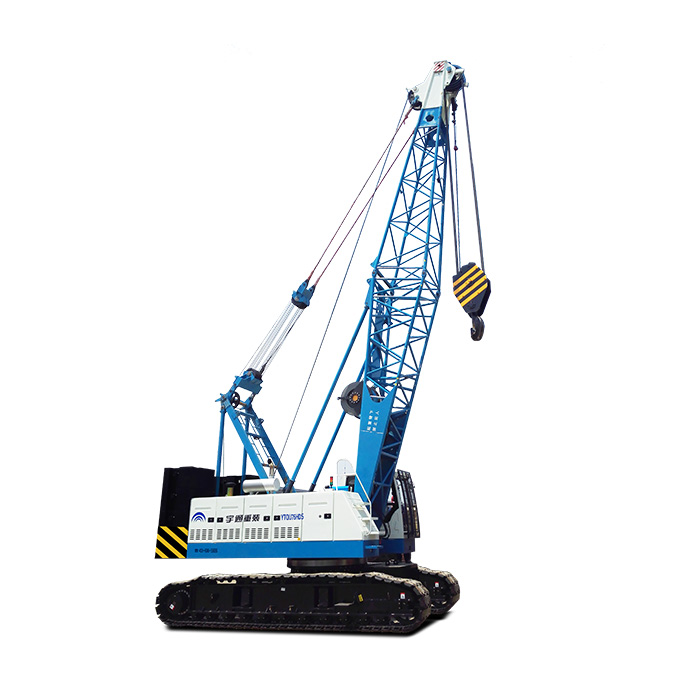
YTQU75HDS — 75 t class
Side-by-side specification comparison
Both are tracked hydraulic crawler cranes from the YTQU family, sharing operator controls and service approach. The headline difference is rated capacity, which drives boom length, ground pressure and mobilisation effort. Figures are typical ordering data; always lift from the load chart at your actual radius.
| Parameter | YTQU55HDS | YTQU75HDS |
|---|---|---|
| Rated capacity | ~55 tonnes | ~75 tonnes |
| Boom | Standard lattice boom | Longer reach boom option |
| Ground pressure | Lower, gentler on site | Higher, needs firmer ground |
| Mobilisation | Lighter, fewer truck loads | Heavier, more transport moves |
| Best lifts | General lifting under 55 t | Heavy / long-reach lifts |
| Cost per hour | Lower | Higher |
The 20-tonne capacity step
The YTQU55HDS is rated at about 55 tonnes; the YTQU75HDS at about 75. That is a 20-tonne step at close radius, and it matters on steel erection, piling rig moves and precast panels where the load is heavy and the radius short. If your heaviest lifts sit near 55 tonnes, the 75-tonne crane gives you safety margin and the ability to cover larger loads that a second crane would otherwise be called in for.
But the headline tonnage is only true at a close radius. Crawler crane capacity falls as the load gets further out. At long radius the gap between the two cranes narrows, and the load chart at your actual boom angle decides who can lift. Never size a crane off the brochure number; pull the chart for the exact radius and lift height.
Mobilisation and ground conditions
The 55-tonne crane breaks down into lighter components, so it reaches a job on fewer truck loads and needs less site preparation. Its lower ground pressure is kinder to soft or recently filled ground. If your business is a series of short, scattered jobs, the smaller crane's fast mobilisation and cheaper transport win the week.
The 75-tonne crane needs more truck loads and a firmer, more levelled setup, because its higher weight and capacity demand a stable base. On a large project where the crane stays on site for months, that mobilisation cost is spread and the bigger crane's reach and capacity dominate. On a muddy greenfield, confirm ground bearing pressure before you commit the heavier machine.
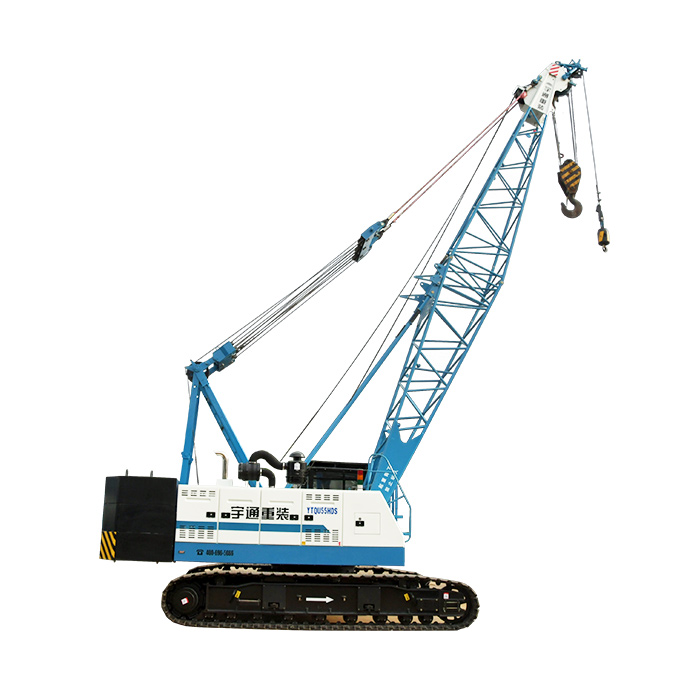
Which crane fits which work
Choose the YTQU55HDS when: your lifts are generally under 55 tonnes; jobs are short and scattered; site ground is soft; and cost per hour and fast mobilisation matter most.
Choose the YTQU75HDS when: you have heavy or long-reach lifts near the 75-tonne range; the crane stays on site; and one machine should cover a wider mix of work. Between them, the YTQU65HDS offers a middle capacity.
Crane fleet TCO
The YTQU55HDS costs less per hour and per mobilisation, so on general lifting it wins unless a lift genuinely needs the extra capacity. The YTQU75HDS earns its higher rate when it replaces two crane calls: one medium crane for standard lifts and a heavy crane for the occasional big lift. If only a handful of lifts a year actually exceed 55 tonnes, it is often cheaper to call in a heavy crane for those few days than to own the larger machine full time. Model your lift list, not your heaviest single load.
| YTQU55HDS (55 t) | YTQU75HDS (75 t) | |
|---|---|---|
| Strengths | Cheap per hour; light mobilisation; gentle on ground | 20 t more capacity; longer reach; covers a wider lift mix |
| Watch out | At capacity on heavy / long-reach lifts | Heavier transport; needs firm ground; higher rate |
| Best work | General lifting, scattered short jobs | Heavy lifts, long stays, big sites |
Frequently asked questions
What is the lifting gap between the 55 t and 75 t cranes?
The YTQU55HDS is 55-tonne class and the YTQU75HDS is 75-tonne class, about 20 tonnes more at close radius with longer reach. The 55-tonne crane is lighter, more mobile and cheaper to move.
How does radius change the comparison?
Capacity falls sharply as radius grows. The 75-tonne rating is at a close radius; at long radius the gap narrows. Always work from the load chart at the actual radius and boom angle, not the headline tonnage.
Which crane is easier to mobilise?
The 55-tonne YTQU55HDS breaks down lighter and needs fewer truck loads. The 75-tonne YTQU75HDS needs more transport moves and a firmer setup. For short, scattered jobs, the smaller crane's mobility matters.
When should I choose the 75 t crane?
Choose it when your heaviest lifts are near the 75-tonne range, you need longer reach, or one crane should cover a wide lift mix. Choose the 55-tonne crane for general lifting where mobility and cost per hour dominate.
Not sure which crane fits your lift list?
Send us your heaviest lifts, the load radius for each, required boom length and how often the crane moves between sites. We will model the YTQU55HDS and YTQU75HDS and send load charts plus a cost estimate. Browse the hydraulic crawler crane range or all hoisting equipment.