










Start from the watering loop, not from the brochure
Most sprinkler truck selection mistakes happen at the first step: someone picks a tank size off a price list and then makes the route fit the truck. The reverse is faster and cheaper. Your route already has fixed numbers — loop distance, water use per kilometre, refill points (hydrants or water points), road width, and the split between surface watering and greening irrigation. A good sprinkler choice is simply the smallest tank that still covers the loop without a mid-shift refill. Below is the decision tree we run with customers, followed by the parameter definitions that fleet managers usually argue about.
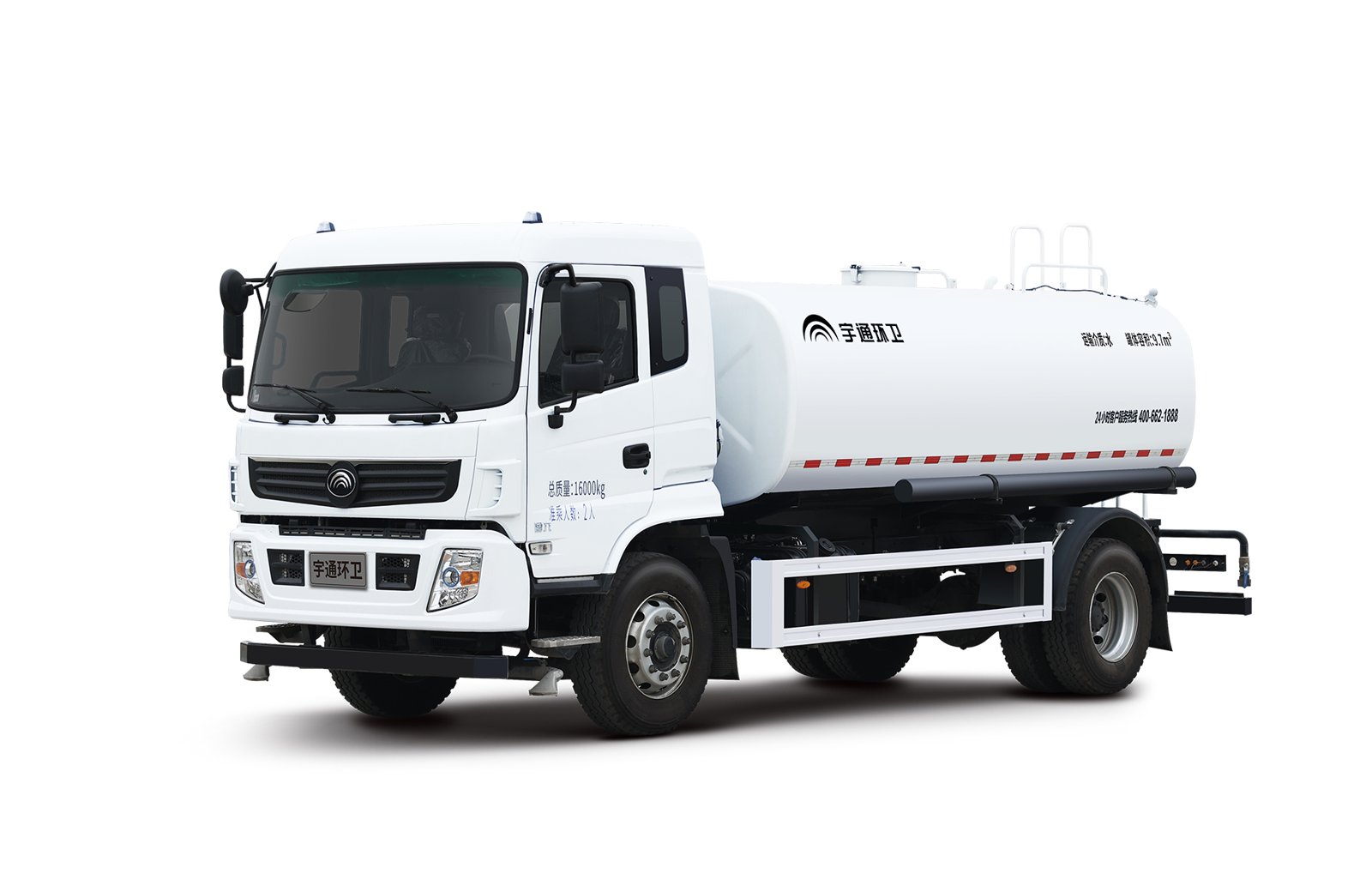
The decision tree: five questions before you spec a sprinkler
1. Tank capacity for the loop. Calculate water used per kilometre (front spray plus rear spray), multiply by loop length, then add margin. A 16 t class such as the YTZ5160GSST0D6 covers a compact urban loop. An 18 t such as the YTZ5181GSST0D6 suits long arterial routes.
2. Work mix: surface watering vs greening. If most work is road surface wetting, standard front and rear sprays suffice. If a large share is median and roadside tree irrigation, specify the HX greening variant with a long-range top gun such as the YTZ5181GSST0D6-HX.
3. Pump flow and travel speed. Higher pump flow lets the truck spray at normal road speed without lagging in traffic. For high-volume arterials, specify a pump that maintains spray at 30 km/h.
4. Refill infrastructure. Map hydrant or water-point positions. If refill points are sparse, a larger tank saves trips. If water points are frequent, a smaller truck is more agile.
5. Budget and TCO. Compare purchase price, water cost, pump maintenance and downtime together. A larger truck that skips a refill trip per shift can win on productivity.
The parameters engineers actually argue about
These five terms are where two buyers "compare" sprinklers that are not comparable at all. Get the definitions right and the table comparison becomes honest.
| Parameter | What it really means | How to use it in selection |
|---|---|---|
| Tank capacity (L) | Volume of water the truck carries per load. | Must cover the full watering loop. Multiply water use per km by loop length and add margin. |
| Pump flow (L/min) | Rate at which the pump delivers water to the spray system. | Higher flow = wider spray at road speed. Match to route speed expectations. |
| Front spray bar | Spray nozzles mounted ahead of the front bumper. | Flushes the road surface and settles dust as the truck moves. |
| Rear side spray | Spray nozzles at the rear sides. | Waters the kerb, gutter and edge of the road. |
| Top-mounted gun | Long-range overhead nozzle for median and tree irrigation. | Essential for greening work. HX variant adds extended range. |
| Chassis brand | Commercial truck platform the tank mounts on. | Choose a chassis your local service network supports. Dongfeng, Howo, Foton, JAC are common. |
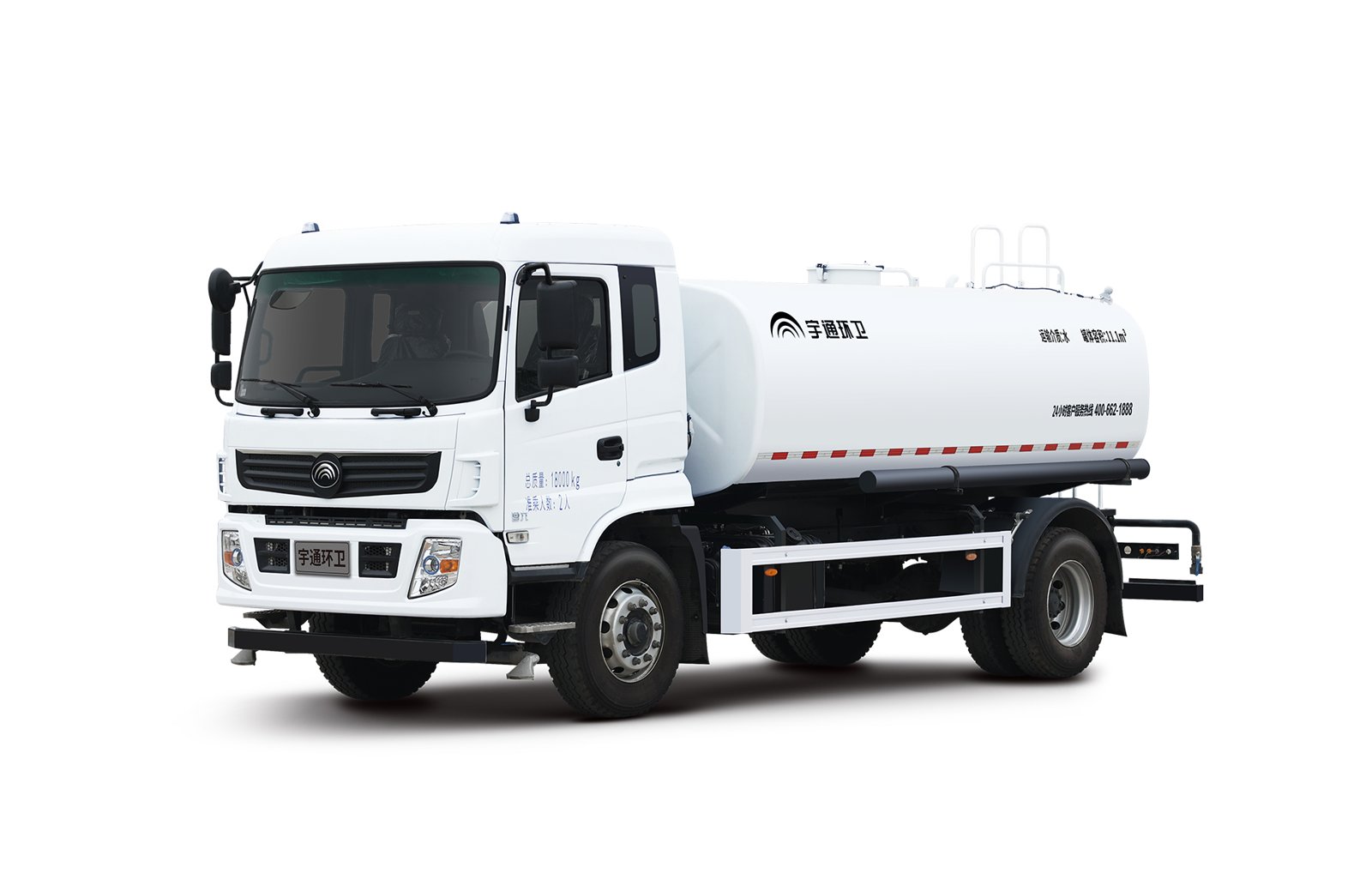
Match the truck to the application: municipal, greening, industrial
Municipal road watering. Dust control and surface flushing on urban roads. A standard 16 to 18 t sprinkler with front and rear spray covers the duty. The water tank truck range covers this work.
Greening and landscape irrigation. Medians, roadside trees, parkland. The HX variant with a long-range top gun reaches tree canopies and medians that ground-level spray cannot. Choose it when a large share of work is landscaping.
Industrial and construction dust control. Site access roads and stockpile areas need frequent wetting. A larger 25 t unit such as the YTZ5250GSS21D6 covers longer loops without refill. Compare against a dedicated dust-suppression mist cannon for airborne dust.
Secondary use: emergency water support. The top gun and pump can deliver water over distance for fire emergencies, but the truck is not a fire engine. Size it for its primary municipal watering duty.
Sprinkler vs washer vs mist cannon: which tool for the job
The honest comparison is not tank size on a spec sheet; it is what the truck actually does to the pavement. A sprinkler delivers coarse droplets to wet the surface and irrigate plants. A washer truck uses high-pressure jets to scrub oil film, rubber marks and embedded stains that a sprinkler leaves behind. A dust-suppression mist cannon launches fine mist into the air to bind airborne dust at construction sites. If your complaint is dust and dryness, a sprinkler works. If the pavement must be left visibly clean, a washer truck is the right tool. If airborne dust at a demolition site is the problem, a mist cannon beats a sprinkler. Buying a sprinkler to scrub oil stains is a common and expensive mistake.
| Truck type | What it does | What it cannot do | Best fit |
|---|---|---|---|
| Water sprinkler | Wets surface, irrigates greenery | Does not scrub stains | Road dust control, greening |
| Washer truck | High-pressure jet cleaning | Does not irrigate | Stain removal, visibly clean pavement |
| Mist cannon | Fine mist binds airborne dust | Does not wet the road surface | Construction and demolition sites |
Five mistakes we see on real fleets
1. Tank too small for the loop. A small tank forces mid-shift refills that waste 20 percent of the shift. Size the tank for a full loop.
2. Buying a standard sprinkler for greening work. Ground-level spray cannot reach tree canopies. Specify the HX top-gun variant when irrigation is the main duty.
3. Using a sprinkler to scrub oil stains. A sprinkler wets the surface but does not remove oil film. That needs a washer truck.
4. Under-sizing the pump for road speed. A weak pump forces the truck to crawl to maintain spray, blocking traffic. Match pump flow to route speed.
5. Ignoring refill point locations. A large tank helps only if refill points are sparse. If hydrants are every 2 km, a smaller agile truck may be more productive.
Frequently asked questions
What tank capacity do I need for my watering route?
Size the tank so one fill covers a full watering loop without a mid-shift refill. A 16 t unit covers a compact urban loop; a larger 18 to 25 t unit suits long arterial routes. Map the loop distance and hydrant positions first.
Sprinkler or dust-suppression truck?
A sprinkler delivers coarse droplets onto the road surface and vegetation. A mist cannon launches fine mist into the air to bind airborne dust. Use a sprinkler to wet the surface; use a mist cannon to suppress airborne dust.
What spray systems should I specify?
A front spray bar flushes the road; rear side sprays water the kerb; a top-mounted gun reaches medians and trees. If most work is surface watering, front and rear sprays suffice. If greening is a large share, specify the HX top-gun variant.
How does pump flow rate affect productivity?
Pump flow (L/min) determines how fast the tank empties and how wide a spray the truck maintains. A higher flow covers road at normal speed without lagging in traffic. For high-volume arterials, specify a pump that maintains spray at 30 km/h.
Sprinkler truck or washer truck?
A sprinkler wets the surface and irrigates. A washer truck uses high-pressure jets to remove oil film and stains. If the complaint is dust and dryness, a sprinkler works. If the pavement must be left visibly clean, a washer truck is the right tool.
What chassis and right-hand-drive options exist?
Superstructures mount on Dongfeng, Sinotruk (Howo), Foton and JAC chassis, so local technicians know the drivetrain. Right-hand-drive variants are available for the UK, Australia, Southeast Asia and parts of Africa.
What is the warranty and lead time?
Standard warranty is 12 months or 20,000 km. Standard catalog models ship within 15 to 30 working days after deposit; custom builds take 35 to 50 working days plus sea freight. Wear parts are supplied as spare-parts kits.
Send us your route map and we will size the sprinkler
Tell us the loop distance, water use per kilometre, refill point locations, road width, and the split between surface watering and greening, and our sanitation engineering team will match you to the right class across the Yutong water sprinkler truck range — from the 16 t urban class up to the 25 t long-route units. We export to over 60 countries and build to FOB / CIF shipment terms with the full customs document set.