










The project at a glance
The customer is a foundation contractor building a high-speed rail viaduct across an alluvial plain in eastern China. The viaduct called for a long series of near-identical bored piles repeated over kilometres. The work ran near settled areas, where noise and emissions were restricted during sensitive hours. The contractor needed electric rotary drilling rigs that could run quietly through those hours and repeat the same pile cycle across hundreds of piles. We supplied the YTR266HE class electric rotary drilling rig.
| Item | Value |
|---|---|
| Location | Eastern China, alluvial-plain high-speed rail viaduct |
| Pile type | ~1.25 m diameter bored cast-in-place piles |
| Ground profile | Soft alluvial soil over weathered bearing stratum |
| Working hours | Restricted noise/emissions windows near settlements |
| Supplied rigs | YTR266HE electric rotary rigs |
| Program | Hundreds of near-identical piles along the alignment |
The challenge: noise windows and a long, repeatable pile line
Noise and emissions windows. The viaduct ran near settled areas. A diesel rig is loud and emits exhaust, and in sensitive hours the work would have been stopped. An electric rig removes the local exhaust and runs quieter, so the contractor keeps working through the window instead of packing up.
Repeatability over kilometres. A viaduct is not a one-off bridge with ten piles; it is hundreds of near-identical piles. The contractor needs each pile to drill to the same depth, take the same concrete and take the same time. A rig that varies pile to pile makes the program hard to plan and QA hard to pass.
Soft overburden to bearing stratum. The alluvial plain has soft upper soil over a weathered bearing layer. The rig has to drill through the soft layer without hole instability and reach the bearing stratum at a consistent depth along the whole alignment.
The solution: YTR266HE electric rigs for a production-line pile job
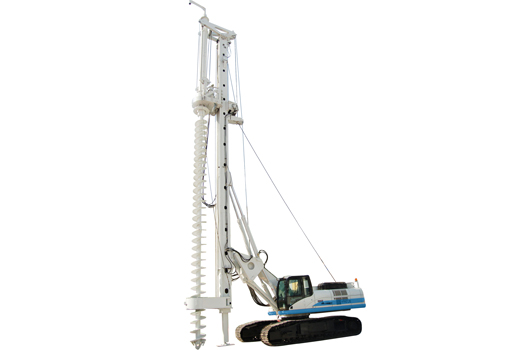
We spec'd the YTR266HE electric rig for the 1.25 m pile and the alluvial ground. The electric drive runs quiet and free of local exhaust, which lets the contractor work through the noise-sensitive windows. For heavier or deeper piles on other sections of the viaduct, the contractor can step up to the YTR306HE; the YTR266HE was the right size for the standard 1.25 m row. The broader electric line is on the electric rotary drilling rigs page.
Because the viaduct is a production line, repeatability is the spec. The rig drills each pile to the designed depth, concrete take-up stays close to design volume, and the rig moves to the next pile on the alignment on a repeatable cycle. That consistency makes QA straightforward: every pile is checked for depth, take-up and cage position, and because the results are consistent pile to pile, the inspection does not throw up surprises. The foundation category overview is on the foundation construction equipment page.
The results: quiet operation and repeatable pile cycle
On the viaduct program, the electric rigs ran through the noise-sensitive windows without triggering a stop, which the contractor estimated kept a meaningful share of the working hours that a diesel rig would have lost. Pile cycle was repeatable along the alignment: each pile drilled to design depth, concrete take-up tracked close to design volume, and the rig moved between piles on a consistent rhythm. That repeatability is what let the contractor plan the long linear job as a production line rather than a sequence of one-off problems.
The contractor's foreman noted that the rigs "drank the same pile every time, and we did not have to stop the line for noise." For a rail viaduct that is the result that matters: the rig shows up, drills the standard pile, moves on, and does not wake the settlement. Quality control stayed predictable because the rig did not surprise pile to pile.
Why the contractor chose Yutong
The tender came down to three points. First, the electric rig solved the noise-and-emissions problem on a settled-alignment job, which a diesel rig could not do. Second, the rig repeated the same pile cycle across hundreds of near-identical piles, which made the linear program easy to plan and inspect. Third, the rig reached the bearing stratum consistently along the alignment. The contractor now has a repeatable spec for the next urban or near-settled viaduct: electric rig for the noise window, standard pile class for the repeat cycle.
For contractors building rail or metro viaducts near settlements, start from the noise and emissions window the site is restricted to, then size the rig to the standard pile. The electric range is on the electric rotary drilling rigs page, and the foundation category overview is on the foundation construction equipment page.
Frequently asked questions
Why an electric rig for a rail viaduct?
The viaduct ran near settlements with restricted noise and emissions hours. An electric rig runs quieter and with no local exhaust, so work continues through windows where a diesel rig would be stopped.
How are viaduct piles different from bridge piles?
A viaduct is a long line of near-identical piles repeated over kilometres. Repeatability matters more than one-off peak performance so the contractor can plan the job as a production line.
How was quality control handled?
Every pile is checked for depth, concrete take-up and cage position. Consistent, repeatable results pile to pile make QA predictable instead of a string of surprises.
What ground conditions were typical?
The viaduct crossed alluvial plain with soft upper soil over a weathered bearing stratum. The rig drilled through the soft layer without hole instability and reached the bearing stratum at a consistent depth.
Spec a quiet rig for your viaduct
Tell us the pile diameter, the ground profile, the number of piles and the noise or emissions restrictions on your site, and our foundation engineering team will match an electric rotary rig across the Yutong range. We export to over 60 countries on FOB or CIF terms with the full customs document set.