










The project at a glance
The customer is a bridge contractor building a highway bridge over a river floodplain in central China. The bridge called for a row of 1.5 m diameter bored piles, some of them in the riverbank, drilled through alluvial fill, sand and a soft weathered layer into mudstone. The contractor needed rotary drilling rigs that could case the sand, cut the mudstone socket and move between piles on a tight schedule. We supplied the YTR230Dpro class fuel-fired rotary drilling rig for the program.
| Item | Value |
|---|---|
| Location | Central China, river floodplain highway bridge |
| Pile diameter | 1.5 m bored cast-in-place piles |
| Pile depth | ~38-45 m to rock socket |
| Ground profile | Fill, sand, weathered layer over mudstone |
| Supplied rigs | YTR230Dpro fuel rotary rigs |
| Program | Multi-pile bridge, tight schedule |
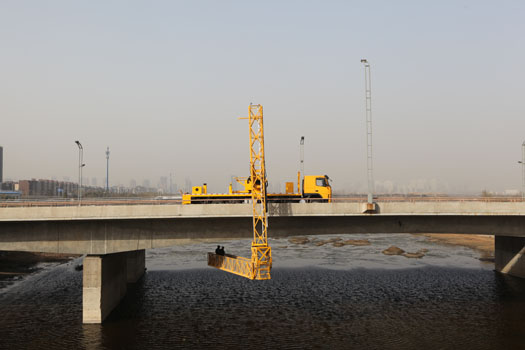
The challenge: sand, a rock socket and a tight bridge schedule
Sand needs casing. The upper alluvial sand will collapse on an uncased hole. The rig has to drive casing through the sand quickly, because every extra metre of casing in the overburden is time spent not cutting rock. A rig that is slow to case loses the pile cycle before it reaches the mudstone.
Mudstone needs torque. Once the casing is down, the rig has to cut a socket in the mudstone. A rig under-specified on torque will spin in the socket and never reach design depth; the pile ends up shallow. The spec had to match the mudstone so the bit cuts on crowd, not on slip.
Bridge schedule. A multi-pile bridge is a moving operation: rig up, drill, case, cage, tremie, move to the next pile. The rig that moves fastest between piles wins, even if its per-metre drilling speed is only average. Downtime between piles is the cost the contractor really watches.
The solution: YTR230Dpro matched to the pile and the geology
We spec'd the YTR230Dpro fuel-fired rig around the 1.5 m pile and the mudstone socket. The rig drives casing through the upper sand at a good rate, then cuts the rock socket with enough torque and crowd to reach design depth without spinning out. On deeper or larger-diameter piles on the same bridge program, the contractor could step up to the YTR300Dmax; the YTR230Dpro was the right size for the 1.5 m row. The broader range of fuel-fired rotary drilling rigs covers the other pile sizes on the contract.
Because the bridge crosses a river, the rig was run with a slurry system and spoil settling so the floodplain was not contaminated. The contractor was audited on environmental controls during the program, and the rig's slurry setup was part of passing that audit. On a bridge job, the rig that drills fast but leaves the riverbank muddy loses points with the engineer. The foundation equipment category is on the foundation construction equipment page.
The results: pile cycle and concrete take-up
On the 1.5 m piles, the rig cased through the upper sand and cut the mudstone socket to design depth on the planned pile cycle. Concrete take-up per pile tracked close to the design volume, which means the hole stayed clean and did not bulge in the soft layer: a swollen hole would take extra concrete and cost the contractor money per pile. The rig moved between piles on the bridge row without long rig-up delays, which is what kept the program on schedule.
The contractor's pile foreman noted that the rig "held the socket in the mudstone without bogging down, and the casing went through the sand faster than the older units." That is the combination that matters on a floodplain bridge: case the overburden fast, cut the rock to depth, and move to the next pile without a day lost between sites. Concrete take-up close to design also meant the holes were stable, which the engineer's inspection confirmed.
Why the contractor chose Yutong
The decision came down to the geology and the schedule. First, the rig sized to the 1.5 m pile and the mudstone socket, so it cut design depth instead of spinning in the rock. Second, the rig moved fast between piles, which kept the bridge row on schedule. Third, the slurry and spoil setup passed the river-site environmental audit. The contractor now has a repeatable rig spec for the next floodplain bridge: same casing-through-sand approach, same rock-socket torque, same slurry control.
For contractors building highway or rail bridge piles in river floodplains, start from the pile diameter, the rock socket depth and the overburden profile, then size the rig. The full rotary rig range is on the fuel-fired rotary drilling rigs page and the electric options are on the electric rotary drilling rigs page. The category overview is on the foundation construction equipment page.
Foire aux questions
What ground did the piles drill through?
The bridge crosses a floodplain with alluvial fill, sand and a soft weathered layer over mudstone. The sand needs casing; the mudstone needs torque to cut a proper rock socket.
How is pile cycle time measured?
It is the time from rig setup to concrete placement: casing, drilling to depth, cage lowering and tremie. The rig that moves fastest between piles wins, not the one that drills the fastest metre in isolation.
Why size the rig to the pile and the socket?
A 1.5 m pile in mudstone needs enough torque to cut the socket and crowd to keep the bit on the rock. Under-sizing leaves the rig spinning in the socket; over-sizing wastes money and moves slowly on site.
How was slurry handled on the river site?
The rig ran with a slurry system and spoil settling so the floodplain was not contaminated. That environmental control was audited during the program and was part of passing inspection.
Spec a rotary rig for your pile
Send us your pile diameter, depth, ground profile (overburden layers and rock type) and the number of piles, and our foundation engineering team will match a rotary rig across the Yutong range. We export to over 60 countries on FOB or CIF terms with the full customs document set.